



Hip and Knee Implant Manufacturer Egypt
Hip and knee implant manufacturer Egypt is a search intent that usually comes from hospitals and orthopedic decision makers who want a dependable arthroplasty partner, not a generic medical vendor. In Egypt, joint replacement is increasingly managed as a program with defined schedules, measurable performance, and strong expectations around readiness. That program mindset changes what “good manufacturer” means because the implant is only part of the decision.
Hip and knee implant manufacturer Egypt also signals controlled risk. When core sizes are unavailable, when instrument sets are incomplete, or when routines are not standardized, the impact is immediate: delayed lists, emergency purchasing, and lost surgeon confidence. Premium Egyptian providers compete on reliability, which makes manufacturer operational maturity a key selection factor.
Ortonom Medical positions itself as a hip and knee implant manufacturer for African hospitals with a program first approach. For Egypt, the focus is to support stable routine use through predictable availability, disciplined implementation support, and a product portfolio that fits both primary and revision pathways.
Why Egypt is a high intent market for hip and knee programs
Egypt’s orthopedic demand is driven by high patient volume and a growing concentration of private healthcare capacity. As hospitals expand arthroplasty services, scheduling reliability becomes part of the patient experience. That is why searches for a hip and knee implant manufacturer Egypt often come from buyers who want a long term program partner.
The Egyptian arthroplasty environment also exposes operational weaknesses quickly. When volumes rise, small gaps become major disruptions. A missing size, a delayed component, or an incomplete tray can impact an entire theatre list. Hospitals that scale successfully treat supply, instrumentation, and support routines as a system.
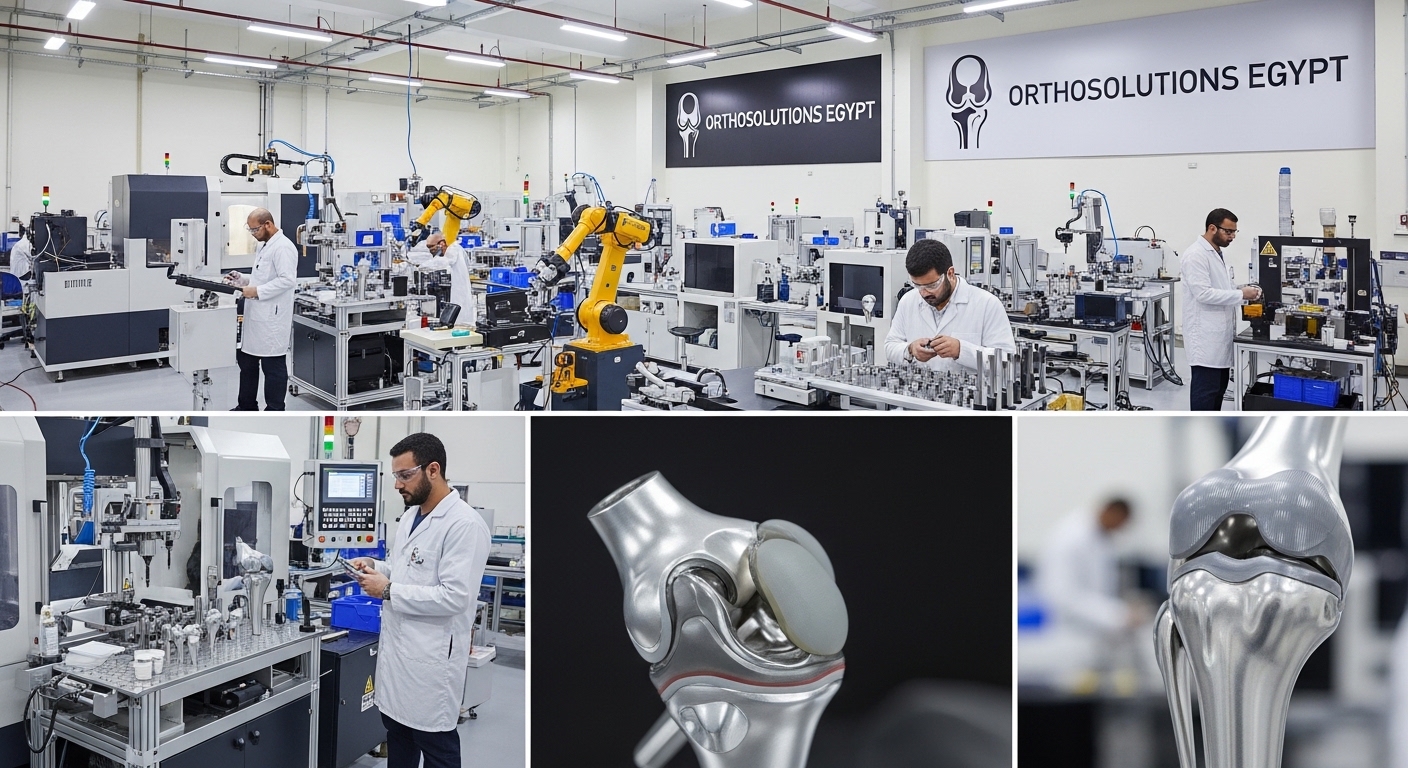
Egyptian hospital groups also value standardization because it reduces internal complexity. When routines are consistent across surgeons and teams, performance is easier to measure and improve. A manufacturer that can support standardization is usually positioned more strongly in procurement decisions.
Ortonom Medical product portfolio for Egyptian arthroplasty programs
Hospitals in Egypt typically prefer partners who can support stable hip and knee pathways while also offering continuity when case complexity changes. Ortonom Medical presents a focused arthroplasty portfolio designed to support program growth without forcing hospitals into fragmented vendor relationships.
Ortonom Medical hip systems include:
- OrtoHip Bipolar Hip System
- OrtoHip K2 Revision Hip System
- OrtoHip Total Hip System
Ortonom Medical knee systems include:
- OrtoKnee Fixed Knee System
- OrtoKnee Revision Knee System
- OrtoKnee Mobile Knee System
This portfolio structure helps Egyptian hospitals align implants, instruments, and routines into one program. It also supports orthopedic specialists who want predictable system behavior as case volume increases.
What Egyptian hospitals and orthopedic specialists expect from a manufacturer
Orthopedic specialists in Egypt expect predictable system behavior under real theatre pressure. They care about consistent sizing decisions, reliable instrument flow, and repeatable verification checkpoints that protect outcomes. When the system behaves consistently, surgeons spend less time troubleshooting and more time delivering efficient surgery.
Hospitals add operational and governance expectations. Procurement teams want clear traceability routines, disciplined documentation flow, and reliable replenishment. Theatre leadership wants stable case starts, fewer last minute substitutions, and predictable exception handling. Sterile services wants tray logic and inspection routines that keep instruments reliable and ready.
A practical way to summarize expectations is to evaluate the manufacturer across three pillars: clinical confidence, operational readiness, and governance control. If one pillar is weak, the program becomes fragile. If all three are strong, the hospital can scale volume with fewer disruptions.
How procurement and clinical teams decide in Egypt
Arthroplasty programs in Egypt are rarely approved by one department. Procurement, finance, orthopedic leadership, theatre management, and sterile services all influence the decision. When a manufacturer speaks only to surgeons, approval usually slows because operational risk questions remain unanswered.
A faster approach is to present the partnership as a controlled adoption system. The hospital needs clarity on how core sizes will be kept available, how tray readiness will be protected, how documentation will stay consistent, and how urgent exceptions will be handled. This approach also improves credibility because it maps directly to theatre performance.
The table below reflects what committees typically check when evaluating a hip and knee implant manufacturer Egypt.
| Decision lens | What Egypt hospitals should check | What strong readiness looks like |
|---|---|---|
| Core size stability | Are high runner sizes consistently available | Minimum levels reorder points predictable replenishment cadence |
| Tray readiness discipline | Are sets complete and reprocessing is stable | Tray maps readiness checks discrepancy escalation |
| Governance control | Can leadership audit usage and updates | Usage capture routine version discipline auditable reporting |
| First case protection | Is early adoption protected from chaos | Structured rollout plan and fast correction loop |
| Responsiveness | What happens when something is urgent | Defined escalation path and response time expectations |
Where your products fit in Egypt programs
Hospitals tend to think in pathways rather than part numbers. That is why positioning each product line within a program narrative is more persuasive than listing names without context. The aim is to help the reader visualize how the hospital would adopt and standardize the program.
For hip programs, hospitals may start with primary workflow adoption and then confirm a pathway for more complex cases. In this narrative, OrtoHip Total Hip System and OrtoHip Bipolar Hip System help build predictable routine coverage, while OrtoHip K2 Revision Hip System supports continuity when revision capability becomes important.

For knee programs, hospitals often evaluate how quickly they can standardize technique and instrument handling across teams. OrtoKnee Fixed Knee System and OrtoKnee Mobile Knee System can be positioned as program building options depending on surgeon preference and workflow, while OrtoKnee Revision Knee System supports continuity for more complex pathways.
This approach helps Egypt buyers understand that Ortonom Medical is not offering a single item. It is offering a structured arthroplasty platform that can be operated consistently.
Inventory and supply continuity that protect theatre schedules in Egypt
In Egypt, theatre schedule reliability is a major adoption driver. Hospitals want to avoid last minute cancellations and substitutions that damage patient experience and waste OR time. That is why supply continuity must be treated as a core part of the implant partnership, not an afterthought.
A stable model starts with defining core sizes for hip and knee programs, then setting minimum availability rules and reorder points. It continues with predictable replenishment cadence aligned to case volume. The goal is to prevent emergencies by identifying trends early and adjusting levels before stockouts occur.
Hospitals often expect operational controls that a manufacturer and local partner can run without friction:
- Core size list and minimum availability rules for high runner items
- Predictable replenishment cadence and lead time commitments
- Cycle count routines and discrepancy escalation process
- Expiry management and packaging integrity checks
- Emergency pathway for time sensitive exceptions
- Monthly reporting that leadership can review
Documentation and training that reduce variability across teams
Arthroplasty consistency depends on shared routines. If documentation is unclear or training is shallow, variability increases across surgeons and OR teams. That variability shows up in workflow, verification habits, and case efficiency even when implants are available.
A structured training approach should support the full team. Surgeons need consistent decision logic and technique checkpoints. OR teams need setup flow, tray logic, and intraoperative verification routines. Sterile services needs reprocessing and inspection discipline that keeps instruments reliable and ready.
Hospitals in Egypt often prefer a staged training structure because it supports onboarding, first cases, and continuity as staffing changes.
| Training stage | Primary audience | Focus | Practical output |
|---|---|---|---|
| Foundational onboarding | Surgeons OR leads | Shared system language and setup discipline | Workflow overview tray orientation key checkpoints |
| Procedure mastery | Surgeons core OR team | Repeatable execution under pressure | Decision routines troubleshooting verification habits |
| Continuity refresh | Site champions rotating staff | Maintain consistency as teams change | Refresh cadence updates checklist reinforcement |
A rollout blueprint designed for Egyptian hospital reality
A common mistake is treating rollout as a delivery event instead of a controlled adoption process. A stable rollout defines scope, protects first cases, and creates routines that can be repeated without constant external dependence. This is how a manufacturer becomes a program partner rather than a temporary vendor.
A practical rollout blueprint for Egypt starts with readiness alignment, then expands volume gradually while keeping routines stable. The objective is to correct small issues early before they become repeated friction. Hospitals value this approach because it protects theatre schedules and reduces early case risk.
A rollout checklist hospitals can run:
- Define procedure scope and expected case volume
- Confirm core size list and minimum availability rules
- Set reorder points and replenishment cadence aligned to volume
- Establish tray readiness checks before scheduled lists
- Align sterile services reprocessing and inspection routines
- Standardize usage capture for traceability and reporting
- Run first cases with structured debrief and fast corrections
- Review monthly and adjust stock levels and routines based on trends
What success looks like for a manufacturer partnership in Egypt
Success is not an initial agreement. Success is stable weekly performance. Cases start on time, core sizes remain available, and instrument sets are consistently complete. Surgeons trust the system because workflows stay consistent and exceptions are handled predictably.
From leadership’s perspective, success is measurable. Fewer cancellations, fewer emergency deliveries, fewer tray discrepancies, and clearer cost visibility per case. These outcomes matter because they protect theatre utilization and patient experience while making arthroplasty growth financially defensible.
For Ortonom Medical, success in Egypt means being viewed as a long term hip and knee program partner. That is achieved through disciplined availability planning, predictable support, and a product platform that hospitals can standardize around: OrtoHip Bipolar Hip System, OrtoHip Total Hip System, OrtoHip K2 Revision Hip System, OrtoKnee Fixed Knee System, OrtoKnee Mobile Knee System, and OrtoKnee Revision Knee System.