



Healthcare Solution Providers
Healthcare solution providers is a broad phrase, but in orthopedic arthroplasty it has a very specific meaning for hospitals. It means a partner who can help a facility run hip and knee replacement as a reliable program, not a set of disconnected purchases. Hospitals do not need a “general medical” supplier from this query. They need a provider that can deliver predictable readiness for joint replacement with clear routines, stable availability, and support that holds up when case volume increases.
Healthcare solution providers also implies accountability. In hip and knee arthroplasty, accountability shows up in practical outcomes: cases start on time, core sizes are available, instrument sets are complete, and teams follow consistent workflows. When any of these break, hospitals feel it immediately through cancellations, emergency procurement, and reduced surgeon confidence. That is why the right partner is the one that manages the program system around the implants, not only the implants themselves.
Ortonom Medical operates in a focused scope as a hip and knee implant manufacturer. This article stays strictly within that scope. The goal is to explain how Ortonom Medical can be positioned as a healthcare solution provider for African hospitals by combining a clear product portfolio with adoption structure that helps hospitals move from evaluation to stable routine use.
Defining solutions in arthroplasty without drifting into general medical
Hospitals often hear “solutions” and assume it means everything from monitors to beds. In arthroplasty, solutions mean something narrower and more operational. It means the ability to deliver joint replacement consistently through controlled availability, instrument readiness, documentation discipline, and repeatable training support. A solution in this context is a program that runs smoothly under real theatre conditions.
When the scope is clear, hospitals evaluate more confidently. They compare partners on how well they can support hip and knee workflows, how they prevent stock gaps, and how they protect surgical readiness across teams. If a provider tries to cover everything, decision makers often treat the message as unfocused and less trustworthy. Focus builds authority.
Ortonom Medical’s solution scope is hip and knee arthroplasty only. That focus is useful for African hospitals because it aligns the partner’s capabilities with the hospital’s program goals. It also avoids attracting the wrong inquiries from unrelated product categories.
What African hospitals are actually buying when they buy a “solution”
Hospitals do not buy implants in isolation. They buy the ability to deliver elective and complex joint cases on schedule. They buy stability in the operating room, confidence for surgeons, and predictability for procurement. A healthcare solution provider in arthroplasty is evaluated on whether it reduces operational noise and improves routine delivery.

In premium African markets, the decision typically includes both clinical and operational criteria. Surgeons want predictable system behavior. OR leadership wants readiness that prevents delays. Procurement wants traceability and auditable routines. Finance wants cost visibility that is tied to usage, not guesswork. A solution provider must address all of these without expanding into unrelated medical fields.
This is also where country focus matters. Hospitals across South Africa Gauteng, Morocco, Algeria, Egypt, Nigeria, Ghana, Kenya, Tanzania, Libya, Gabon, Senegal, Namibia, Cameroon, Guinea, DRC, and Côte d’Ivoire often share the same goal: stable arthroplasty delivery. The operational constraints differ by location, but the expectation is the same. Predictable program performance.
Ortonom Medical product portfolio as a structured arthroplasty platform
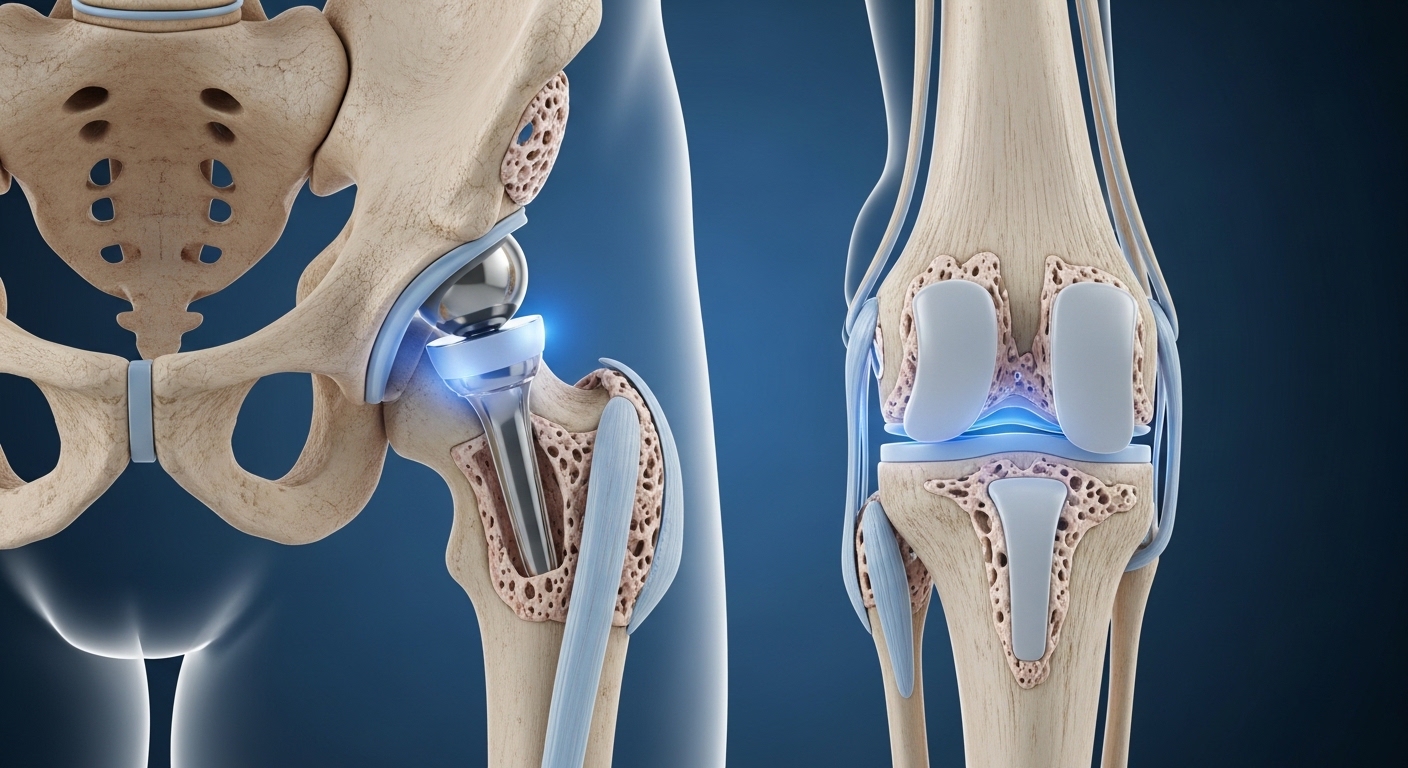
A solution provider needs a portfolio that supports continuity, not gaps. Hospitals want to standardize one platform and keep it stable as case mix changes. Ortonom Medical’s portfolio is designed to support this program approach for both hip and knee pathways.
Ortonom Medical hip systems include:
Ortonom Medical knee systems include:
These lines allow hospitals to plan primary workflows while maintaining continuity when revision capability is needed. The value of this portfolio in Africa is not only the product names. It is the ability to build stable routines around a consistent platform.
A solution mindset for hospitals and surgeons
Hospitals adopt faster when they can visualize how the platform will operate day to day. That means showing how hip and knee programs will be implemented, how inventory will be controlled, and how the hospital will maintain readiness across teams. A solution provider gives the hospital a playbook, not just a quote.
Surgeons care about workflow stability. If trays are complete, sizes are available, and verification steps are consistent, surgeons can focus on technique rather than troubleshooting. When those basics fail, confidence drops quickly even if the implant itself is clinically acceptable. That is why solution positioning must be operational, not only clinical.
A practical way to communicate this is to frame the solution as repeatable routines. The hospital should be able to run the same process in multiple rooms and across multiple shifts. In African markets where hospital groups operate multiple sites, repeatability becomes even more valuable because it protects standardization.
A practical model hospitals can evaluate in one meeting
Hospitals need a simple structure that converts “solution” into measurable elements. The model below keeps the scope limited to hip and knee arthroplasty while covering the core decision drivers procurement teams care about.
| Program element | What the hospital wants | What a solution provider must deliver |
|---|---|---|
| Clinical routine | Repeatable decision points | Clear usage guidance and practical checkpoints |
| OR readiness | No missing sizes no incomplete trays | Core size planning and tray completeness discipline |
| Sterile services stability | Predictable reprocessing and inspection | Tray maps and inspection routines that hold over time |
| Supply continuity | Predictable replenishment | Reorder points cadence and urgent pathway |
| Governance control | Auditability and traceability | Usage capture routine and version discipline |
This model is applicable across the target markets because it focuses on the same operational failure points that disrupt arthroplasty everywhere. It also helps hospitals compare partners without drifting into unrelated medical product categories.
Stock continuity that protects theatre schedules
A solution provider must prevent predictable disruptions. The biggest disruption is running out of core sizes or discovering gaps on surgery day. This is why core size planning is one of the strongest indicators of partner maturity for hip and knee programs.
A stable approach begins with defining a core set based on real usage and expected case volume. It then sets minimum levels, reorder points, and a replenishment cadence that matches hospital activity. Hospitals do not need complicated inventory theory. They need routines that keep critical items available and prevent last minute emergencies.
Hospitals typically expect the following operational controls:
- Defined core size list for hip and knee programs
- Minimum availability rules for high runner items
- Predictable replenishment cadence aligned to volume
- Cycle counts and discrepancy escalation
- Expiry discipline and packaging integrity checks
- Urgent pathway for time sensitive exceptions
Tray discipline and sterile services alignment
Hip and knee programs are instrument intensive. A program becomes fragile when trays are incomplete, when reprocessing routines vary by team, or when inspection habits are inconsistent. Hospitals often underestimate this during evaluation and then face repeated delays once volume increases.
A solution provider supports sterile services with clarity and repeatability. Tray maps must be simple. Labeling must be consistent. Inspection points must be defined so instruments remain reliable. When sterile services teams have stable routines, they stabilize the entire program.
Hospitals also need a structured way to handle exceptions. Missing instruments, damaged parts, or unclear handling rules should trigger a defined escalation routine. When escalation is informal, the same problems repeat. When escalation is disciplined, the program improves and becomes more predictable.
Training support that maintains consistency as teams rotate
Arthroplasty programs succeed when teams share the same language and verification habits. If training is shallow or inconsistent, variability increases across surgeons and OR teams. This variability shows up as inconsistent case flow, uneven verification steps, and more intraoperative friction.
A solution provider supports training in a way that is repeatable, not one time. Hospitals value staged onboarding because it supports first cases and continuity as staff rotates. This is especially important in multi-site environments across Africa where standardization is a strategic goal.
| Training stage | Primary audience | Focus | Practical output |
|---|---|---|---|
| Foundational onboarding | Surgeons OR leads | Shared system language and setup discipline | Workflow overview tray orientation key checkpoints |
| Procedure reinforcement | Surgeons core OR team | Stable routine under pressure | Decision routines troubleshooting verification habits |
| Continuity refresh | Site champions rotating staff | Maintain consistency as teams change | Refresh cadence updates checklist reinforcement |
Where Ortonom Medical fits as a focused healthcare solution provider
Ortonom Medical fits the healthcare solution providers intent by offering a focused arthroplasty platform and a program approach that hospitals can operate. The portfolio supports hip and knee continuity through OrtoHip and OrtoKnee lines, including primary and revision pathways.
Ortonom Medical’s role is to help hospitals in Africa move from evaluation to routine use with controlled risk. That means structuring the relationship around readiness, repeatability, and governance rather than around one off shipments. It also means keeping the message focused on arthroplasty only, so the hospital receives a clear partner identity.
Across South Africa Gauteng, Morocco, Algeria, Egypt, Nigeria, Ghana, Kenya, Tanzania, Libya, Gabon, Senegal, Namibia, Cameroon, Guinea, DRC, and Côte d’Ivoire, the solution story stays consistent: stable hip and knee programs require predictable availability, tray discipline, and repeatable routines.
Closing perspective
Healthcare solution providers can sound general, but in orthopedic arthroplasty it should mean one thing: a partner that makes hip and knee replacement more predictable for hospitals. When the scope stays disciplined, the message becomes stronger and the leads become higher quality.
Ortonom Medical supports that focused definition through its hip and knee portfolio and its program-first adoption mindset. With OrtoHip Bipolar Hip System, OrtoHip Total Hip System, OrtoHip K2 Revision Hip System, OrtoKnee Fixed Knee System, OrtoKnee Mobile Knee System, and OrtoKnee Revision Knee System, hospitals can evaluate a structured arthroplasty platform designed for repeatable program delivery in African healthcare markets.