



Orthopedic Implant Supplier Lagos
Orthopedic Implant Supplier Lagos is an important search for hospital procurement departments, orthopedic surgeons, and medical distributors seeking specialized hip and knee replacement systems in Nigeria. Selecting an orthopedic implant manufacturer requires careful consideration of clinical applications, component compatibility, technical documentation, regulatory compliance, and institutional purchasing requirements. For hospitals performing joint replacement procedures, these factors influence both surgical preparation and long-term procurement planning.
Lagos is one of Nigeria’s major commercial and healthcare centers, with specialist orthopedic facilities, private hospitals, and medical organizations providing advanced surgical services. Institutions evaluating international orthopedic implant manufacturers must consider not only product availability but also Nigeria’s medical device registration requirements, import procedures, and the relationship between surgeons and hospital purchasing committees.
Ortonom Medical manufactures hip and knee prosthesis systems through its specialized OrtoHip and OrtoKnee product portfolios. These include primary and revision implant systems designed for evaluation by orthopedic specialists and institutional healthcare buyers. The company welcomes inquiries from hospitals, orthopedic surgeons, procurement departments, and qualified medical distributors in Lagos interested in discussing technical product requirements and potential purchasing cooperation.
Orthopedic Implant Procurement Opportunities in Lagos Hospitals
Lagos has an established orthopedic healthcare environment that includes specialist hospitals, private medical institutions, and surgical departments involved in joint replacement procedures. For implant manufacturers, understanding this healthcare structure is essential when evaluating the institutional requirements of the Nigerian market.
The National Orthopaedic Hospital Igbobi Lagos is a prominent public orthopedic institution offering specialized services in orthopedic surgery, trauma management, and arthroplasty. Its clinical activities demonstrate the role of specialist orthopedic institutions within Lagos’s healthcare system. Hospitals with these capabilities require structured clinical evaluations and appropriate purchasing arrangements when considering implantable medical devices.
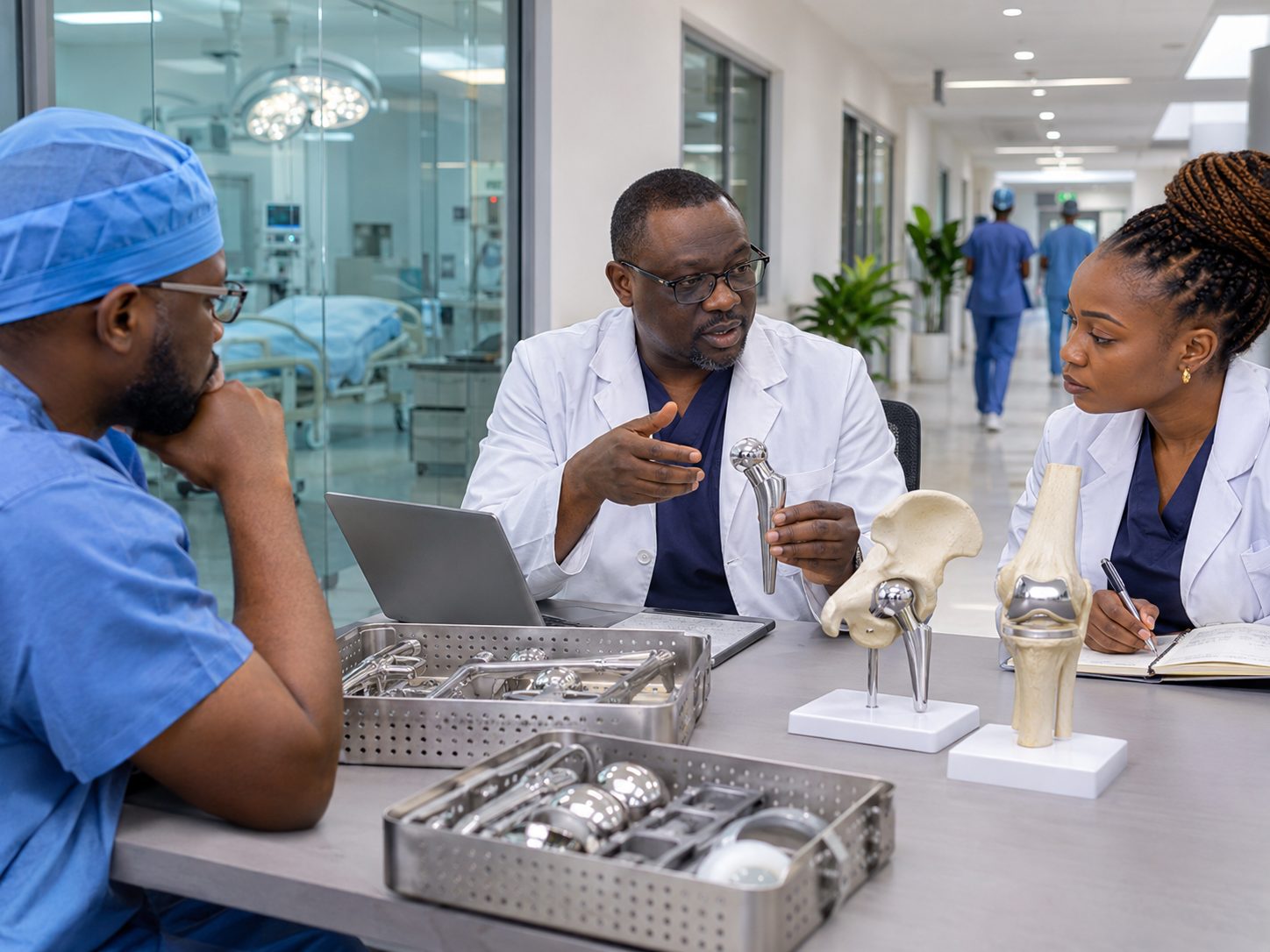
Cedar Crest Hospital in Lagos is another relevant example of orthopedic surgical capacity. Its documented services include orthopedic and trauma surgery, routine arthroplasty, and spinal procedures. Such private healthcare institutions illustrate the importance of specialized surgical services beyond Nigeria’s federal capital.
These institutions are examples of the orthopedic healthcare infrastructure in Lagos and are not presented as existing customers or commercial partners of Ortonom Medical. Their documented activities help explain why orthopedic implant procurement is a relevant institutional topic for the city.
Why Lagos Hospitals Need Specialized Hip and Knee Implant Manufacturers
Hospital purchasing departments must evaluate orthopedic implants according to clinical requirements rather than treating them as ordinary medical consumables. Hip and knee prostheses involve specific components, implant configurations, surgical instruments, and manufacturer instructions that influence the evaluation process.
A manufacturer specializing in orthopedic implants can provide a more focused product portfolio than a general medical equipment supplier. This distinction is especially important for hospital purchasing committees responsible for preparing technical specifications and comparing potential suppliers.
Ortonom Medical concentrates on hip and knee replacement systems rather than unrelated medical equipment categories. This specialization allows purchasing discussions to focus on defined implant families, relevant documentation, surgical instrument requirements, and the possibility of structured institutional supply arrangements.
How Hospital Procurement Departments in Lagos Evaluate Implant Suppliers
Hospital procurement in Lagos involves more than requesting a quotation from an international manufacturer. Purchasing committees must coordinate clinical assessment, supplier qualification, regulatory review, and commercial evaluation before an implant system can be considered for institutional acquisition.
Orthopedic surgeons should establish the clinical requirements of the implant systems under consideration. Their assessment may include intended indications, implant design, component compatibility, available sizes, surgical technique, and instrument requirements. The purchasing department can then use this information to prepare the relevant commercial inquiry.
Nigerian hospitals should also evaluate the responsibilities associated with importing implantable medical devices. These may include registration, documentation, product identification, and the involvement of appropriately qualified local commercial partners.
A structured procurement process helps reduce uncertainty during supplier evaluation and establishes clearer communication between the manufacturer, surgical department, and purchasing committee.
Essential Criteria for Selecting an Orthopedic Implant Manufacturer
| Evaluation criterion | Hospital purchasing consideration |
|---|---|
| Manufacturer specialization | Defined hip and knee replacement portfolio |
| Implant specifications | Clinical indications and component configurations |
| Surgical compatibility | Instruments and trial components |
| Technical documentation | Product information and instructions for use |
| Regulatory compliance | Applicable NAFDAC requirements |
| Product traceability | Implant references and lot identification |
| Purchasing conditions | Quotation procedures and order quantities |
| Import arrangements | Local regulatory and distribution responsibilities |
| Supply planning | Institutional purchasing forecasts |
| Clinical approval | Evaluation by qualified orthopedic surgeons |
These criteria provide a foundation for comparing orthopedic implant suppliers. Hospitals should examine the complete purchasing requirements rather than making decisions based exclusively on product prices.
Ortonom Medical welcomes institutional inquiries concerning its OrtoHip and OrtoKnee systems. Hospitals can identify their required implant categories and request available technical information before proceeding with commercial discussions.
OrtoHip Hip Replacement Systems for Lagos Orthopedic Hospitals
Hip replacement procedures require implant systems selected according to the patient’s clinical condition, surgical indications, and the requirements of the orthopedic specialist. Hospitals evaluating hip implant manufacturers should examine the relevant technical documentation, component configurations, and surgical instrumentation before preparing purchasing specifications.
Ortonom Medical manufactures three principal hip implant families: OrtoHip Bipolar Hip System, OrtoHip Total Hip System, and OrtoHip K2 Revision Hip System. Each family belongs to a different area of hip arthroplasty, allowing hospitals to organize their technical inquiries around the relevant surgical procedures.
For Lagos hospitals developing or maintaining hip replacement services, the distinction between bipolar hip prostheses, total hip replacement systems, and revision implants is important. Purchasing departments should work with orthopedic surgeons to identify the required product categories and components before requesting commercial quotations.
OrtoHip Bipolar Hip System
OrtoHip Bipolar Hip System belongs to the bipolar hip replacement category. Hospitals considering this system should examine its intended clinical applications, component configurations, available size options, and corresponding technical documentation.
Bipolar hip implants require a clinical evaluation that considers the patient’s condition and the intended surgical procedure. The orthopedic surgeon determines whether the implant category is appropriate, while the purchasing department reviews product specifications and institutional requirements.
Lagos healthcare organizations interested in bipolar hip prostheses can contact Ortonom Medical to request information about the OrtoHip Bipolar Hip System and discuss potential purchasing requirements.
OrtoHip Total Hip System
OrtoHip Total Hip System is part of Ortonom Medical’s total hip replacement portfolio. Hospitals evaluating this product family should review the relevant femoral and acetabular components, implant configurations, fixation considerations, and surgical instrument requirements.
Total hip arthroplasty programs require coordination between the surgeon’s clinical preferences and the purchasing department’s technical specifications. This coordination is particularly important when hospitals introduce a new implant system into an established surgical program.
Ortonom Medical welcomes technical and commercial inquiries regarding the OrtoHip Total Hip System from orthopedic departments and institutional buyers in Lagos.
OrtoHip K2 Revision Hip System
Revision hip arthroplasty involves replacing or reconstructing components of a previously implanted hip system. These procedures may require additional planning because of existing implants, altered bone structures, and patient-specific surgical requirements.
OrtoHip K2 Revision Hip System belongs to Ortonom Medical’s revision hip implant portfolio. Hospitals considering revision systems should assess the intended indications, component requirements, technical documentation, and applicable instrumentation.
Specialist orthopedic teams can request information about the OrtoHip K2 Revision Hip System when evaluating products for their revision arthroplasty programs. The final selection must follow the appropriate clinical assessment and the manufacturer’s instructions for use.
OrtoKnee Knee Replacement Systems for Lagos Hospitals
Knee replacement implant procurement requires an understanding of implant design, component compatibility, and surgical preparation. Hospitals evaluating a knee replacement manufacturer should distinguish between primary and revision procedures and identify the relevant product characteristics before preparing an institutional purchasing request.
Ortonom Medical manufactures three knee implant families: OrtoKnee Fixed Knee System, OrtoKnee Mobile Knee System, and OrtoKnee Revision Knee System. These systems provide different categories of knee arthroplasty products for evaluation by orthopedic surgeons and hospital purchasing departments.
For healthcare organizations in Lagos, the selection process should begin with the orthopedic department’s clinical requirements. Purchasing teams can subsequently request technical documentation, component information, and commercial proposals corresponding to those requirements.
OrtoKnee Fixed Knee System
OrtoKnee Fixed Knee System belongs to the fixed-bearing knee replacement category. Its evaluation should consider the implant’s intended applications, component configurations, technical characteristics, and surgical instrument requirements.
Orthopedic surgeons should determine whether a fixed-bearing knee system corresponds to the procedure being considered. Hospital purchasing departments can then identify the necessary components and prepare a detailed procurement inquiry.
Ortonom Medical provides a defined product family for hospitals interested in evaluating fixed-bearing knee replacement systems.
OrtoKnee Mobile Knee System
OrtoKnee Mobile Knee System belongs to the mobile-bearing knee arthroplasty category. Hospitals considering this type of implant should examine the manufacturer’s technical documentation, intended clinical applications, and associated component configurations.
The distinction between mobile-bearing and fixed-bearing designs should be addressed during clinical evaluation rather than treated solely as a commercial preference. Surgeons must determine which design is appropriate for the intended procedure.
Purchasing departments in Lagos can request information about OrtoKnee Mobile Knee System when preparing technical assessments or institutional quotations.
OrtoKnee Revision Knee System
Revision knee arthroplasty may involve additional clinical and technical considerations compared with primary knee replacement. Orthopedic departments should evaluate the implant requirements, component compatibility, and relevant instrumentation according to the procedure being planned.
OrtoKnee Revision Knee System represents Ortonom Medical’s dedicated revision knee implant family. Hospitals interested in revision arthroplasty systems can request available technical information and evaluate the products through qualified orthopedic specialists.
Institutional purchasing should follow clinical assessment and confirmation of the relevant product, regulatory, and commercial requirements.
Ortonom Medical Hip and Knee Implant Portfolio
A clearly organized implant portfolio can help hospital purchasing departments prepare more accurate requests for quotations. When orthopedic surgeons and procurement representatives use consistent product categories, the manufacturer can better understand the information required for technical evaluation.
Ortonom Medical’s product portfolio focuses exclusively on hip and knee replacement systems. Its six product families cover bipolar hip replacement, total hip replacement, revision hip arthroplasty, fixed-bearing knee replacement, mobile-bearing knee replacement, and revision knee arthroplasty.
This specialized structure is relevant for Lagos hospitals evaluating manufacturers with a defined orthopedic implant focus.
| Product system | Implant category | Hospital evaluation focus |
|---|---|---|
| OrtoHip Bipolar Hip System | Bipolar hip replacement | Component selection and clinical indications |
| OrtoHip Total Hip System | Total hip arthroplasty | Femoral and acetabular system assessment |
| OrtoHip K2 Revision Hip System | Revision hip replacement | Revision-specific technical requirements |
| OrtoKnee Fixed Knee System | Fixed-bearing knee replacement | Primary knee implant evaluation |
| OrtoKnee Mobile Knee System | Mobile-bearing knee replacement | Design and component compatibility |
| OrtoKnee Revision Knee System | Revision knee replacement | Revision implant and instrument requirements |
This comparison provides a general product overview for institutional evaluation. Clinical suitability, product availability, and regulatory status must be verified separately before purchasing decisions are made.
NAFDAC Requirements for Orthopedic Implant Importation in Nigeria
Medical device regulation is a central consideration for hospitals and distributors evaluating international orthopedic implant manufacturers in Nigeria. Hip and knee implants are implantable medical devices, making regulatory compliance an essential part of any potential purchasing arrangement.
The National Agency for Food and Drug Administration and Control, commonly known as NAFDAC, regulates medical devices in Nigeria. Its medical device registration guidelines establish requirements for products entering the Nigerian market, including relevant registration procedures and supporting documentation.
Hospitals and distributors should not assume that a product authorized for use in another country is automatically approved for importation or sale in Nigeria. The applicable NAFDAC status and requirements must be verified for each relevant implant system before commercial importation or clinical use.
What Documents May Be Required for Imported Orthopedic Implants?
Institutional buyers and potential importers should review the applicable Nigerian medical device guidelines before proceeding with international purchases. Depending on the product and regulatory pathway, the documentation and administrative process may involve:
- Product identification and technical specifications
- Manufacturer and product information
- Applicable regulatory registration documents
- Product labeling and instructions for use
- Relevant conformity and quality documentation
- Information concerning product sterilization
- Authorized importer or local representative details where required
- Product registration and import authorization requirements
- Appropriate packaging and traceability information
The precise documentation requirements depend on the regulatory classification, product registration pathway, and applicable NAFDAC procedures.
Ortonom Medical can be contacted regarding available product documentation for its OrtoHip and OrtoKnee systems. Any prospective Nigerian buyer or distribution partner must independently verify the regulatory steps necessary before the products can be imported, marketed, or used in Nigeria.
How Private Hospitals in Lagos Can Plan Orthopedic Implant Purchases
Private hospitals may organize orthopedic implant procurement according to their clinical programs, internal purchasing policies, financial planning, and established supplier evaluation procedures. Unlike a general medical equipment order, implant purchasing requires close coordination between clinical and administrative teams.

For hospitals performing hip and knee replacement procedures, procurement planning can begin with a review of anticipated surgical activity. Orthopedic departments may identify the systems required for primary procedures, the potential need for revision implants, and the component configurations appropriate for evaluation.
The purchasing department can then consider inventory capacity, order quantities, regulatory documentation, instrument requirements, and proposed delivery arrangements. A structured approach helps ensure that commercial discussions are based on actual clinical needs.
Preparing an Institutional Purchasing Forecast
A hospital purchasing forecast should reflect more than the total number of expected procedures. Orthopedic implant procurement also depends on the specific systems requested, the range of components needed, and the institution’s approach to maintaining appropriate inventory.
Hospitals should distinguish between recurring requirements for primary hip and knee arthroplasty and less predictable revision procedures. These categories may require different product configurations and procurement planning.
A manufacturer can evaluate a commercial inquiry more effectively when the hospital provides a clear purchasing forecast, subject to clinical approval and confirmation of applicable product availability.
Implant Traceability and Surgical Instrument Compatibility
Product traceability is an important consideration in orthopedic implant procurement. Hospitals must maintain appropriate records of the implantable devices they purchase, store, and use, according to their clinical procedures and applicable regulations.
Implant identification may involve product references, lot or serial numbers where applicable, labeling information, and records connecting the implant to the relevant surgical documentation. Purchasing departments should coordinate with hospital inventory and clinical teams to establish the necessary processes.
Surgical instrument compatibility is equally important. Hip and knee replacement systems require instruments appropriate to their design and intended procedures. Hospitals should verify instrument requirements before adopting a new implant system.
Why Instrument Planning Matters for Lagos Orthopedic Departments
Orthopedic surgeons need to understand the surgical techniques and instruments associated with the selected implant systems. Relevant considerations may include trial components, preparation tools, instrument trays, and sterilization requirements.
Purchasing departments should examine whether the necessary instruments are available and identify any additional arrangements that must be discussed with the manufacturer or a qualified distribution partner.
For Ortonom Medical products, hospitals can request information regarding the instrument requirements associated with the selected OrtoHip and OrtoKnee systems. Clinical teams and procurement representatives should review the information together before implementation.
Bulk Hip and Knee Implant Purchasing for Lagos Hospital Groups
Hospital groups managing multiple facilities or recurring arthroplasty programs may consider consolidated implant purchasing. Bulk purchasing can support structured procurement planning when the requested products correspond to the hospital’s actual surgical requirements.
The first step is to identify the implant systems used or under consideration across the relevant orthopedic departments. Purchasing teams should evaluate expected procedure volumes, component specifications, inventory capacity, and institutional ordering practices.
Bulk purchasing should not be based exclusively on obtaining a lower unit price. Hospitals must also consider whether the selected implant configurations are clinically appropriate, whether stock levels are manageable, and whether the necessary documentation and instruments are available.
Information for a Hospital Implant Quotation
Healthcare organizations in Lagos can prepare a detailed quotation inquiry containing the following information:
- Hospital or healthcare organization name
- Lagos facility location
- Procurement department contact information
- Required OrtoHip or OrtoKnee systems
- Estimated order quantities
- Implant categories and component specifications
- Primary or revision arthroplasty requirements
- Technical documentation requests
- Surgical instrument information requirements
- Expected purchasing schedule
- Nigerian regulatory and import considerations
- Preferred communication arrangements
Providing this information allows the manufacturer to evaluate the inquiry according to the products and commercial requirements involved.
Ortonom Medical welcomes requests for quotations and technical discussions concerning its specialized hip and knee implant portfolio. Product availability, pricing, regulatory feasibility, and delivery arrangements must be confirmed before any purchasing agreement.
Orthopedic Implant Distribution Partnerships in Lagos
Medical distributors specializing in orthopedic implants may play an important role in the relationship between international manufacturers and Nigerian healthcare institutions. Distribution cooperation involves understanding hospital purchasing requirements, technical product information, import regulations, and the responsibilities associated with supplying implantable medical devices.
Lagos offers a relevant environment for discussions with distributors serving private hospitals and specialist orthopedic departments. However, the existence of surgical activity does not automatically establish product demand or commercial opportunities for a particular manufacturer. Each potential relationship requires market-specific evaluation.
Ortonom Medical’s portfolio is focused on hip and knee prosthesis systems rather than general medical equipment. Distributors interested in orthopedic arthroplasty products can therefore evaluate a clearly defined product category.
What Should Nigerian Orthopedic Distributors Evaluate?
Potential distribution partners should examine the implant systems, available technical information, applicable regulatory status, and the purchasing requirements of the institutions they intend to serve.
Distributors must also clarify their responsibilities regarding registration, importation, product storage, documentation, and customer communication. These issues should be addressed before negotiating contractual arrangements.
Ortonom Medical welcomes inquiries from qualified orthopedic distribution organizations interested in exploring potential cooperation in Lagos and other Nigerian healthcare markets.
Long-Term Orthopedic Implant Procurement for Nigerian Hospitals
Hospitals with established joint replacement programs may explore longer-term purchasing arrangements when they anticipate recurring requirements for hip and knee implants. A structured agreement can define the product families involved, expected purchasing volumes, ordering procedures, and commercial responsibilities.
Before considering such arrangements, hospitals should review their clinical demand, available storage capacity, applicable procurement policies, and regulatory obligations. They should also confirm how instrument requirements, documentation, and future product inquiries would be handled.

Long-term procurement planning can be especially relevant for hospital groups and specialized orthopedic institutions seeking a consistent purchasing process. However, the appropriate agreement structure will vary according to each organization’s needs and the applicable commercial conditions.
Ortonom Medical is open to discussing potential institutional cooperation with Nigerian hospitals and qualified distribution partners. Any agreement remains subject to clinical suitability, product availability, regulatory compliance, and mutually accepted contractual terms.
How Lagos Hospitals Can Request Hip and Knee Implant Quotations
An effective hospital quotation begins with a clear definition of the required implant systems. Purchasing departments should identify the relevant hip or knee product families, provide estimated quantities, and explain any technical or documentation requirements associated with the intended procurement.
Orthopedic surgeons can support this process by confirming the implant categories appropriate for their clinical programs. Hospital administrators and procurement representatives can then assess the commercial conditions and regulatory requirements involved.
Ortonom Medical manufactures six dedicated hip and knee implant systems through its OrtoHip and OrtoKnee portfolios. Hospitals and medical distributors in Lagos can contact the company to request technical product information and explore potential commercial arrangements.
Why Lagos Healthcare Organizations Can Contact Ortonom Medical
Lagos has an established orthopedic healthcare environment that includes specialist surgical institutions and private hospitals providing arthroplasty services. These clinical activities create a relevant context for evaluating manufacturers specializing in hip and knee replacement systems.
Ortonom Medical offers a focused orthopedic implant portfolio rather than a broad catalog of unrelated medical devices. Its OrtoHip and OrtoKnee systems provide a defined starting point for discussions involving orthopedic surgeons, hospital procurement departments, and medical distributors.
Healthcare organizations in Lagos interested in evaluating hip and knee implant systems can contact Ortonom Medical to discuss product specifications, documentation requirements, and institutional purchasing needs. Any proposed cooperation must satisfy the relevant clinical, regulatory, and commercial requirements.