



Arthroplasty Surgeon Supplier
Across many African countries, the demand for reliable joint replacement solutions is rising as life expectancy increases, trauma cases remain prevalent, and degenerative joint diseases become more frequently diagnosed. In this environment, choosing the right arthroplasty surgeon supplier is no longer a procurement formality; it is a clinical decision that directly affects surgical outcomes, patient recovery, and hospital reputation.
Orthopedic surgeons who perform hip and knee replacements depend on more than implants alone. They require a complete, predictable ecosystem: precision-engineered components, compatible instrument sets, sterile logistics, and technical continuity from the first case onward. Hospitals, in turn, need a partner that understands surgical workflow as well as international trade, documentation, and after-sales support.
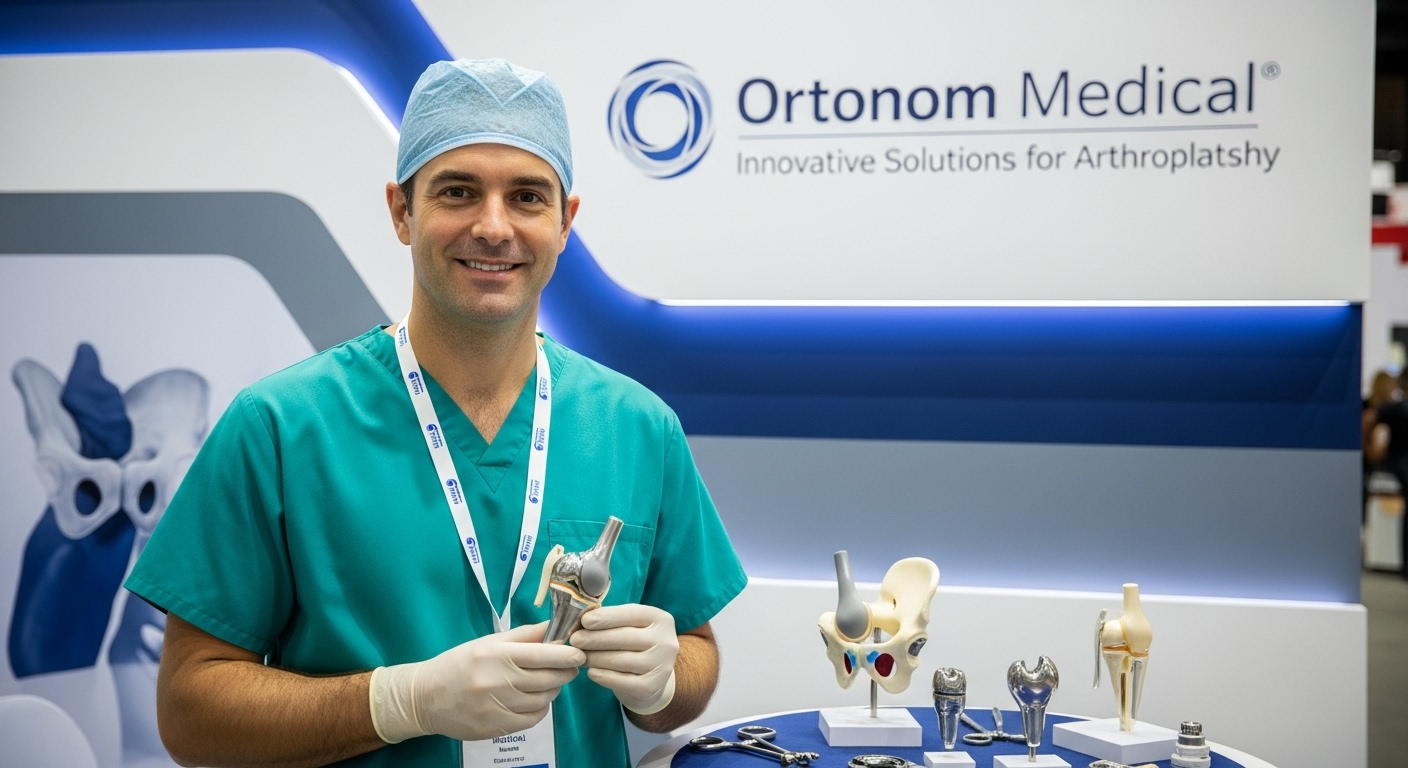
This is where Ortonom Medical positions itself—not merely as an implant exporter, but as a long-term arthroplasty partner for surgeons and healthcare institutions across Africa.
What Defines a True Arthroplasty Surgeon Supplier?
An authentic arthroplasty surgeon supplier does not operate like a generic medical trader. The relationship begins in the operating room, not in a catalog. Surgeons expect implant geometry that matches anatomical realities, instruments that feel intuitive in hand, and sets that reduce operative time rather than complicate it.
Equally important is standardization. When implant systems are consistent across cases, surgical teams gain confidence, sterilization cycles become predictable, and inventory management becomes simpler. This consistency is especially critical for hospitals managing high patient volumes with limited resources.
A qualified supplier must also understand regulatory pathways, import documentation, and sterilization validation. African hospitals cannot afford delays at customs or incomplete paperwork that holds critical surgical stock for weeks.
Finally, education and communication matter. Surgeons and OR teams need direct, responsive technical support. This is what separates a box-moving distributor from a true arthroplasty partner.
The Needs of African Hospitals Performing Joint Replacement
African healthcare systems are expanding orthopedic capacity rapidly. From North Africa to Sub-Saharan regions, hospitals are investing in joint replacement units to reduce patient travel abroad and to strengthen local surgical capability.
However, these hospitals often face common constraints:
-
Limited budgets for premium Western brands
-
Long lead times from distant suppliers
-
Inconsistent instrument compatibility
-
Lack of technical training on new systems
An ideal arthroplasty surgeon supplier for Africa must therefore balance quality, affordability, availability, and training in a single package.
This balance is precisely where Turkish orthopedic manufacturing has become a strategic advantage for African healthcare institutions.
Why Türkiye Has Become a Strategic Source for Arthroplasty Implants
Türkiye has emerged as one of the most important manufacturing hubs for orthopedic implants due to its advanced CNC machining capability, metallurgical expertise, and strict quality standards aligned with international certifications.
Manufacturers operate with titanium and cobalt-chrome alloys under validated production protocols. Surface treatments, polishing, and coating processes are controlled to ensure biocompatibility and longevity inside the human body.
For African buyers, Türkiye offers an additional benefit: logistical proximity. Shipping times are significantly shorter than from the US or Far East, and trade documentation is more adaptable to regional import procedures.

As a Turkish exporter dedicated to orthopedics, Ortonom Medical leverages this manufacturing strength to supply surgeons with dependable arthroplasty systems without the cost burden of multinational brands.
Complete Arthroplasty Systems: Implants + Instruments + Sterile Logistics
A recurring problem for hospitals is receiving implants from one source and instrument sets from another. This fragmentation causes sterilization conflicts, tray mismatches, and surgical delays.
A professional arthroplasty surgeon supplier provides:
| Component | Requirement in Surgery | Ortonom Medical Approach |
|---|---|---|
| Femoral & tibial components | Anatomical compatibility | Precision CNC manufacturing with size range continuity |
| Acetabular cups & liners | Secure fixation & articulation | Multiple diameter options with validated locking systems |
| Instrument trays | Workflow efficiency | Complete, labeled, sterilization-ready sets |
| Sterile packaging | Infection control | Individually packed, traceable labeling |
| Documentation | Import & hospital compliance | Full export, CE, and sterilization records |
This integrated supply model reduces surgical risk and simplifies hospital operations.
Supporting Surgeons Beyond the First Shipment
For a true arthroplasty surgeon supplier, responsibility begins after the first delivery. The real evaluation of an implant system happens when surgeons perform multiple consecutive cases and start to assess sizing transitions, instrument ergonomics, tray logic, and intraoperative efficiency under routine conditions.
At this stage, the supplier’s role expands from logistics to surgical continuity. Monitoring monthly case volumes, forecasting size consumption, and planning proactive replenishment become essential. In many African countries, where import timelines can be unpredictable, any delay in restocking can directly disrupt surgical schedules.
Ortonom Medical works closely with partner hospitals to track implant usage patterns and establish forward-looking reorder plans. This ensures that surgeons can approach every case with the same confidence as the first one, without concern for availability.
Additionally, detailed instrument maps, sizing charts, and tray configuration guides are provided to operating room teams. This technical clarity accelerates adaptation and builds long-term surgical trust in the system.
Quality Assurance, Traceability, and Sterility
In arthroplasty, quality assurance extends far beyond manufacturing. Every implant must be traceable from raw material sourcing to the sterile package entering the operating room. This level of traceability is critical for hospital compliance, audits, and national health authority requirements.
Batch numbers, alloy certifications, production dates, and sterilization validation records form part of the standard documentation expected from a professional arthroplasty surgeon supplier. These records protect hospitals in case of inspections and reinforce clinical accountability.

Sterile packaging is performed under cleanroom conditions, with labeling designed to remain intact and legible even in long-term storage and warm climate environments common across many African regions.
Ortonom Medical provides implants that arrive fully documented, sterile, and ready for immediate surgical use—aligned with modern hospital quality protocols.
Long-Term Partnership Model for African Distributors and Hospitals
Sustainable orthopedic supply cannot rely on one-time transactions. Especially in African markets, success depends on building long-term partnerships with local distributors and direct hospital relationships.
In this model, local distributors manage regional communication and logistics, while the manufacturer provides continuous technical backing, product consistency, and documentation support. Hospitals benefit from fast local response combined with direct manufacturer reliability.
Ortonom Medical operates through this hybrid partnership structure across Africa. Distributors are supported with stable product flow and technical knowledge, while hospitals experience faster procurement cycles and dependable communication.
This structure creates a regional orthopedic ecosystem rather than a simple trade channel.
Advantages for Hospitals Choosing the Right Arthroplasty Surgeon Supplier
Hospitals working with a specialized arthroplasty surgeon supplier quickly observe operational improvements. Surgical preparation time decreases, instrument mismatches are eliminated, and inventory planning becomes more predictable.
Surgeons perform procedures with greater speed and confidence when using a consistent implant system. Operating room teams become familiar with tray organization, leading to standardized workflows and reduced procedural errors.
Cost management also improves. Hospitals gain access to high-quality implant systems without the financial burden of multinational brand pricing, enabling treatment of more patients within existing budgets.
These advantages translate directly into both clinical success and institutional efficiency.
A Reliable Arthroplasty Future for Africa
Across Africa, joint replacement is no longer an exceptional procedure performed in a few reference centers. It is becoming a routine orthopedic solution in public hospitals, private clinics, and regional surgical units that are determined to treat patients locally rather than referring them abroad. This transformation places a new level of responsibility on hospitals: they must work with an arthroplasty surgeon supplier that understands surgery, logistics, documentation, and long-term continuity as a single system.
For surgeons, implant performance is evaluated inside the operating room under real conditions—bone quality variations, time pressure, limited staff, and sterilization cycles that must run flawlessly. A supplier who only focuses on selling components cannot meet these realities. What surgeons need is a partner that ensures consistent sizing logic, intuitive instrument sets, reliable stock availability, and technical clarity from the first case to the hundredth.

Hospitals, on the other hand, evaluate a supplier through operational stability. Can the same implant sizes be reordered without delay? Are the instrument trays always compatible? Do the sterilization labels remain readable after months in storage? Are CE documents, batch traceability, and export papers always complete and ready for inspection? These questions define whether arthroplasty programs grow smoothly or struggle with interruptions.
This is where Ortonom Medical establishes its role for African healthcare institutions. By combining Türkiye’s advanced orthopedic manufacturing capability with disciplined export logistics and surgical-oriented system design, Ortonom Medical supplies not just implants, but a dependable arthroplasty workflow that hospitals and surgeons can rely on over time.
The result is practical and measurable: surgeons operate with familiar systems, operating rooms function with standardized trays, procurement teams manage predictable inventories, and hospitals expand their joint replacement capacity without being constrained by cost or supply uncertainty.
A reliable arthroplasty future for Africa is not built on products alone. It is built on surgical understanding, documentation discipline, sterile logistics, and uninterrupted partnership.
 Ortonomy refers to the study and application of principles related to the proper function and structure of systems, especially in biological or technological contexts. In medical terms, it often refers to the alignment and balance of body structures.