



Hip Arthroplasty Manufacturers
Hip arthroplasty manufacturers are judged by African hospitals in a very practical way. The question is not only whether the implant looks good on paper. The question is whether the manufacturer can support a hip program that runs on schedule, keeps core sizes available, and stays consistent across surgeons, teams, and sites. When a hospital is preparing an agreement, reliability is the currency that matters.
Hip arthroplasty manufacturers also get evaluated on how well they reduce operational friction. A single missing size, a delayed component, or an incomplete instrument set can disrupt a full operating list and damage patient experience. In premium African markets, that disruption is expensive and visible. Hospitals want partners that prevent predictable failures instead of reacting to them repeatedly.
Ortonom Medical focuses strictly on hip and knee arthroplasty for African hospitals. This article stays within that scope and explains how agreements are won by combining a clear product portfolio with program-ready execution that hospitals can standardize and scale.
What hospitals really mean when they ask for a manufacturer partner
Hospitals do not sign agreements for implants alone. They sign for a system that protects theatre schedules, supports consistent technique, and gives procurement auditable routines. When committees ask for a hip arthroplasty manufacturer, they are asking who will make the program stable under real operating pressure.
In practical terms, hospitals want clarity on core items, replenishment cadence, traceability routines, and escalation when exceptions appear. If these points are vague, procurement slows because program risk looks uncontrolled. If these points are clear, hospitals move faster because readiness is visible before the first case.
Multi site organizations amplify this requirement. If one site runs differently from another, variability multiplies and governance becomes difficult. A manufacturer that can present a repeatable operating model makes it easier for groups to standardize hip arthroplasty across facilities.
Africa target markets and how to use country specificity correctly
Country specificity is not a marketing trick, it is an operational signal. Hospitals search differently in South Africa Gauteng than they do in Morocco or Egypt because logistics corridors, procurement habits, and private hospital concentration differ. Addressing countries directly improves both search relevance and commercial credibility.
Ortonom Medical targets partnerships across South Africa Gauteng, Morocco, Algeria, Egypt, Nigeria, Ghana, Kenya, Tanzania, Libya, Gabon, Senegal, Namibia, Cameroon, Guinea, DRC, and Côte d’Ivoire. These markets represent a mix of high-volume hubs, governance-driven procurement environments, and fast-scaling private networks where program stability is a competitive advantage.

A useful way to avoid country-name spam is to attach country groups to the hospital priorities that actually drive agreements. North Africa markets such as Morocco, Algeria, Egypt, and Libya often emphasize standardization and auditable routines. Southern Africa markets such as South Africa Gauteng and Namibia often emphasize schedule protection and responsiveness. West Africa markets such as Nigeria, Ghana, Senegal, Côte d’Ivoire, and Guinea often emphasize scaling without disruption. East and Central Africa markets such as Kenya, Tanzania, Cameroon, DRC, and Gabon often emphasize readiness and predictable execution while capacity expands.
| Hub grouping | Target markets | Typical hospital priority | Agreement proof point |
|---|---|---|---|
| Southern Africa | South Africa Gauteng, Namibia | Theatre schedule protection | Core size availability and fast escalation |
| North Africa | Morocco, Algeria, Egypt, Libya | Governance and standardization | Auditable routines and version discipline |
| West Africa | Nigeria, Ghana, Senegal, Côte d’Ivoire, Guinea | Scale without chaos | Repeatable model across sites |
| East Africa | Kenya, Tanzania | Program readiness as volume grows | Simple routines teams can run daily |
| Central Africa | Cameroon, DRC, Gabon | Consistent execution under constraints | Predictable support and continuity |
Ortonom Medical portfolio for hip arthroplasty agreements
Hospitals prefer hip arthroplasty manufacturers that offer continuity across primary and revision pathways. They do not want to change vendors when case complexity evolves. They also want fewer vendor relationships, because every additional vendor increases variability in instruments, routines, and reporting.
Ortonom Medical hip systems include OrtoHip Bipolar Hip System, OrtoHip Total Hip System, and OrtoHip K2 Revision Hip System. This trio supports a hospital program approach where routine coverage is established first and revision readiness is not an afterthought. For agreement discussions, this matters because hospitals can plan a stable pathway instead of patching procurement later.
Ortonom Medical also maintains a complementary knee portfolio that many hospitals value when they build a complete arthroplasty service line. OrtoKnee Fixed Knee System, OrtoKnee Mobile Knee System, and OrtoKnee Revision Knee System support knee program continuity. Even when the agreement is hip-first, many African hospitals prefer a partner that can align hip and knee governance and supply routines under one consistent framework.
Agreement architecture hospitals accept without friction
Hospitals accept agreements that are simple enough to run daily and strict enough to audit. If the model is complex, it breaks in practice. If it is vague, it becomes risky. The best hip arthroplasty manufacturer agreements define core availability rules, replenishment cadence, traceability routines, and an urgent pathway that prevents theatre disruption.
A strong agreement usually clarifies responsibilities across procurement, OR leadership, sterile services, and the supplier partner. Storage control, cycle counting, discrepancy resolution, and expiry handling must be defined as routine steps, not as ad hoc decisions. This is particularly important in Egypt, Morocco, and Algeria where internal governance and reporting often influence approval.
Hospitals also want predictable behavior when reality changes. The agreement should define how urgent exceptions are handled, how fast response is expected, and how replenishment adapts when volume rises. These elements are central across the full target set, from South Africa Gauteng and Nigeria to Kenya, Tanzania, Senegal, Côte d’Ivoire, Cameroon, DRC, Gabon, Libya, Guinea, and Namibia.
| Agreement building block | What hospitals want | What the manufacturer must show |
|---|---|---|
| Core size rules | No stockouts on planned lists | Minimum levels and reorder points |
| Replenishment cadence | Predictable weekly operations | Fixed cadence and lead time clarity |
| Traceability routine | Auditability without slowing the OR | Simple usage capture and reporting |
| Set readiness discipline | No missing items on surgery day | Completeness checks and escalation |
| Exception pathway | No chaos during urgent needs | Defined escalation and response expectations |
Supply discipline that prevents cancelled lists
Hip arthroplasty programs fail operationally when supply is treated as secondary. In reality, supply continuity is one of the strongest drivers of surgeon confidence and patient scheduling reliability. Hospitals in high-throughput hubs like South Africa Gauteng, Egypt, and Nigeria often feel disruptions immediately because theatre schedules are tight and rescheduling is costly.
A disciplined model begins with a core set aligned to real case volume. The hospital and partner define which sizes must be continuously available, how stock is counted, and when replenishment triggers. The goal is to reduce emergency purchasing and protect planned lists. This is valuable across Morocco, Algeria, and Libya where governance discipline often rewards predictable routines, and it is equally valuable across Ghana, Senegal, Côte d’Ivoire, and Guinea where fast scaling can expose weaknesses quickly.
Hospitals typically look for the following operational controls from hip arthroplasty manufacturers and their local partners:
- Defined core size list for hip programs and minimum availability rules
- Reorder points aligned to usage and expected case volume
- Predictable replenishment cadence and lead time commitments
- Routine cycle counts and discrepancy escalation
- Expiry discipline and packaging integrity checks
- Urgent pathway for time sensitive exceptions
Instrument readiness and sterile services alignment
Hip programs are not stable if instruments are not stable. Even strong implants fail at the program level when sets are incomplete, reprocessing routines vary between teams, or inspection habits are inconsistent. Hospitals often discover this after adoption begins, which is why experienced committees now ask early questions about instrument readiness.
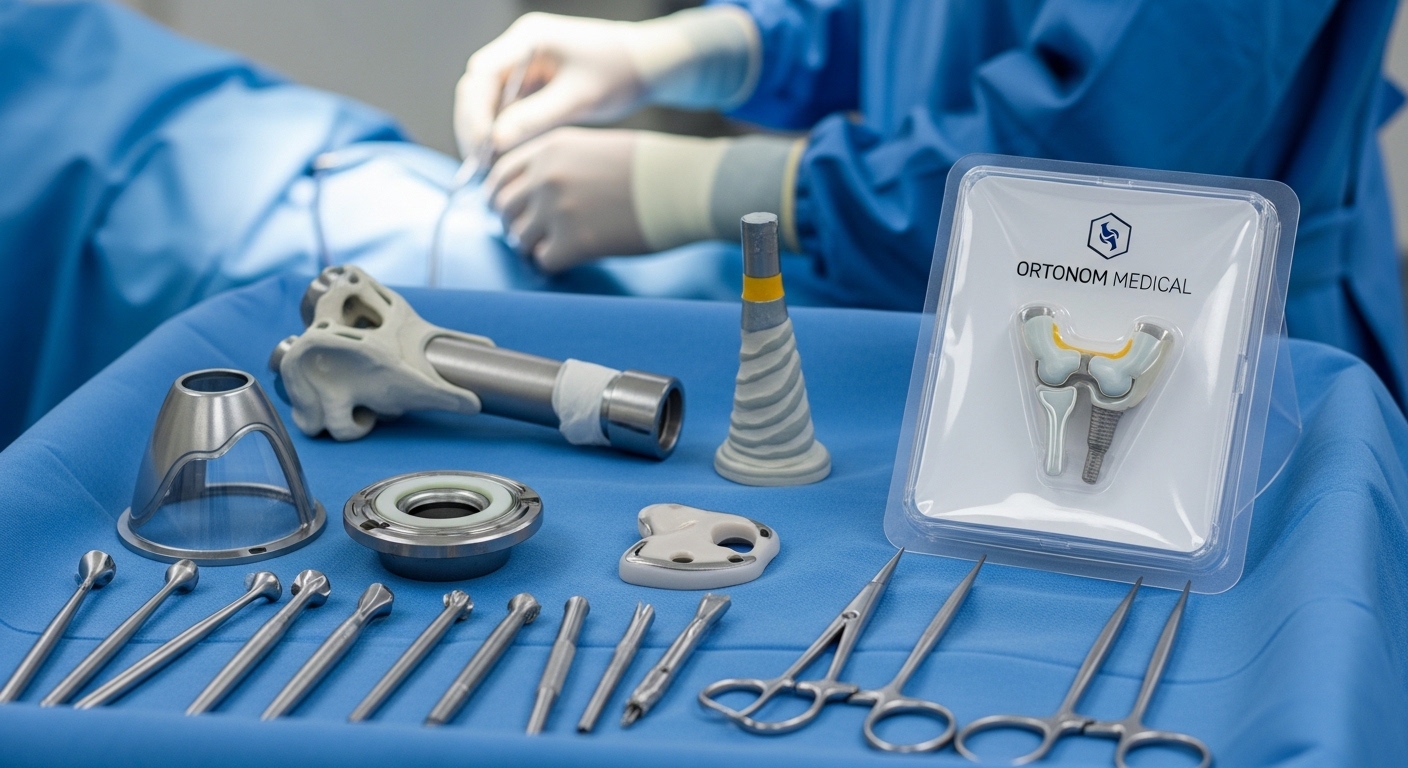
A mature approach supports sterile services with repeatable logic. Tray maps must be clear. Labeling must be consistent. Inspection points must be defined so worn or damaged items are detected early. When sterile services routines are stable, the entire hip pathway becomes more predictable and theatre delays reduce.
Hospitals also need a structured loop for exceptions. Missing items, damaged instruments, or unclear handling rules must trigger an escalation routine that leads to correction and prevention. If escalation is informal, the same disruptions recur. If escalation is disciplined, the program improves, which is exactly what multi site groups in Egypt, Morocco, Algeria, Nigeria, and Kenya require as they standardize.
Clinical enablement that supports surgeons without slowing theatres
Hospitals do not want training that feels like a disruption. They want enablement that makes teams faster, safer, and more consistent. For hip arthroplasty manufacturers, clinical enablement is most persuasive when it is tied to readiness routines and verification habits that protect outcomes under pressure.
Surgeons typically value predictable decision points and consistent workflows across cases. OR teams value clear setup routines and verification habits. Sterile services teams value repeatable reprocessing and inspection routines. When enablement is structured around shared language and checkpoints, variability decreases and adoption becomes easier.
Hospitals often prefer a staged approach that supports early cases and then maintains consistency as staff rotates. This matters in fast-scaling markets like Nigeria, Ghana, and Kenya, and it is equally important in governance-driven environments like Egypt, Morocco, Algeria, and Libya.
| Enablement stage | Primary audience | Operational purpose | Outcome hospitals can measure |
|---|---|---|---|
| Program onboarding | Surgeons OR leads | Shared language and setup discipline | Fewer first-case delays |
| Early-case stabilization | Core OR team | Repeatable verification habits | Reduced intraoperative disruptions |
| Continuity refresh | Site champions rotating staff | Maintain routine as teams change | Stable performance over time |
How hospitals can request a quotation in a way that speeds approval
Hospitals often lose time by requesting quotes without clarifying program scope. A better approach is to request a quotation that reflects real operating needs. This makes the response more useful for committees and reduces back-and-forth before agreement.
A quotation request that supports faster approval usually includes the expected monthly case volume, the initial core size strategy, and whether the hospital is single-site or multi-site. It also clarifies the preferred supply model and the expected cadence of replenishment. These details are particularly useful for hospital groups in Egypt, Morocco, Algeria, and South Africa Gauteng, and for fast-scaling providers in Nigeria, Kenya, Tanzania, Ghana, Senegal, Côte d’Ivoire, and Cameroon.
To keep the request simple and operational, hospitals can include:
- Estimated hip arthroplasty case volume and start timeline
- Preferred pathway coverage including primary and revision readiness
- Desired core size availability rules and replenishment cadence
- Traceability and reporting expectations for governance
- Contact points for OR leadership and sterile services alignment
Closing perspective for African hospital agreements
Hip arthroplasty manufacturers win African hospital agreements by proving program stability, not by repeating generic product claims. Hospitals across South Africa Gauteng, Morocco, Algeria, Egypt, Nigeria, Ghana, Kenya, Tanzania, Libya, Gabon, Senegal, Namibia, Cameroon, Guinea, DRC, and Côte d’Ivoire want predictable weekly delivery with controlled risk and a partner that can standardize routines.
Ortonom Medical supports that outcome with a focused hip and knee portfolio and a program-first approach to adoption. With OrtoHip Bipolar Hip System, OrtoHip Total Hip System, OrtoHip K2 Revision Hip System, OrtoKnee Fixed Knee System, OrtoKnee Mobile Knee System, and OrtoKnee Revision Knee System, hospitals can evaluate an arthroplasty partnership designed for repeatable routines, auditable governance, and long-term reliability.