



Bulk Medical Supplies
Bulk medical supplies is a broad search term used by hospitals, procurement teams, healthcare groups, distributors, and medical purchasing departments looking for large scale product supply. However, not every company that appears under this search intent supplies every medical category. Ortonom Medical focuses on a specific and highly specialized field: hip and knee implant systems for orthopedic arthroplasty programs.
Bulk medical supplies can include consumables, gloves, syringes, diagnostic items, hospital furniture, laboratory products, general surgical tools, monitoring equipment, and many other categories. Ortonom Medical does not position itself as a supplier of all medical supplies. The company is focused on orthopedic implant systems, especially hip replacement and knee replacement solutions for hospitals, orthopedic specialists, healthcare organizations, and distribution partners.
This distinction is important for buyers. A hospital or distributor searching for bulk medical supplies may actually be looking for reliable orthopedic implant availability, stock planning, instrument readiness, documentation, traceability, and long term supply cooperation. For this specific need, Ortonom Medical supports hospitals through OrtoHip Bipolar Hip System, OrtoHip K2 Revision Hip System, OrtoHip Total Hip System, OrtoKnee Fixed Knee System, OrtoKnee Revision Knee System, and OrtoKnee Mobile Knee System.
Understanding bulk medical supplies in orthopedic procurement
Bulk medical supplies usually suggests volume purchasing, stable availability, predictable pricing, and structured supplier cooperation. In general healthcare purchasing, this may refer to many different product groups. In orthopedic implant procurement, however, bulk supply must be managed more carefully because implants are connected directly to surgery schedules, patient records, operating room readiness, and hospital inventory control.
Hospitals cannot treat hip and knee implants like ordinary disposable supplies. An implant system requires compatible instruments, multiple size options, proper documentation, lot traceability, and replenishment routines after surgical use. A missing size or incomplete instrument set may affect a planned operation.
This is why Ortonom Medical approaches bulk supply through a focused orthopedic framework. The company’s value is not based on offering every type of medical supply. Its value is in supporting hospitals and healthcare partners with structured hip and knee implant availability for arthroplasty programs.
Why broad supply searches need a specialized orthopedic focus
Many procurement teams begin with broad terms because they are exploring supplier options. They may search for bulk medical supplies, medical equipment suppliers, hospital suppliers, or medical distributors before narrowing their need. This is normal during early purchasing research.
However, the next step must be product clarity. A buyer searching for general medical supplies may need consumables, but a hospital planning arthroplasty procedures needs a different kind of supplier. It needs implant systems, compatible instrumentation, product continuity, and documentation that can support clinical and administrative processes.

Ortonom Medical helps narrow this broad search intent into a clear orthopedic category. The company is relevant when the buyer needs bulk or repeated supply of hip and knee implant systems, not unrelated medical products.
| Broad purchasing intent | General meaning | Ortonom Medical relevance |
|---|---|---|
| Bulk medical supplies | Large volume medical purchasing | Relevant for orthopedic implant systems only |
| Hospital medical supplies | Products for hospital departments | Relevant for hip and knee arthroplasty programs |
| Medical distributors | Local or regional product supply | Relevant for orthopedic implant distribution |
| Orthopedic medical supplies | Products for orthopedic departments | Strong fit for OrtoHip and OrtoKnee systems |
| Arthroplasty implant supply | Hip and knee replacement systems | Direct fit for Ortonom Medical |
Bulk orthopedic implant supply for hospitals
Bulk orthopedic implant supply is not only about delivering many products at once. It is about creating a reliable supply structure that helps hospitals plan surgical activity. In hip and knee arthroplasty, hospitals need the right systems available at the right time, supported by instruments and usage records.
A hospital may require repeated access to core sizes, revision options, trial components, and instrument trays. Procurement teams must understand how these products will be stocked, how usage will be recorded, and how replenishment will happen after surgery.
Ortonom Medical can support this need by building supply cooperation around its focused product portfolio. Instead of supplying unrelated medical items, the company supports the specific requirements of hip and knee implant programs.
Ortonom Medical hip systems for structured supply
Hip replacement programs require dependable implant access and clear system planning. Hospitals and distributors evaluating bulk medical supplies for orthopedic use need to understand which hip systems are available, which procedures they support, and how stock continuity can be maintained.
Ortonom Medical’s hip portfolio includes OrtoHip Bipolar Hip System, OrtoHip K2 Revision Hip System, and OrtoHip Total Hip System. These systems support different hip arthroplasty pathways while remaining within a focused orthopedic portfolio.
OrtoHip Bipolar Hip System can support hospitals that require a defined bipolar hip pathway. OrtoHip Total Hip System is relevant for total hip replacement programs where femoral components, acetabular components, trials, and instruments must be coordinated. OrtoHip K2 Revision Hip System supports hospitals preparing for revision hip procedures and more complex arthroplasty planning.
Ortonom Medical hip portfolio
- OrtoHip Bipolar Hip System
- OrtoHip K2 Revision Hip System
- OrtoHip Total Hip System
For hospitals and distribution partners, this portfolio helps create a more structured supply conversation. The discussion can include core sizes, replenishment, instrument readiness, documentation, and long term cooperation.
Ortonom Medical knee systems for hospital supply planning
Knee replacement programs also need a planned supply model. Hospitals cannot rely on irregular access to implants when they are building a consistent surgical program. They need availability, instruments, revision readiness, traceability, and reliable supplier communication.
Ortonom Medical’s knee portfolio includes OrtoKnee Fixed Knee System, OrtoKnee Revision Knee System, and OrtoKnee Mobile Knee System. These systems support fixed, mobile, and revision knee pathways within a focused arthroplasty product range.
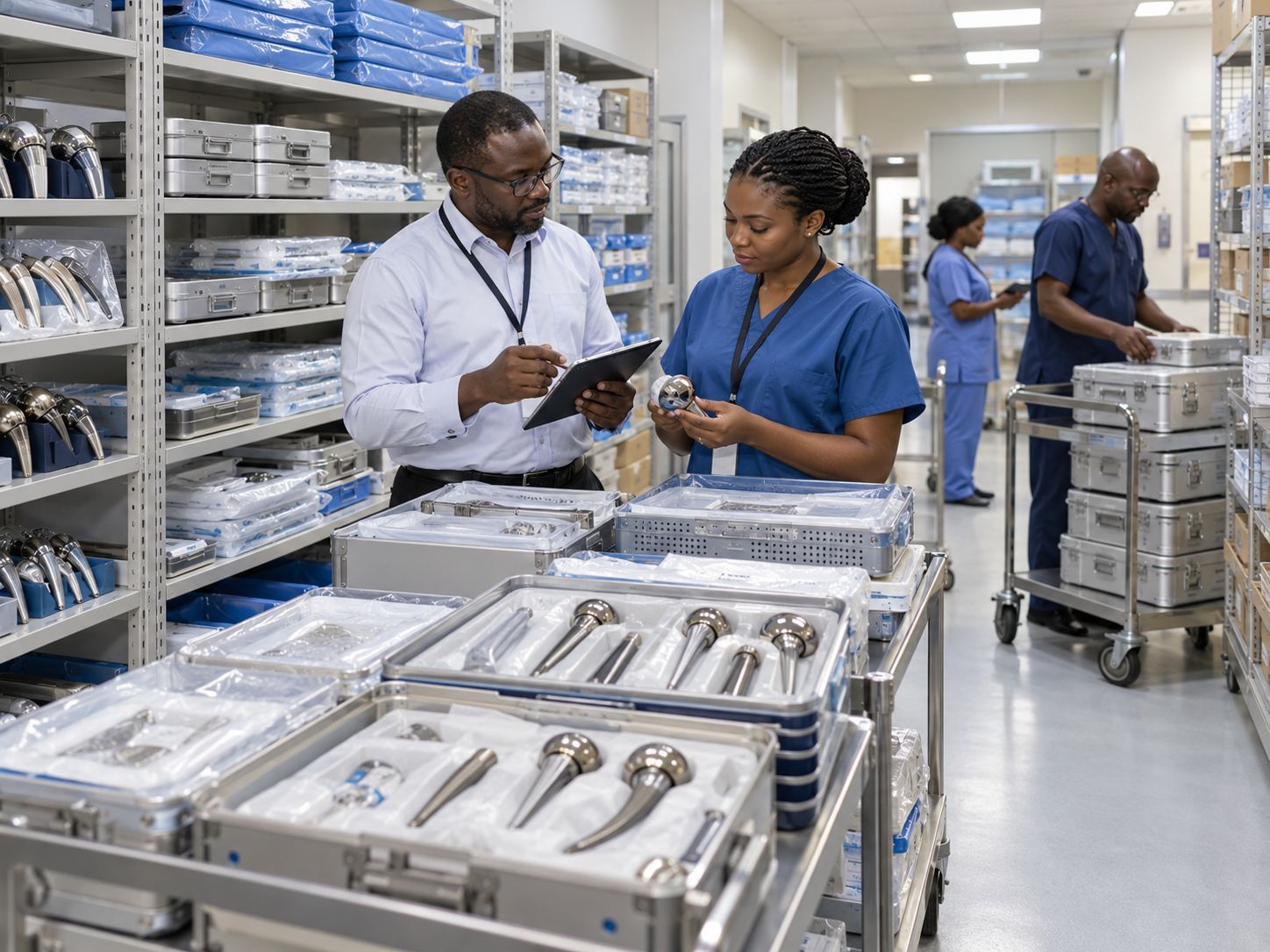
OrtoKnee Fixed Knee System can support structured primary knee replacement programs. OrtoKnee Mobile Knee System gives hospitals another option for knee arthroplasty planning. OrtoKnee Revision Knee System is important for hospitals preparing for complex knee cases and revision capability.
Ortonom Medical knee portfolio
- OrtoKnee Fixed Knee System
- OrtoKnee Revision Knee System
- OrtoKnee Mobile Knee System
For procurement teams, the value of these systems increases when supply is connected to predictable stock levels, prepared instruments, product documentation, and periodic review.
What hospitals should evaluate before bulk implant purchasing
Bulk purchasing requires more than a quantity decision. In orthopedic implants, hospitals should evaluate the full supplier model before approving repeated supply. The decision should include product scope, system compatibility, size availability, instruments, documentation, and long term supplier reliability.
The first question should be whether the supplier is specialized enough for the hospital’s orthopedic needs. A general medical supplier may offer many categories, but hip and knee arthroplasty requires deeper product knowledge and stronger operational planning.
The second question should be whether the supply model protects surgical continuity. A hospital may purchase implants in volume, but if the right sizes are not available at the right time, the program can still face disruption.
Important evaluation questions include:
- Which hip and knee implant systems are included
- Which procedures each system supports
- Which sizes should be planned as core stock
- Which instruments and trays are required
- How product references and lot information will be recorded
- How replenishment will be managed after surgery
- How urgent requests will be escalated
- How supplier performance will be reviewed over time
Stock planning for repeated hospital use
Stock planning is central to bulk orthopedic implant supply. Hospitals need to define which implant sizes should remain available, how frequently stock should be reviewed, and how replenishment should be triggered after product use.
Without a clear stock model, bulk purchasing may create either shortages or unused inventory. Both problems can affect hospital efficiency. Too little stock can disrupt surgery. Too much unfocused inventory can increase storage pressure and complicate purchasing decisions.
Ortonom Medical can support stock planning by helping hospitals and distributors connect selected OrtoHip and OrtoKnee systems with expected procedure volume and core stock logic.
| Stock planning area | Hospital objective | Supplier support |
|---|---|---|
| Core size selection | Keep essential sizes available | Define expected implant size range |
| Replenishment routine | Avoid repeated shortages | Plan reorder after surgical use |
| Usage tracking | Understand product movement | Record system and component use |
| Urgent access | Manage unexpected demand | Define escalation process |
| Periodic review | Improve purchasing accuracy | Review stock and procedure trends |
Instrument readiness in bulk orthopedic supply
In orthopedic implant programs, instruments must be included in the supply discussion. A hospital may have implant stock available, but the procedure can still be delayed if instruments are incomplete, unavailable, damaged, or not properly prepared.
Instrument readiness is especially important when hospitals use implant systems repeatedly. The supplier and hospital should define tray content, preparation responsibilities, inspection routines, missing item reporting, and escalation steps.
For Ortonom Medical’s OrtoHip and OrtoKnee systems, instrument planning should be connected directly to the selected product pathway. This helps orthopedic surgeons, operating room teams, sterile services departments, and procurement teams work with a more predictable process.
Documentation and traceability for hospital governance
Documentation is one of the most important differences between general medical supplies and orthopedic implants. Hospitals need accurate product references, lot numbers, usage records, and traceability processes. These details support patient files, inventory control, internal audits, procurement accountability, and replenishment planning.
A supplier that cannot support documentation clearly may create long term problems for the hospital. Even when implants are delivered, weak records can make stock review, traceability, and future ordering more difficult.
Ortonom Medical’s hip and knee systems should be supplied with clear documentation pathways. Hospitals and distribution partners should understand which system is used, which components are included, and how each product is recorded after surgery.
Bulk medical supplies for African hospital programs
Hospitals across Africa often search for reliable suppliers who can support stable medical product availability. In markets such as Egypt, Algeria, Morocco, Kenya, Tanzania, Nigeria, Ghana, South Africa, Senegal, Cameroon, Libya, Gabon, Namibia, Guinea, DRC, and Côte d’Ivoire, hospital buyers increasingly evaluate suppliers by specialization, continuity, and operational support.
For Ortonom Medical, the African opportunity is not general medical supply. The opportunity is focused orthopedic implant cooperation for hip and knee arthroplasty programs. This includes hospitals, private healthcare groups, orthopedic departments, procurement teams, and medical distribution partners.
A strong supply model should connect product availability with surgical readiness. It should also support documentation, traceability, stock review, and long term hospital cooperation.
Working with distributors for orthopedic implant supply
Distribution partners can play an important role in making orthopedic implant systems available to hospitals. However, successful distribution is not only about moving boxes. It requires product knowledge, hospital communication, stock planning, documentation control, and support for surgical workflows.
Ortonom Medical can build distributor cooperation around a clear product scope. This makes the partnership easier to communicate to hospitals because the focus is hip and knee implant systems rather than a broad and unclear medical supply catalog.

A strong distributor cooperation model should define selected products, target hospital profiles, stock responsibilities, instrument workflows, documentation routines, communication channels, and review frequency.
Key cooperation elements include:
- Selected OrtoHip and OrtoKnee systems
- Target hospitals and orthopedic departments
- Core stock and replenishment rules
- Instrument tray responsibilities
- Documentation and traceability process
- Training and communication support
- Periodic performance review
Why focus matters in bulk medical supply decisions
Broad supply capability can look attractive at the beginning of a procurement process. However, hospitals often need specialized suppliers for high impact surgical categories. Orthopedic implants are one of those categories because they are connected to patient care, surgery schedules, and hospital governance.
A focused supplier can provide clearer product information, better system planning, more relevant documentation, and stronger support for clinical teams. This is especially important in hip and knee arthroplasty, where product and instrument readiness must work together.
Ortonom Medical’s focused portfolio helps buyers understand the company’s role quickly. It does not supply every medical item. It supports hospitals and partners that need hip and knee implant systems for structured arthroplasty programs.
Related search terms that support this content strategy
The keyword bulk medical supplies can be supported by related terms that guide broad search intent toward Ortonom Medical’s real product category. These terms help build a more relevant content cluster around hospital supply and orthopedic procurement.
Relevant terms include orthopedic medical supplies, bulk orthopedic implants, hospital medical supplies, medical equipment suppliers, orthopedic implant supplier, hip implant supplier, knee implant supplier, arthroplasty implant supply, hospital orthopedic supplier, and hip and knee prosthesis supplier.
These terms should be used naturally in the article. Broad supply terms belong in the introduction and procurement sections. Orthopedic terms belong in the OrtoHip and OrtoKnee product sections. Hospital and distributor terms belong in the long term cooperation sections.
Why hospitals and distributors can consider Ortonom Medical
Hospitals and distribution partners considering bulk medical supplies need to identify whether their real need is general medical purchasing or specialized orthopedic implant supply. When the requirement is hip and knee arthroplasty, Ortonom Medical offers a focused product portfolio and structured cooperation approach.
The OrtoHip portfolio supports bipolar, total hip, and revision hip pathways. The OrtoKnee portfolio supports fixed, mobile, and revision knee pathways. Together, these systems create a clear product base for hospital supply planning and distributor cooperation.
For hospitals, orthopedic specialists, procurement teams, healthcare organizations, and distribution partners, Ortonom Medical offers a focused pathway from broad bulk medical supplies search intent to specialized hip and knee implant cooperation.
Bulk medical supplies is a valuable keyword because it reflects purchasing intent, volume interest, and supplier search behavior. For Ortonom Medical, the right strategy is to guide this broad intent toward the company’s real expertise: hip and knee implant systems for orthopedic arthroplasty programs.
Ortonom Medical does not present itself as a supplier of every medical supply category. The company focuses on OrtoHip Bipolar Hip System, OrtoHip K2 Revision Hip System, OrtoHip Total Hip System, OrtoKnee Fixed Knee System, OrtoKnee Revision Knee System, and OrtoKnee Mobile Knee System.
For hospitals and partners, Ortonom Medical offers a cooperation model based on product clarity, stable orthopedic implant supply, surgical readiness, documentation, traceability, and long term arthroplasty program support.