



Orthopedic Implants Supplier
Orthopedic implants supplier is a critical search term for hospitals, orthopedic surgeons, healthcare procurement departments, and medical distributors seeking dependable hip and knee replacement systems. In Africa, selecting an orthopedic implant supplier involves more than comparing product prices. Hospital purchasing committees must consider implant specifications, clinical suitability, regulatory documentation, instrument compatibility, supply continuity, and the manufacturer’s ability to support long-term institutional cooperation.
An orthopedic implants supplier serving African healthcare markets must understand the requirements of orthopedic departments and hospital procurement organizations. Whether a hospital operates in Egypt, Algeria, Kenya, Nigeria, Ghana, South Africa, or another African country, purchasing decisions should connect clinical requirements with commercial feasibility, product traceability, and reliable supply planning.
Ortonom Medical is an orthopedic implant manufacturer specializing in hip and knee prosthesis systems. Its portfolio includes OrtoHip Bipolar Hip System, OrtoHip K2 Revision Hip System, OrtoHip Total Hip System, OrtoKnee Fixed Knee System, OrtoKnee Revision Knee System, and OrtoKnee Mobile Knee System. These product families provide a focused foundation for institutional purchasing discussions with African hospitals, orthopedic specialists, and qualified distribution partners.
Why African Hospitals Need a Specialized Orthopedic Implants Supplier
Orthopedic implant procurement requires a different purchasing strategy from ordinary hospital consumables. Hip and knee prostheses are implantable medical devices that must be evaluated according to their intended clinical applications, component configurations, technical documentation, and compatibility with the surgical procedures performed by the hospital.
For hospital procurement departments, specialization is an important supplier evaluation criterion. A company offering an extensive catalog of unrelated medical equipment may not necessarily provide the technical focus required for joint replacement systems. Hospitals should therefore assess whether a potential supplier has a clearly defined orthopedic portfolio and can provide appropriate information about its implant families.
Ortonom Medical concentrates on hip and knee arthroplasty rather than general medical equipment distribution. This specialization allows procurement discussions to focus on identifiable orthopedic implant systems, purchasing quantities, surgical instrument requirements, product documentation, and potential long-term supply arrangements.
Connecting Clinical Decisions With Hospital Purchasing
Orthopedic surgeons and procurement departments evaluate implants from different perspectives. Surgeons examine clinical indications, implant design, surgical technique, and component compatibility, while purchasing departments assess quotations, regulatory documentation, order conditions, and institutional budgets.
An effective purchasing process brings these evaluations together before the hospital approves a supplier. Clinical suitability should be established by qualified healthcare professionals, while commercial and administrative requirements should be addressed by authorized purchasing representatives.
For African hospitals evaluating Ortonom Medical, the cooperation process can begin with a defined product inquiry. Hospitals can identify the required OrtoHip or OrtoKnee systems and request technical information to support clinical and purchasing reviews.
What Hospital Procurement Committees Should Evaluate Before Selecting a Supplier
Hospital procurement committees should consider the total requirements of an arthroplasty program rather than treating orthopedic implants as interchangeable products. Implant specifications, documentation, instrument compatibility, traceability, and purchasing conditions all influence the evaluation process.
Before selecting an orthopedic implants supplier, hospitals should establish which hip and knee procedures their orthopedic departments perform, which systems are suitable for evaluation, and whether additional technical information is necessary. This helps avoid commercial decisions that do not correspond to clinical needs.

In African markets, international purchasing can also involve national medical device requirements, importer responsibilities, local registrations, and customs documentation. Hospitals should verify these obligations before finalizing purchase agreements.
| Procurement criterion | Hospital evaluation requirement | Importance for supplier selection |
|---|---|---|
| Implant specialization | Defined hip and knee product portfolio | Supports relevant supplier evaluation |
| Clinical suitability | Intended use and technical specifications | Supports surgeon-led review |
| Component compatibility | System-specific implant combinations | Helps avoid incompatible selections |
| Instrumentation | Required surgical tools and trial components | Supports procedural preparation |
| Regulatory documentation | Applicable approvals and product records | Supports institutional compliance |
| Traceability | Product identification and lot records | Supports implant tracking |
| Commercial conditions | Quotations and ordering requirements | Supports purchasing decisions |
| Supply planning | Quantities and delivery arrangements | Supports recurring procurement |
These criteria help purchasing committees develop a structured evaluation process. They also make it easier for hospitals to compare suppliers according to relevant orthopedic requirements instead of relying exclusively on unit price.
OrtoHip Implant Systems for Hospital Hip Arthroplasty Programs
Hip replacement surgery requires implant systems selected according to the patient’s clinical condition and the intended surgical procedure. Hospitals evaluating hip implant manufacturers should examine product specifications, implant configurations, available component options, and the documentation required for professional clinical assessment.
Ortonom Medical manufactures three hip implant families designed for different areas of hip arthroplasty. The portfolio includes bipolar hip solutions, total hip replacement systems, and revision hip systems, allowing hospitals to discuss distinct product categories with the manufacturer.
For procurement departments, these product families provide a clear basis for preparing technical inquiries and purchasing specifications. Orthopedic surgeons should review the relevant indications, instructions for use, and component configurations before deciding whether a system is appropriate for their clinical practice.
OrtoHip Bipolar Hip System
OrtoHip Bipolar Hip System belongs to the bipolar hip prosthesis category. Hospitals considering bipolar hip implants should evaluate the manufacturer’s technical documentation, component availability, intended clinical applications, and surgical instrumentation.
Procurement departments may include this product family when preparing institutional inquiries for orthopedic departments performing procedures that require bipolar hip replacement systems.
OrtoHip K2 Revision Hip System
OrtoHip K2 Revision Hip System is part of Ortonom Medical’s revision hip portfolio. Revision arthroplasty can involve complex surgical planning, making detailed product specifications and appropriate clinical evaluation particularly important.
African hospitals developing revision hip services can request technical information about this system and assess its suitability through their orthopedic specialists.
OrtoHip Total Hip System
OrtoHip Total Hip System is intended for evaluation within total hip arthroplasty programs. Hospitals should review the relevant femoral and acetabular components, implant configurations, instrument requirements, and manufacturer documentation.
For purchasing committees, the system represents a defined total hip product family that can be included in formal orthopedic implant procurement inquiries.
OrtoKnee Implant Systems for Hospital Knee Replacement Programs
Knee arthroplasty procurement requires careful consideration of implant design, surgical indications, instrumentation, and component compatibility. Hospitals looking for a knee implant supplier should evaluate products according to their orthopedic departments’ clinical requirements rather than relying on general product descriptions.
Ortonom Medical manufactures three knee replacement system families: OrtoKnee Fixed Knee System, OrtoKnee Revision Knee System, and OrtoKnee Mobile Knee System. These products allow hospitals to investigate different areas of primary and revision knee arthroplasty.
Purchasing departments can request technical information about the selected knee systems, while orthopedic surgeons evaluate the relevant clinical and surgical requirements. This collaborative approach supports more informed purchasing decisions.
OrtoKnee Fixed Knee System
OrtoKnee Fixed Knee System provides an implant family for evaluation in fixed-bearing knee arthroplasty programs. Hospitals should examine the system’s intended applications, component configurations, surgical technique, and technical documentation.
The product can be considered by hospitals developing or maintaining primary knee replacement services, subject to the clinical evaluation of the orthopedic team.
OrtoKnee Revision Knee System
OrtoKnee Revision Knee System addresses the revision knee implant category. Revision procedures may require specific implant configurations and instrumentation, making surgeon-led technical review essential.
Hospitals interested in revision knee systems can request product information and discuss their requirements with Ortonom Medical before preparing a formal purchasing request.
OrtoKnee Mobile Knee System
OrtoKnee Mobile Knee System belongs to the mobile-bearing knee replacement category. Hospitals evaluating mobile knee systems should consider implant design, indications, component compatibility, and instrument requirements.
Procurement departments can include this product family in their institutional evaluation when the orthopedic department identifies a relevant clinical need.
Ortonom Medical Hip and Knee Implant Portfolio Comparison
An orthopedic implants supplier should make product identification straightforward for hospital procurement departments. Clear product categories help purchasing committees organize inquiries and allow surgeons to identify which technical documents need to be reviewed.

Ortonom Medical’s portfolio is structured around six implant systems, divided into hip and knee arthroplasty. This focused arrangement supports communication between hospitals, surgeons, purchasing teams, and potential distribution partners.
| Product system | Implant category | Institutional evaluation |
|---|---|---|
| OrtoHip Bipolar Hip System | Bipolar hip prosthesis | Hospitals evaluating bipolar hip systems |
| OrtoHip K2 Revision Hip System | Revision hip implant | Revision arthroplasty departments |
| OrtoHip Total Hip System | Total hip implant | Total hip replacement programs |
| OrtoKnee Fixed Knee System | Fixed-bearing knee implant | Primary knee arthroplasty programs |
| OrtoKnee Revision Knee System | Revision knee implant | Revision knee surgery departments |
| OrtoKnee Mobile Knee System | Mobile-bearing knee implant | Hospitals evaluating mobile knee systems |
Clinical suitability, system availability, and procurement conditions must be confirmed for each inquiry. The comparison provides a product overview rather than a substitute for detailed technical assessment.
Orthopedic Implant Procurement Opportunities in African Healthcare Markets
Africa is the exclusive regional focus of Ortonom Medical’s institutional marketing strategy. The company’s relevant audiences include orthopedic surgeons, hospital purchasing departments, private healthcare groups, and distributors specializing in orthopedic implants.
Although procurement procedures vary by country, hospitals across African markets share several important purchasing considerations. They must evaluate clinical requirements, medical device documentation, import responsibilities, supplier communications, and the sustainability of institutional purchasing arrangements.
For Ortonom Medical, country-specific inquiries provide an opportunity to understand each hospital’s requirements while maintaining a consistent focus on hip and knee implant systems.
Egypt and North Africa
Hospitals in Egypt, particularly in Cairo, Alexandria, and Giza, represent a relevant audience for manufacturer-oriented hip and knee implant inquiries. Orthopedic departments and purchasing teams can approach international manufacturers to evaluate product systems and institutional procurement options.
Algeria, Morocco, and Libya are also important markets for North African orthopedic cooperation. Hospitals should consider their respective medical device regulations, import requirements, and local distribution arrangements before proceeding with international procurement.
Kenya and East Africa
Kenya offers opportunities for institutional discussions involving hospitals, orthopedic specialists, and medical distributors in Nairobi and other healthcare centers. Ethiopia, including Addis Ababa, and Tanzania are additional East African markets for focused orthopedic implant cooperation.
Potential buyers should define their required hip and knee systems, expected purchasing volumes, and technical documentation needs before requesting commercial proposals.
Nigeria and West Africa
Nigeria and Ghana are relevant markets for hospital purchasing and orthopedic implant distribution discussions. Healthcare organizations in Lagos, Abuja, Accra, and other cities may contact manufacturers when evaluating hip and knee arthroplasty products.
Senegal, Côte d’Ivoire, and Guinea provide additional opportunities for French-speaking and English-speaking institutional inquiries, depending on the destination market and the organization’s purchasing requirements.
Southern and Central Africa
South Africa, particularly Gauteng, and Namibia can be addressed through hospital purchasing and orthopedic specialist inquiries. Cameroon, Gabon, and the Democratic Republic of the Congo are additional markets for institutional and distributor-focused cooperation.
Across these countries, prospective buyers should verify local regulatory obligations and the feasibility of specific supply arrangements before proceeding with an order.
How African Hospitals Can Request Quotations for Orthopedic Implants
A detailed quotation request helps an orthopedic implant manufacturer understand the hospital’s requirements. General inquiries such as asking for a complete price list may be useful initially, but a more structured request can produce a clearer commercial discussion.
Hospital procurement departments should identify their organization, destination country, required implant systems, estimated order quantities, and any relevant technical specifications. Where possible, the request should distinguish between hip and knee products and between primary and revision arthroplasty systems.
Ortonom Medical welcomes institutional inquiries about its OrtoHip and OrtoKnee portfolio. Actual quotations, product availability, delivery feasibility, and commercial conditions should be confirmed during the purchasing process.
Recommended Information for a Hospital Quotation Request
- Hospital or healthcare organization name
- Country and destination city
- Procurement department contact details
- Required OrtoHip or OrtoKnee systems
- Expected purchasing quantities
- Relevant implant specifications
- Technical documentation requests
- Instrumentation information requirements
- Anticipated ordering schedule
- Applicable import or distribution arrangements
Providing these details can improve communication between purchasing departments and the manufacturer. It also helps both parties identify questions that should be resolved before entering a commercial agreement.
Medical Device Documentation and Implant Traceability
Documentation is a major component of orthopedic implant procurement. Hospitals purchasing implantable medical devices should verify the records required under their own regulatory and institutional procedures.
Relevant materials may include product specifications, instructions for use, labeling information, available conformity documentation, sterilization information, and product identification details. The exact documentation requirements depend on the implant, the destination country, and the applicable regulatory framework.
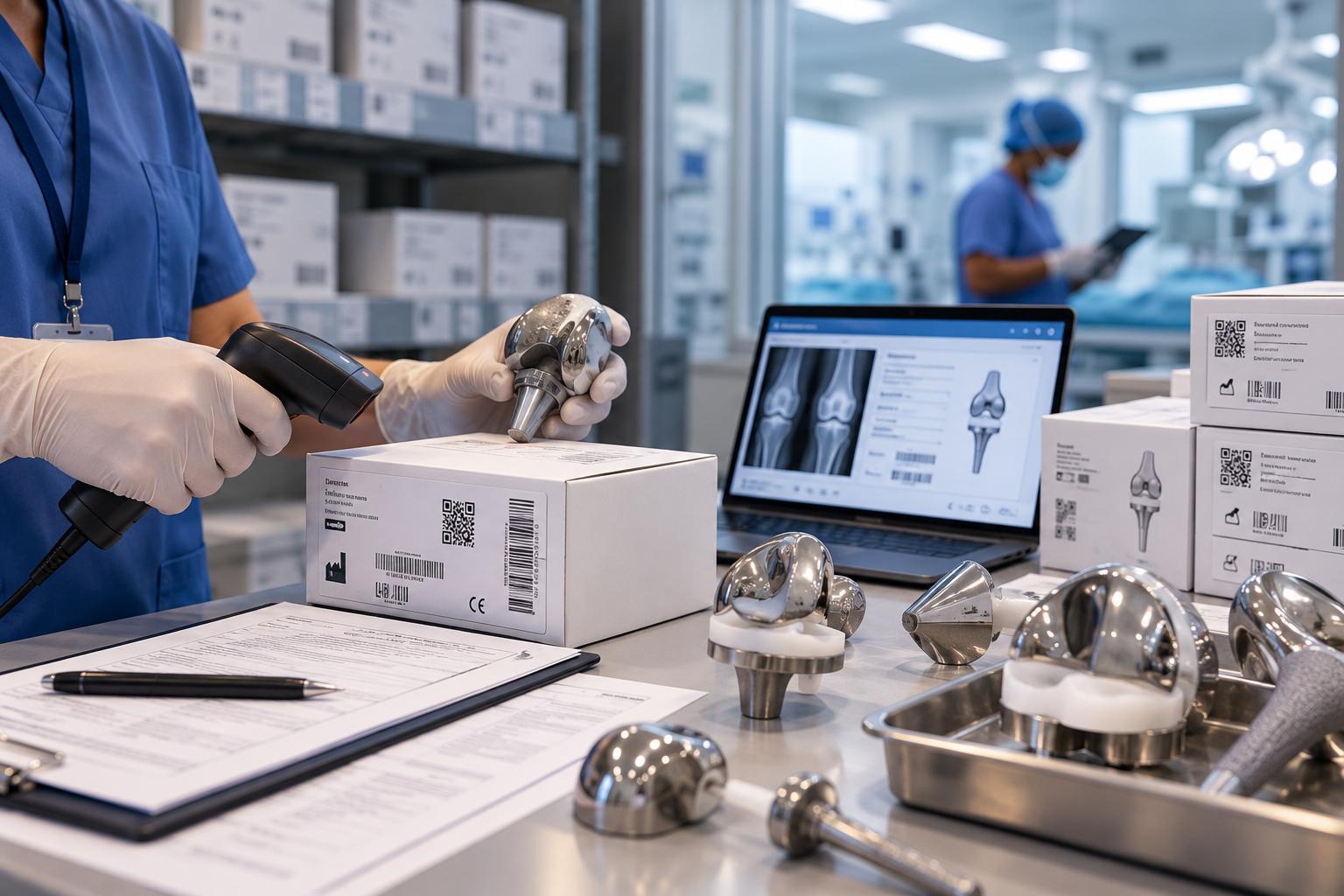
Ortonom Medical can be contacted regarding the available documentation for selected OrtoHip and OrtoKnee systems. Hospitals should specify the requested products and country so the relevant documentation requirements can be discussed accurately.
Why Traceability Matters to Procurement Departments
Orthopedic implants must be identifiable throughout the relevant supply and clinical documentation process. Hospitals should establish procedures for recording product references, lot or serial information where applicable, and the connection between implanted components and patient records.
Traceability also affects inventory management. Accurate records support stock reconciliation, product identification, and the management of relevant manufacturer notices.
An orthopedic implants supplier should therefore be evaluated not only on product pricing but also on the documentation and identification information available for institutional use.
Surgical Instrument Compatibility and Hospital Readiness
Hip and knee replacement procedures require surgical instruments appropriate to the selected implant systems. Hospitals must examine the relationship between implant components, trial instruments, surgical techniques, and their established operating room procedures.
Instrument compatibility is particularly important when a hospital introduces a new implant system. The presence of an implant does not automatically establish that the necessary instruments and trial components are available for its intended surgical use.
For OrtoHip and OrtoKnee procurement, hospitals should request information about applicable instrument requirements. Orthopedic surgeons, operating room representatives, and sterile services departments should review the details before implementing a system.
Long-Term Orthopedic Implant Supply Agreements for Hospitals
Hospitals performing regular hip and knee replacement procedures may benefit from discussing recurring purchasing arrangements with specialized orthopedic manufacturers. Such arrangements can help organize future procurement requirements and establish clearer communication between the parties.
A potential agreement should identify the implant systems involved, expected purchasing volumes, commercial terms, ordering procedures, documentation responsibilities, and any agreed delivery arrangements. Instrumentation and related responsibilities should also be addressed when applicable.
Ortonom Medical is open to evaluating long-term institutional cooperation with African hospitals and healthcare groups. Commercial arrangements remain subject to product availability, market requirements, regulatory obligations, and mutually agreed contractual conditions.
Procurement Planning Before an Agreement
Before negotiating an agreement, hospitals should assess their anticipated arthroplasty case volumes and projected implant requirements. Purchasing forecasts should reflect realistic clinical demand and should be reviewed with the relevant orthopedic specialists.
Hospitals should also consider storage capacity, inventory monitoring, product identification procedures, and the administrative resources needed for managing repeated orders.
A structured purchasing plan gives the manufacturer and the hospital a clearer foundation for discussing appropriate cooperation, without assuming that every institution requires the same supply model.
Orthopedic Implant Distribution Partnerships Across Africa
Medical distributors specializing in orthopedic implants can play an important role in connecting manufacturers with hospitals and surgical departments. Distribution cooperation requires understanding the product portfolio, relevant clinical applications, purchasing requirements, regulatory responsibilities, and the conditions of the local market.
For distributors, product specialization is particularly important. Ortonom Medical’s portfolio concerns hip and knee prosthesis systems rather than general medical equipment, allowing potential partners to evaluate a defined orthopedic category.
African distributors can contact Ortonom Medical to discuss potential cooperation, request product information, and explore the requirements for serving institutional orthopedic customers. Distribution arrangements should be evaluated according to each country’s applicable rules and commercial conditions.
Frequently Asked Questions About Orthopedic Implant Procurement
Can African hospitals request quotations directly from Ortonom Medical?
Yes. Hospital procurement departments and healthcare organizations can contact Ortonom Medical directly to request information and quotations for its hip and knee implant systems.
The inquiry should include the required products, estimated quantities, and destination country. Any commercial agreement will depend on the applicable market and ordering conditions.
Does Ortonom Medical manufacture both primary and revision implant systems?
Ortonom Medical’s portfolio includes product families for primary and revision hip and knee arthroplasty. Its revision systems include OrtoHip K2 Revision Hip System and OrtoKnee Revision Knee System.
Hospitals should request the relevant product documentation and involve their orthopedic specialists in evaluating the clinical suitability of each system.
Can African hospital groups request bulk orthopedic implant purchases?
Yes. Hospital groups can submit inquiries regarding larger purchasing quantities or recurring implant requirements.
The manufacturer and purchasing organization can discuss the requested systems, volume estimates, commercial terms, and potential arrangements after reviewing the relevant requirements.
Can orthopedic surgeons request detailed technical information?
Yes. Orthopedic surgeons and clinical departments can request information about available product specifications, component configurations, and relevant technical documentation.
Product evaluation should follow the applicable instructions for use and the surgeon’s professional clinical assessment.
Is Ortonom Medical a general medical equipment supplier?
No. Ortonom Medical specializes in hip and knee implant systems for arthroplasty. Its portfolio does not cover unrelated general medical equipment categories.
Hospitals and distributors should contact the company when their purchasing requirements relate specifically to hip and knee prostheses.
Why Choose Ortonom Medical as an Orthopedic Implants Supplier?
Hospitals searching for an orthopedic implants supplier need a manufacturer whose product portfolio corresponds to their clinical and procurement requirements. Ortonom Medical provides a defined selection of hip and knee implant systems, allowing institutional buyers to focus their evaluations on the appropriate orthopedic product families.
Its OrtoHip portfolio includes bipolar hip, total hip, and revision hip systems. Its OrtoKnee portfolio includes fixed-bearing, mobile-bearing, and revision knee systems. This specialization supports technical discussions with surgeons and structured purchasing inquiries from hospital procurement departments.
For African healthcare organizations, the next step is a direct institutional discussion. Hospitals, orthopedic surgeons, procurement representatives, and qualified distributors can contact Ortonom Medical to request product information, discuss technical requirements, and explore possible commercial cooperation.
Orthopedic implants supplier is a commercially relevant search term for African hospitals, orthopedic surgeons, healthcare procurement departments, and medical distributors seeking hip and knee prosthesis systems. Choosing the right manufacturer requires careful consideration of implant specifications, clinical suitability, documentation, instrument compatibility, regulatory requirements, and purchasing conditions.
Ortonom Medical manufactures six focused orthopedic implant systems: OrtoHip Bipolar Hip System, OrtoHip K2 Revision Hip System, OrtoHip Total Hip System, OrtoKnee Fixed Knee System, OrtoKnee Revision Knee System, and OrtoKnee Mobile Knee System.
African hospitals and institutional buyers seeking a specialized hip and knee implant manufacturer can contact Ortonom Medical for technical product information and quotation discussions. The objective is to establish meaningful B2B cooperation based on clearly defined clinical requirements, institutional purchasing needs, and sustainable orthopedic implant supply arrangements.