



Orthopedic Implant Supplier Nairobi
Orthopedic implant supplier Nairobi is a commercially relevant search for hospital procurement departments, orthopedic surgeons, and healthcare organizations evaluating hip and knee replacement systems in Kenya. Hospitals require more than access to implant catalogs. They need products that can be assessed against clinical indications, surgical instrumentation, technical documentation, regulatory requirements, and institutional purchasing procedures.
Nairobi is an important orthopedic healthcare center in East Africa, with public referral services, specialist physicians, and private hospitals involved in joint replacement surgery. For organizations reviewing international implant manufacturers, the practical challenge is to connect the clinical requirements of orthopedic departments with purchasing conditions, product traceability, and appropriate supply planning.
Ortonom Medical manufactures specialized hip and knee implant systems through its OrtoHip and OrtoKnee portfolios. The company welcomes inquiries from Nairobi hospitals, orthopedic surgeons, healthcare procurement teams, and qualified distribution partners interested in evaluating these systems for institutional purchasing.
Orthopedic Implant Procurement in Nairobi Hospitals
Hospital orthopedic implant procurement in Nairobi involves both clinical and administrative decision-making. Joint replacement systems must first be assessed by qualified orthopedic specialists before procurement departments can determine the appropriate product categories, documentation requirements, and purchasing quantities.
Nairobi has established institutions with relevant orthopedic capabilities. Aga Khan University Hospital Nairobi identifies hip and knee joint replacement, including revision procedures, among its specialist orthopedic services. Kenyatta National Hospital also provides orthopedic and reconstructive surgical services. These examples demonstrate the importance of specialist orthopedic care within the city’s hospital infrastructure.
A particularly relevant institutional purchasing example is Kenyatta National Hospital’s published framework tender for orthopedic implants covering arthroplasty and spine units for 2025–2027. Although the submission period for that tender has closed, the document illustrates how formal hospital procurement can involve structured product schedules, supplier qualifications, technical specifications, and contractual requirements.
For implant manufacturers serving hospital markets, such purchasing structures underline the importance of clear documentation and accurate communication. Ortonom Medical’s focused hip and knee portfolio provides a starting point for discussions with healthcare organizations seeking information about orthopedic implant systems.
Why Hospital Procurement Requires Specialized Implant Manufacturers
Orthopedic implants differ from general hospital supplies because every system has specific intended clinical applications and associated components. Hospitals cannot evaluate a hip or knee prosthesis solely by comparing prices, since implant selection is directly connected to the procedure planned by the surgical team.
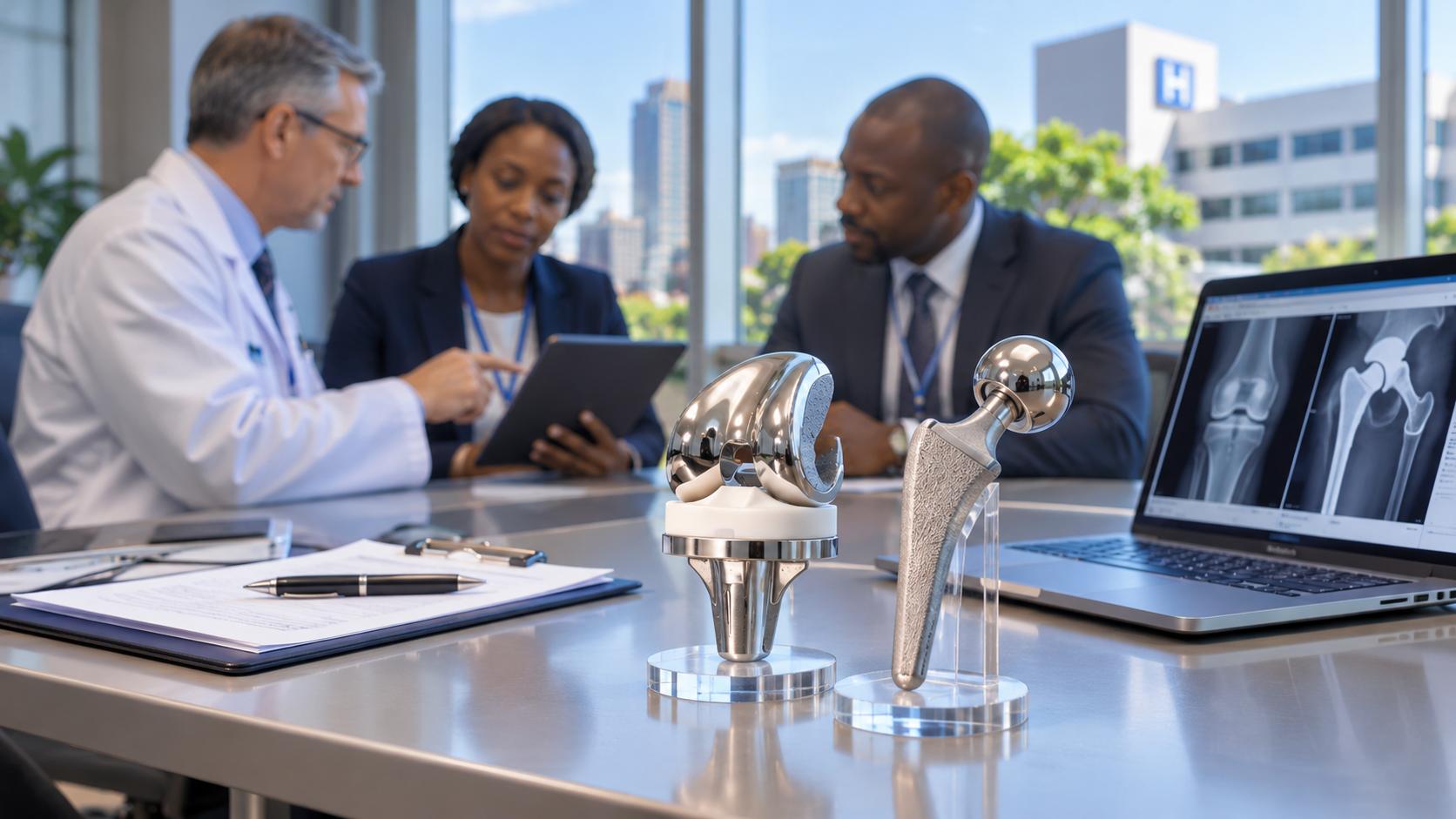
Procurement departments should work alongside orthopedic surgeons to establish clinical requirements before requesting commercial quotations. This approach helps ensure that product selection, instrument availability, and purchasing plans are evaluated together.
A specialized manufacturer such as Ortonom Medical allows discussions to remain focused on hip and knee implant systems instead of unrelated medical equipment categories. This distinction is particularly useful for institutional buyers who need detailed technical product information.
Hip Replacement Implant Systems for Nairobi Orthopedic Departments
Hip arthroplasty programs may require different implant systems depending on the clinical conditions treated and the surgical techniques used. Nairobi hospitals evaluating manufacturers should review the intended applications, component configurations, surgical instructions, and available technical documentation for each product family.
Ortonom Medical manufactures three principal hip replacement systems: OrtoHip Bipolar Hip System, OrtoHip K2 Revision Hip System, and OrtoHip Total Hip System. These product families provide options for technical evaluation across different areas of hip arthroplasty.
Orthopedic surgeons remain responsible for determining whether an implant is appropriate for a particular surgical procedure. Hospital purchasing teams can use the surgeon’s requirements to prepare accurate commercial inquiries and review applicable procurement conditions.
OrtoHip Bipolar Hip System
The OrtoHip Bipolar Hip System belongs to the bipolar hip implant category. Hospitals evaluating this system should review its intended clinical applications, available components, size configurations, and corresponding surgical documentation.
For procurement purposes, buyers should identify the specific implant components required rather than treating all bipolar hip prostheses as equivalent. Any planned purchase should follow clinical approval and confirmation of the applicable technical specifications.
OrtoHip Total Hip System
The OrtoHip Total Hip System is a product family for total hip arthroplasty evaluation. Its assessment should include the relevant femoral and acetabular components, component compatibility, fixation requirements, and surgical instrumentation.
Nairobi hospitals performing total hip replacement procedures can request available technical information about this system and discuss the requirements for an institutional quotation with Ortonom Medical.
OrtoHip K2 Revision Hip System
Revision hip arthroplasty can require additional planning because of previous implants, altered bone structures, and procedure-specific reconstruction needs. Hospitals should therefore evaluate revision implant systems through experienced orthopedic specialists.
The OrtoHip K2 Revision Hip System forms part of Ortonom Medical’s revision hip portfolio. Clinical teams can request appropriate technical information before assessing whether the system meets their institutional surgical requirements.
Knee Replacement Implant Systems for Nairobi Hospitals
Hospitals evaluating a knee implant manufacturer must consider the relationship between implant design, clinical indications, component selection, and surgical instrumentation. For institutional buyers, these requirements influence both the technical review and the commercial purchasing process.
Ortonom Medical manufactures OrtoKnee Fixed Knee System, OrtoKnee Mobile Knee System, and OrtoKnee Revision Knee System. Each product family represents a distinct category of knee arthroplasty that can be considered according to the hospital’s clinical programs.
Purchasing departments should distinguish between primary knee replacement and revision knee replacement needs. This helps avoid combining different implant requirements into a single, unclear quotation request.
OrtoKnee Fixed Knee System
OrtoKnee Fixed Knee System is part of the fixed-bearing knee replacement category. Surgeons evaluating fixed-bearing designs should review relevant indications, implant configurations, associated instruments, and the manufacturer’s instructions for use.
Hospitals can include this product family in procurement discussions when their orthopedic departments identify appropriate clinical requirements for a fixed-bearing knee system.
OrtoKnee Mobile Knee System
OrtoKnee Mobile Knee System belongs to the mobile-bearing knee arthroplasty category. Evaluating such systems requires attention to implant design, component compatibility, surgical technique, and available technical documentation.
For Nairobi procurement teams, clearly specifying whether a fixed-bearing or mobile-bearing system is requested helps the manufacturer respond with more relevant product information.
OrtoKnee Revision Knee System
Revision knee replacement can involve additional implant components and procedural considerations compared with primary arthroplasty. Hospitals should assess the suitability of revision systems through their orthopedic surgical teams before purchasing.
The OrtoKnee Revision Knee System provides a dedicated revision product family within Ortonom Medical’s portfolio. Institutions can request technical specifications and discuss purchasing requirements according to their clinical needs.
OrtoHip and OrtoKnee Systems for Hospital Purchasing
A structured orthopedic implant portfolio helps hospital departments organize technical reviews and prepare consistent quotation requests. Product identification is particularly important when a purchasing team is coordinating requirements from multiple surgeons or surgical units.
Ortonom Medical’s portfolio is divided into six systems covering hip and knee arthroplasty. This specialization helps institutional buyers identify which product categories require additional documentation and which systems should be reviewed by the relevant clinical specialists.
| Implant system | Product category | Hospital purchasing consideration |
|---|---|---|
| OrtoHip Bipolar Hip System | Bipolar hip implant | Clinical indication and component selection |
| OrtoHip Total Hip System | Total hip implant | Femoral and acetabular system evaluation |
| OrtoHip K2 Revision Hip System | Revision hip implant | Revision planning and instrumentation |
| OrtoKnee Fixed Knee System | Fixed-bearing knee implant | Primary knee system evaluation |
| OrtoKnee Mobile Knee System | Mobile-bearing knee implant | Design and component compatibility |
| OrtoKnee Revision Knee System | Revision knee implant | Revision-specific product requirements |
The final suitability of each system must be established through clinical assessment and the applicable product documentation. Product availability, regulatory status, and commercial conditions should be confirmed before ordering.
How Nairobi Hospitals Evaluate International Implant Suppliers
International orthopedic implant purchasing is more complex than requesting a general medical supply price list. Hospital committees need to understand the clinical product requirements alongside supplier qualifications and the documentation required for national and institutional compliance.
Kenya’s Pharmacy and Poisons Board provides regulatory oversight of medical devices and other health products. Hospitals and prospective importers should verify current product registration, authorization, and import requirements before making supply commitments.

For public healthcare institutions, purchasing may also involve formal tenders and competitive procurement rules. Private hospitals may use different internal purchasing procedures, including clinical review, supplier evaluation, and contractual negotiations.
Technical and Commercial Supplier Evaluation
| Evaluation area | Information to examine |
|---|---|
| Product scope | Hip or knee implant systems required |
| Clinical assessment | Indications and implant compatibility |
| Surgical preparation | Instruments and trial components |
| Regulatory review | Applicable Kenyan medical device requirements |
| Documentation | Product specifications and instructions for use |
| Traceability | Product and lot identification information |
| Commercial conditions | Quantities, quotations, and delivery arrangements |
| Institutional approval | Procurement and clinical authorization procedures |
A manufacturer evaluation becomes more productive when the purchasing committee provides detailed requirements from the beginning. This allows the clinical and commercial aspects of a prospective supply agreement to be assessed separately but consistently.
Ortonom Medical welcomes requests for technical product information and commercial discussions concerning its OrtoHip and OrtoKnee systems. Any proposed supply arrangement must be evaluated according to the applicable regulatory and institutional requirements.
Medical Device Documentation and Implant Traceability in Kenya
Orthopedic implant documentation plays an important role in hospital procurement and patient safety systems. Hospitals should examine the information necessary to identify each implant, verify its intended use, and maintain appropriate records through purchasing, storage, and clinical use.
Depending on the implant system and applicable rules, technical documentation may include product descriptions, instructions for use, labeling details, sterilization information, and relevant conformity records. Hospitals should request documents that correspond to their specific products and regulatory obligations.
Traceability should also be considered before placing an order. Procurement departments and hospital inventory teams need procedures for identifying implant references, recording lot or serial numbers where applicable, and reconciling product movements with institutional records.
Surgical Instrument Compatibility
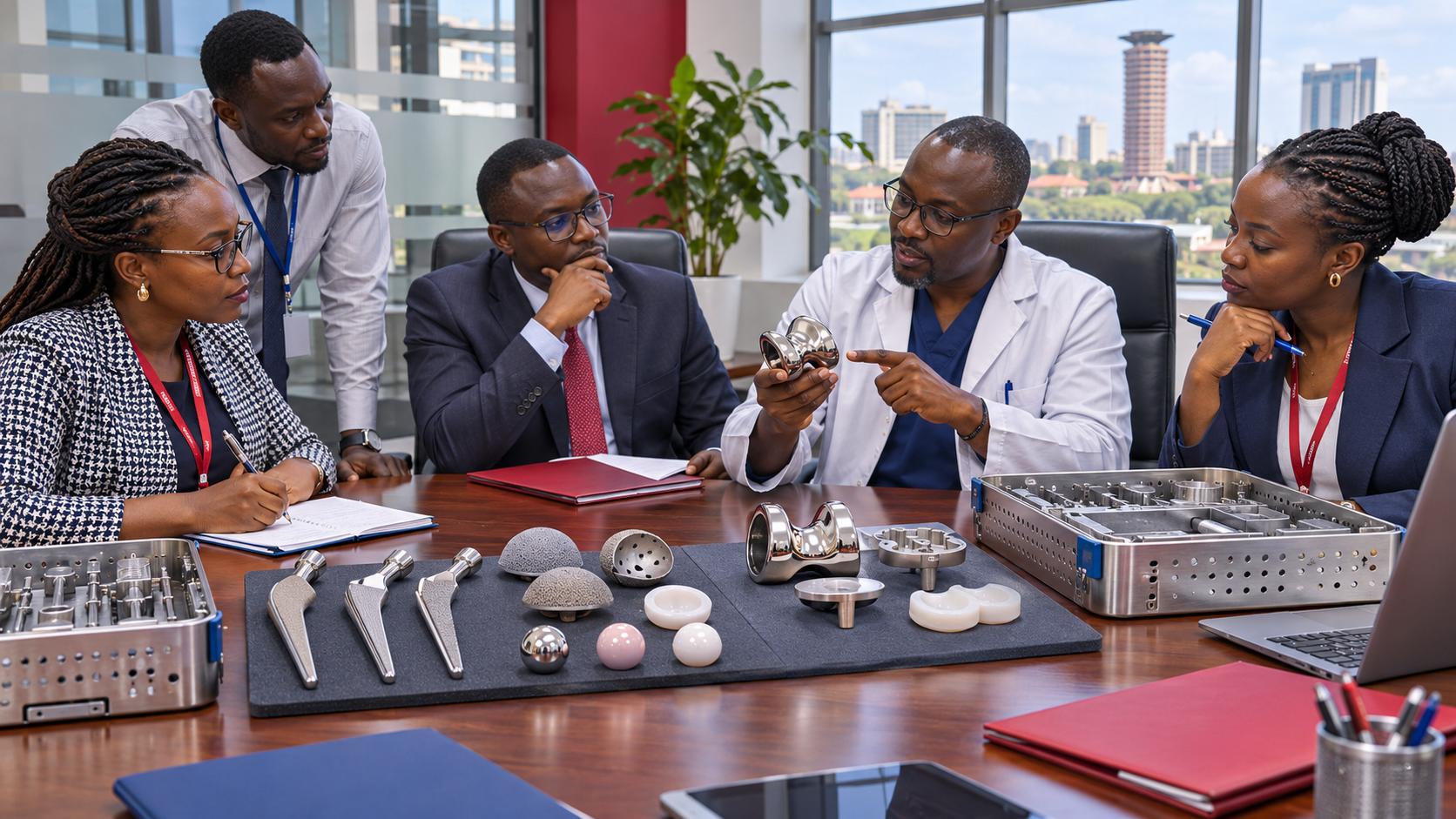
A hip or knee implant system cannot be introduced into a surgical program without evaluating its corresponding instrumentation. Orthopedic surgeons should review the necessary tools, trial components, surgical techniques, and applicable instrument preparation requirements.
The purchasing department should also establish whether the necessary instrument sets are available and whether any additional arrangements must be discussed with the manufacturer or an authorized distribution partner.
These considerations are particularly important for hospitals using multiple implant systems or planning to expand revision arthroplasty services.
Bulk Orthopedic Implant Purchasing and Stock Planning in Nairobi
Hospital groups with recurring arthroplasty requirements may consider consolidated or periodic implant purchasing. The practical objective is to connect expected procedure volumes with suitable component selection and manageable inventory levels.
Procurement planning should include the distinction between primary and revision procedures, expected implant size requirements, storage capacity, product expiration management, and the institution’s established ordering process.
A bulk purchasing inquiry should specify the requested OrtoHip or OrtoKnee systems and estimated quantities. Larger orders do not automatically provide better value unless they match the hospital’s clinical demand and operational capacity.
Information Needed for an Institutional Quotation
Nairobi healthcare organizations can prepare a more useful quotation request by providing:
- Hospital or healthcare group name
- Procurement representative and professional contact details
- Destination city and country
- Required OrtoHip or OrtoKnee systems
- Estimated product quantities
- Technical specifications or component requirements
- Documentation and regulatory questions
- Surgical instrumentation requirements
- Expected purchasing schedule
- Delivery or local distribution considerations
This information allows an initial commercial discussion to focus on the products and services actually required by the institution rather than on general catalog inquiries.
Long-Term Hip and Knee Implant Supply Cooperation
Hospitals with established arthroplasty programs may wish to explore recurring supply arrangements with specialized orthopedic implant manufacturers. These discussions can address estimated purchasing volumes, documentation procedures, product categories, ordering responsibilities, and commercially agreed delivery arrangements.
For Nairobi hospitals, long-term planning should reflect actual surgical demand, rather than assuming that all orthopedic departments require the same selection or quantity of implants. The clinical requirements of primary joint replacement and revision surgery should also be distinguished.
Potential institutional cooperation with Ortonom Medical can be discussed on the basis of defined product needs, regulatory feasibility, and mutually accepted commercial terms. The availability of specific arrangements must be confirmed through direct communication.
Orthopedic Implant Distribution Opportunities in Nairobi
Orthopedic distributors can support hospital procurement when they understand the technical requirements of hip and knee arthroplasty systems. Relevant cooperation involves more than supplying products. It also requires clear responsibility for applicable documentation, import procedures, product handling, and communication with healthcare institutions.
Distributors evaluating Ortonom Medical should focus on the company’s defined hip and knee implant portfolio. The manufacturer does not position itself as a general supplier of unrelated hospital equipment, which keeps potential cooperation centered on arthroplasty products.
Qualified Kenyan distributors can contact Ortonom Medical to discuss possible commercial relationships and determine which product categories might correspond to the needs of institutional orthopedic customers.
Why Nairobi Hospitals Can Contact Ortonom Medical
Nairobi’s established orthopedic services create a relevant environment for evaluating specialized hip and knee implant manufacturers. Hospitals planning primary or revision arthroplasty purchasing need clear product information, appropriate documentation, surgical instrument planning, and a structured quotation process.
Ortonom Medical offers six identifiable implant families through its OrtoHip and OrtoKnee portfolios. Its specialization allows institutional inquiries to concentrate on hip and knee replacement systems without including unrelated medical equipment categories.
Hospital procurement departments, orthopedic surgeons, healthcare groups, and qualified distributors in Nairobi can contact Ortonom Medical to request available technical information, identify the appropriate implant systems for evaluation, and explore potential purchasing cooperation. Every proposal remains subject to product availability, clinical suitability, regulatory requirements, and agreed commercial conditions.