



Hip Replacement Manufacturers
Hip replacement manufacturers are evaluated differently in Africa’s premium healthcare markets than in many other regions. Hospitals, private groups, and orthopedic leaders are not only comparing implant options, they are comparing the manufacturer’s ability to support a stable arthroplasty program over time. In practice, that means consistent availability of core sizes, disciplined documentation, predictable replenishment, and a partner mindset that protects theatre schedules and clinical routines.
Hip replacement manufacturers are also assessed on how well they can support standardization across facilities. A single hospital may have multiple surgeons and rotating OR teams, while a private hospital group may operate across multiple sites. When a manufacturer cannot support repeatable routines and dependable supply, cancellations and delays rise quickly, and surgeon confidence drops. This is why a manufacturer’s operational readiness matters as much as product range.
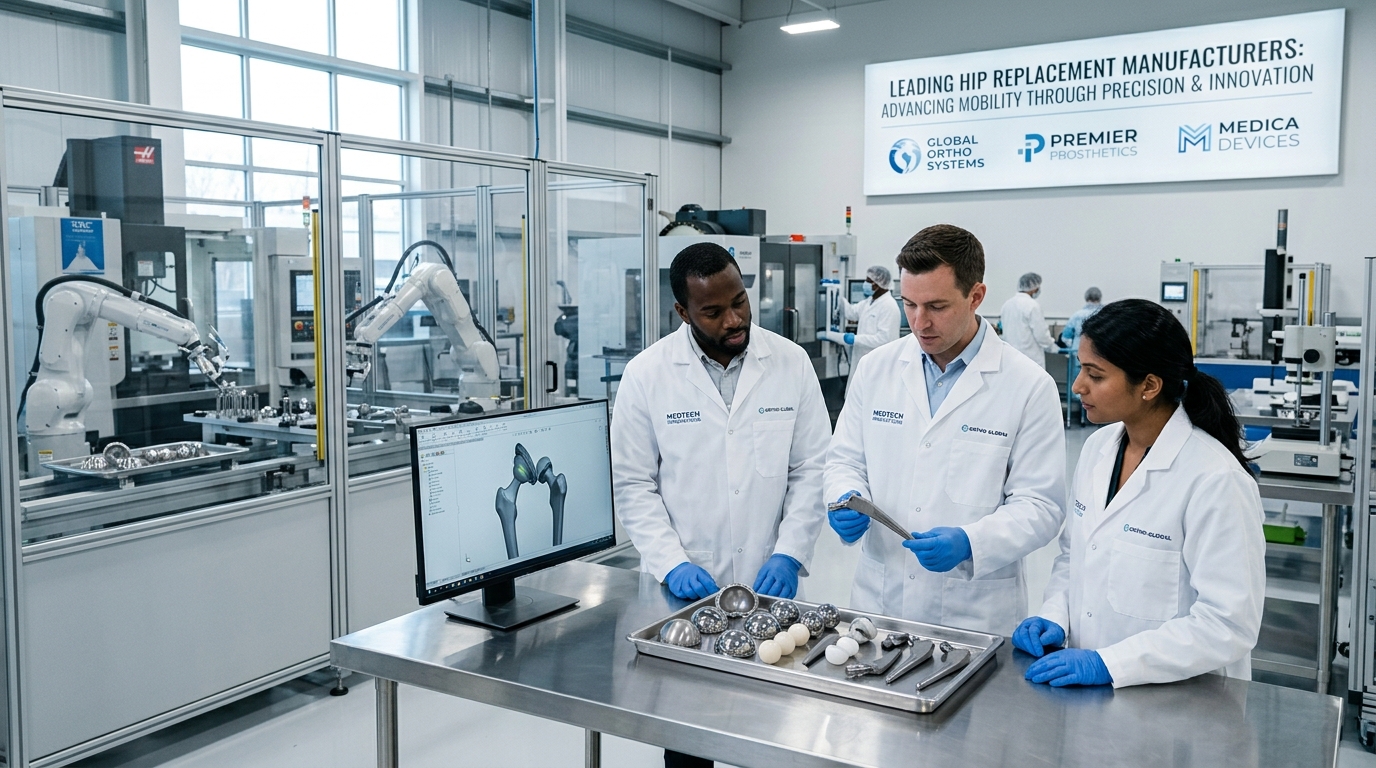
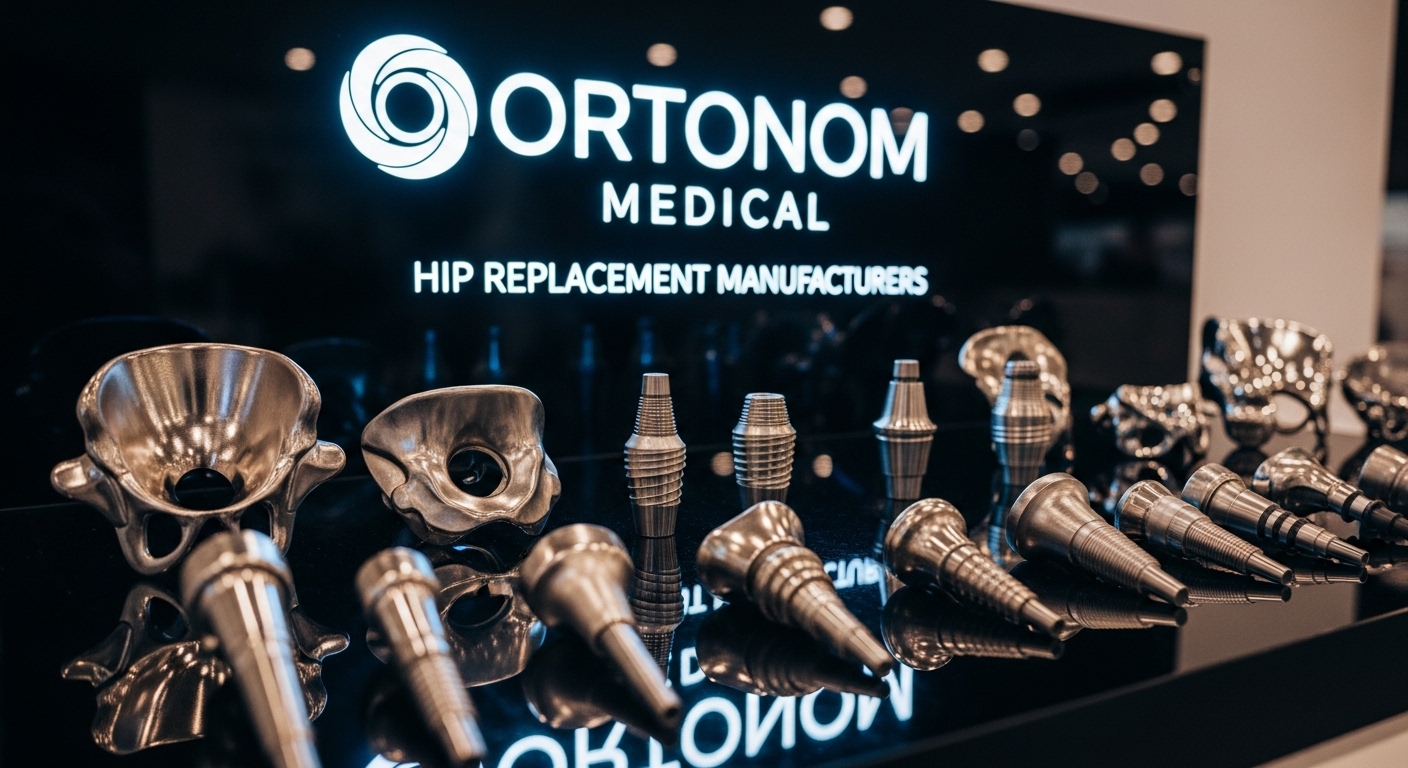
Ortonom Medical positions itself as a hip replacement manufacturer focused on African hospital needs, with an approach built around program stability and controlled implementation. The goal is not one-off delivery, but reliable long-term cooperation with hospitals and healthcare organizations across key target markets: South Africa Gauteng, Morocco, Algeria, Egypt, Nigeria, Ghana, Kenya, Tanzania, Libya, Gabon, Senegal, Namibia, Cameroon, Guinea, DRC, and Côte d’Ivoire.
Why country specificity matters for hip programs in Africa
Africa is not one market, and hospitals do not search or buy as if it is. Country level procurement behavior, logistics realities, and private healthcare concentration differ across South Africa Gauteng, Morocco, Algeria, and Egypt compared with West Africa hubs like Nigeria, Ghana, Senegal, Côte d’Ivoire, and Guinea. If a manufacturer communicates only in generic terms, it becomes harder for decision makers to trust that the partner is operationally prepared.
Country specificity is also a practical signal of support readiness. A hospital in Kenya or Tanzania will evaluate lead times, servicing pathways, and training coverage differently than a hospital in Libya or Gabon. Buyers want to see that the manufacturer understands how to reduce adoption risk in their environment, not just how to describe an implant. Hip replacement manufacturers that present a clear market footprint appear more credible in search and in procurement discussions.
Ortonom Medical’s country focus is designed to match real market hubs and growth corridors. South Africa Gauteng and Namibia represent Southern Africa program depth and standardization demand. Morocco, Algeria, Egypt, and Libya represent North Africa governance expectations and structured evaluation. Nigeria, Ghana, Senegal, Côte d’Ivoire, and Guinea reflect West Africa growth and multi-site expansion potential. Kenya and Tanzania represent East Africa capacity building, while Cameroon, DRC, and Gabon represent Central Africa where reliability and partner execution can be a major differentiator.
What hospitals and orthopedic specialists expect from hip replacement manufacturers
Orthopedic specialists look for predictable technique support and system behavior that stays consistent across cases. In hip arthroplasty, small deviations in preparation and verification routines can influence stability, wear, and long-term satisfaction. Surgeons want clear decision points, instrumentation that behaves predictably, and a manufacturer that supports repeatable clinical routines rather than leaving teams to invent workarounds.
Hospitals and healthcare organizations add operational and governance expectations. They want stable supply of core sizes, disciplined traceability, and documentation that is practical for real workflows. They also want training and implementation support that can be repeated as staff rotates. This becomes especially important in premium environments where performance is evaluated continuously, not just at the first case.
A useful way to summarize what buyers expect from hip replacement manufacturers is three pillars: clinical confidence, operational readiness, and governance control. When the manufacturer is strong across these pillars, procurement moves faster because fewer risks remain unresolved. When any pillar is weak, the decision slows because the hospital feels exposed to cancellations, inconsistencies, or compliance gaps.
Ortonom Medical hip portfolio and joint program continuity
Hospitals prefer a hip partner that supports continuity across case complexity. A portfolio that covers primary and revision pathways reduces the need to switch vendors when case mix changes, and it helps hospitals standardize instrument routines. This is important in high-throughput hubs like South Africa Gauteng and Nigeria, and it also matters in structured evaluation environments like Morocco, Algeria, and Egypt.
Ortonom Medical hip systems include:
- OrtoHip Bipolar Hip System
- OrtoHip Total Hip System
- OrtoHip K2 Revision Hip System
This portfolio is designed to support hospital programs that want stability over time. In parallel, hospitals often value a broader orthopedic platform because it signals maturity in instrumentation discipline and field support. Ortonom Medical also provides knee systems that support joint program planning:
- OrtoKnee Fixed Knee System
- OrtoKnee Mobile Knee System
- OrtoKnee Revision Knee System
Target markets and how hospitals typically evaluate partners
Hospitals do not evaluate hip replacement manufacturers with the same priorities in every country. However, the evaluation logic can be grouped into practical regional patterns that help programs scale. This is where the target-market list becomes a real SEO and procurement advantage when used correctly.
In North Africa, Morocco, Algeria, Egypt, and Libya often involve more structured evaluation and governance expectations. Decision makers want documentation discipline, traceability routines, and an implementation plan that is defensible internally. A manufacturer that can show predictable supply planning and a stable support model is typically positioned more strongly.
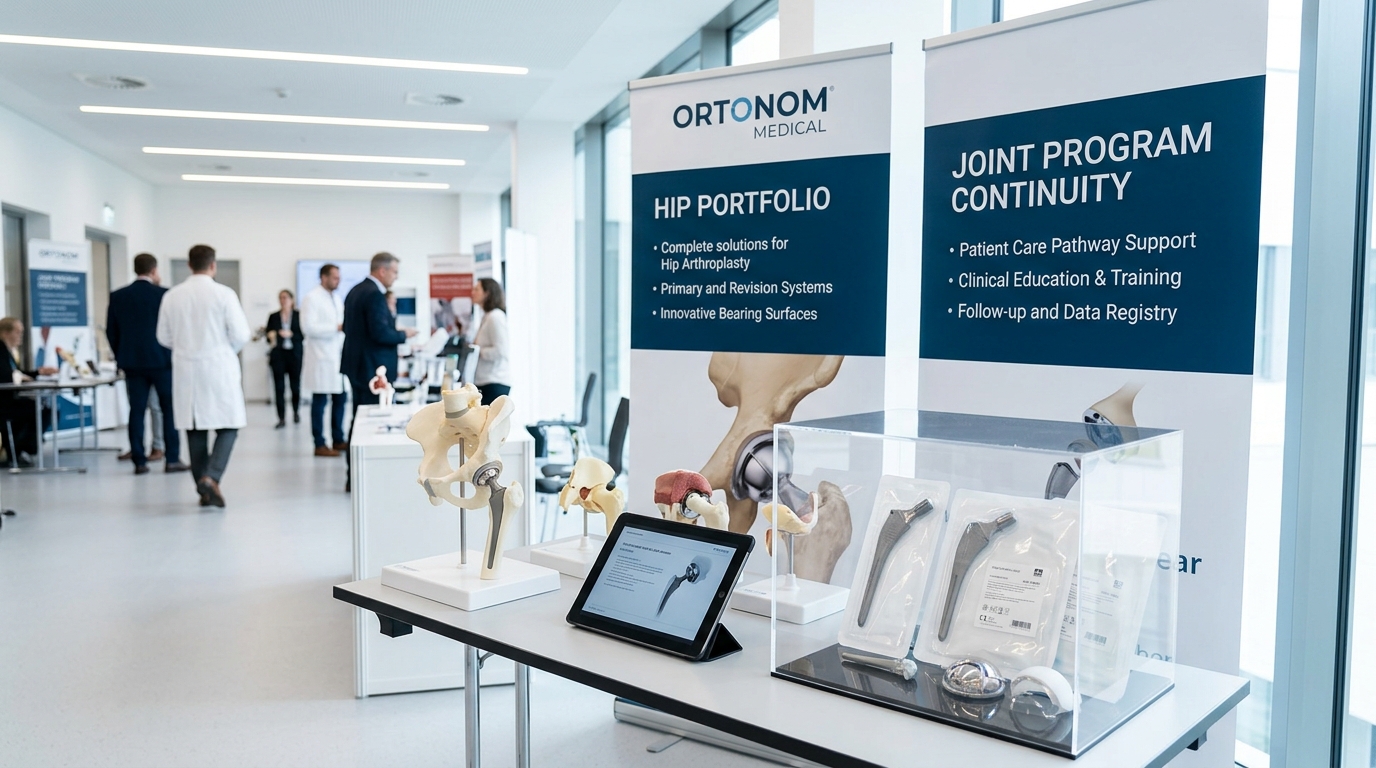
In Southern Africa, South Africa Gauteng and Namibia are often driven by performance expectations and operational reliability. Theatre schedules tend to be tight, and disruptions become visible immediately. Hospitals prioritize partner responsiveness, core size availability, and instrument readiness discipline. In West Africa, Nigeria, Ghana, Senegal, Côte d’Ivoire, and Guinea often combine growth with scaling needs, where multi-site standardization and supply continuity matter. In East and Central Africa, Kenya, Tanzania, Cameroon, DRC, and Gabon often evaluate partners through readiness, continuity, and the ability to support stable routines as capacity expands.
A hospital-ready adoption framework that works across countries
Hospitals approve programs faster when hip replacement manufacturers present a complete adoption framework rather than only product details. A framework clarifies how the hospital will move from evaluation to routine use without disrupting theatre schedules. It also gives procurement and clinical leadership a clear structure for risk control across multiple teams and facilities.
The framework below is intentionally practical. It maps what hospitals need to see in South Africa Gauteng and Namibia, what governance-driven environments often require in Morocco, Algeria, Egypt, and Libya, and what scaling markets tend to prioritize in Nigeria, Ghana, Senegal, Côte d’Ivoire, and Guinea. It also supports the readiness focus common in Kenya, Tanzania, Cameroon, DRC, and Gabon.
| Adoption pillar | What hospitals need | What the manufacturer should provide |
|---|---|---|
| Clinical execution | Repeatable routines and decision points | Clear documentation, training pathway, intraoperative checkpoints |
| Operational readiness | Core sizes available and sets complete | Stock planning, replenishment cadence, tray discipline and readiness checks |
| Governance control | Traceability and documented routines | Version control, usage capture routines, escalation path and reporting |
To make the framework actionable, hospitals typically expect a short implementation checklist that can be repeated across sites. Hip replacement manufacturers that provide this structure appear more credible because the program is designed to run, not just to start.
Supply continuity models that protect theatre schedules
Hip replacement manufacturers are often judged by what happens on surgery day. If the right sizes and components are not available, cases get delayed or cancelled, and the program loses momentum. This is why supply continuity is a core adoption topic in premium African markets, especially in South Africa Gauteng, Morocco, Algeria, Egypt, and Nigeria where throughput and expectations can be high.
A disciplined approach starts with core size planning and clear reorder points, then relies on fast usage capture and predictable replenishment cadence. The goal is to prevent emergencies by identifying trends early and adjusting stock levels before gaps appear. This is particularly valuable in multi-site networks where Nigeria, Ghana, Senegal, Côte d’Ivoire, and Kenya may require consistent rules across facilities.
Hospitals often look for the following operational controls from hip replacement manufacturers:
- Defined core size list for hip programs and minimum availability rules
- Clear replenishment cadence and lead-time commitments
- Routine cycle counts and discrepancy escalation process
- Expiry management and packaging integrity checks
- Emergency pathway for time-sensitive exceptions
- Reporting that procurement can audit and leadership can track
A reliable supply model is also a strong SEO story when it is tied to country realities. A hospital in Tanzania will respond differently than a hospital in Morocco, but both want the same outcome: predictable scheduling and controlled risk.
Documentation and training that support consistent hip routines
Programs become stable when teams share the same language and verification habits. If documentation is unclear or training is shallow, variability increases across surgeons and teams, which can weaken outcomes and confidence. This is why hip replacement manufacturers that treat documentation and training as part of the product tend to earn stronger long-term trust.
A structured approach should support the full hospital team. Surgeons need consistent decision logic and technique checkpoints. OR teams need setup flow, tray logic, and verification routines. Sterile services teams need reprocessing and inspection discipline that keeps instruments reliable and ready. When these elements are aligned, programs scale more safely across sites.
Hospitals often prefer a staged training structure because it supports onboarding, first cases, and continuity as staff rotates. This matters across the full target set, from South Africa Gauteng and Namibia to Morocco, Algeria, Egypt, and Libya, and from Nigeria and Ghana to Kenya, Tanzania, Cameroon, DRC, Gabon, Senegal, Côte d’Ivoire, and Guinea.
| Training stage | Primary audience | Focus | Practical output |
|---|---|---|---|
| Foundational onboarding | Surgeons, OR leads | Shared system language and setup discipline | Workflow overview, tray orientation, key checkpoints |
| Procedure mastery | Surgeons, core OR team | Repeatable execution under pressure | Decision routines, troubleshooting, verification habits |
| Continuity refresh | Site champions, rotating staff | Maintain consistency as teams change | Refresh cadence, updates, checklist reinforcement |
What success looks like across the target countries
Success is not a signed agreement. Success is a program that runs smoothly week after week. Cases start on time, core sizes remain available, and instrument sets are consistently complete. Surgeons trust the system because workflows are stable and exceptions are handled predictably. This is the outcome premium providers pursue in Morocco, Algeria, Egypt, and South Africa Gauteng, and it is equally valuable in fast-growing programs in Nigeria and Kenya.
From leadership’s perspective, success appears in measurable indicators: fewer cancellations, fewer emergency deliveries, fewer instrument-related delays, and clearer cost visibility per case. These outcomes matter in West Africa markets like Ghana, Senegal, Côte d’Ivoire, and Guinea where programs often scale quickly, and they matter in Central Africa markets like Cameroon, DRC, and Gabon where reliability can be a decisive differentiator. They also matter in Tanzania, Libya, and Namibia where stability supports growth and reputation.
Ortonom Medical supports these outcomes by positioning itself as a manufacturer partner focused on standardization, readiness, and controlled risk. The aim is to help hospitals build predictable arthroplasty programs across South Africa Gauteng, Morocco, Algeria, Egypt, Nigeria, Ghana, Kenya, Tanzania, Libya, Gabon, Senegal, Namibia, Cameroon, Guinea, DRC, and Côte d’Ivoire, with implementation discipline that can be repeated across sites.
Closing perspective
Hip replacement manufacturers in premium African markets are ultimately selected based on reliability and partnership, not product claims alone. Hospitals and orthopedic specialists across South Africa Gauteng, Morocco, Algeria, Egypt, Nigeria, Ghana, Kenya, Tanzania, Libya, Gabon, Senegal, Namibia, Cameroon, Guinea, DRC, and Côte d’Ivoire want a manufacturer that can support consistent clinical routines, dependable supply, and disciplined implementation.
Ortonom Medical, with its OrtoHip portfolio and broader joint program capability, is positioned to support African hospitals that want stable, scalable arthroplasty programs. When the decision is framed around standardization, operational readiness, and governance control, hospitals can move from evaluation to routine use with confidence and long-term stability.