



Medical Distributors İn Kenya
Medical distributors in Kenya is a strong B2B search intent for hospitals, orthopedic departments, procurement teams, healthcare groups, and local distribution partners looking for reliable medical device cooperation. Although the phrase is broad, Ortonom Medical’s focus is specific. The company supports hospitals and healthcare partners with hip and knee implant systems for arthroplasty programs, not unrelated general medical equipment categories.
Medical distributors in Kenya may search for many types of products, from hospital consumables to diagnostic devices, surgical instruments, implants, and operating room solutions. For Ortonom Medical, the most relevant opportunity is the orthopedic segment, especially hip and knee replacement programs. Kenyan hospitals need suppliers and distribution partners that can support product availability, surgical readiness, instrument preparation, documentation, traceability, and long term cooperation.
Ortonom Medical focuses on hip and knee arthroplasty systems for hospitals, orthopedic specialists, procurement teams, healthcare organizations, and distribution partners. Its portfolio includes OrtoHip Bipolar Hip System, OrtoHip K2 Revision Hip System, OrtoHip Total Hip System, OrtoKnee Fixed Knee System, OrtoKnee Revision Knee System, and OrtoKnee Mobile Knee System. This focused range allows Ortonom Medical to support Kenya’s orthopedic hospital market with clear product scope and structured cooperation.
Kenya as a strategic market for orthopedic medical distribution
Kenya is one of the important healthcare markets in East Africa. Hospitals, private healthcare groups, specialist clinics, and orthopedic departments in Nairobi and other major cities need reliable access to medical technologies that can support surgical programs. Within this environment, orthopedic implants require more careful planning than many general hospital products.
A hospital may begin with a broad search for medical distributors in Kenya, but the real requirement becomes more specific during procurement. If the hospital is building a hip or knee replacement program, it needs more than product delivery. It needs implant systems, compatible instruments, stock continuity, usage documentation, and supplier communication that can support scheduled cases.
This is why Ortonom Medical should be positioned around focused orthopedic cooperation rather than broad medical distribution. The company does not aim to cover every possible medical product category. Its value is strongest where Kenyan hospitals need hip and knee arthroplasty systems supported by clear supply and operational planning.
From general medical distribution to orthopedic implant supply
Medical distribution is a wide field. A distributor may handle consumables, equipment, diagnostic tools, laboratory products, surgical accessories, or implants. However, orthopedic implants require a more specialized distribution model because they are directly connected to surgical workflow and patient records.
Hip and knee arthroplasty systems cannot be managed like ordinary consumables. The hospital must know which implant sizes are available, which instruments are required, how trays are prepared, how stock is replenished, and how product use is recorded. These details affect operating room efficiency and procurement confidence.
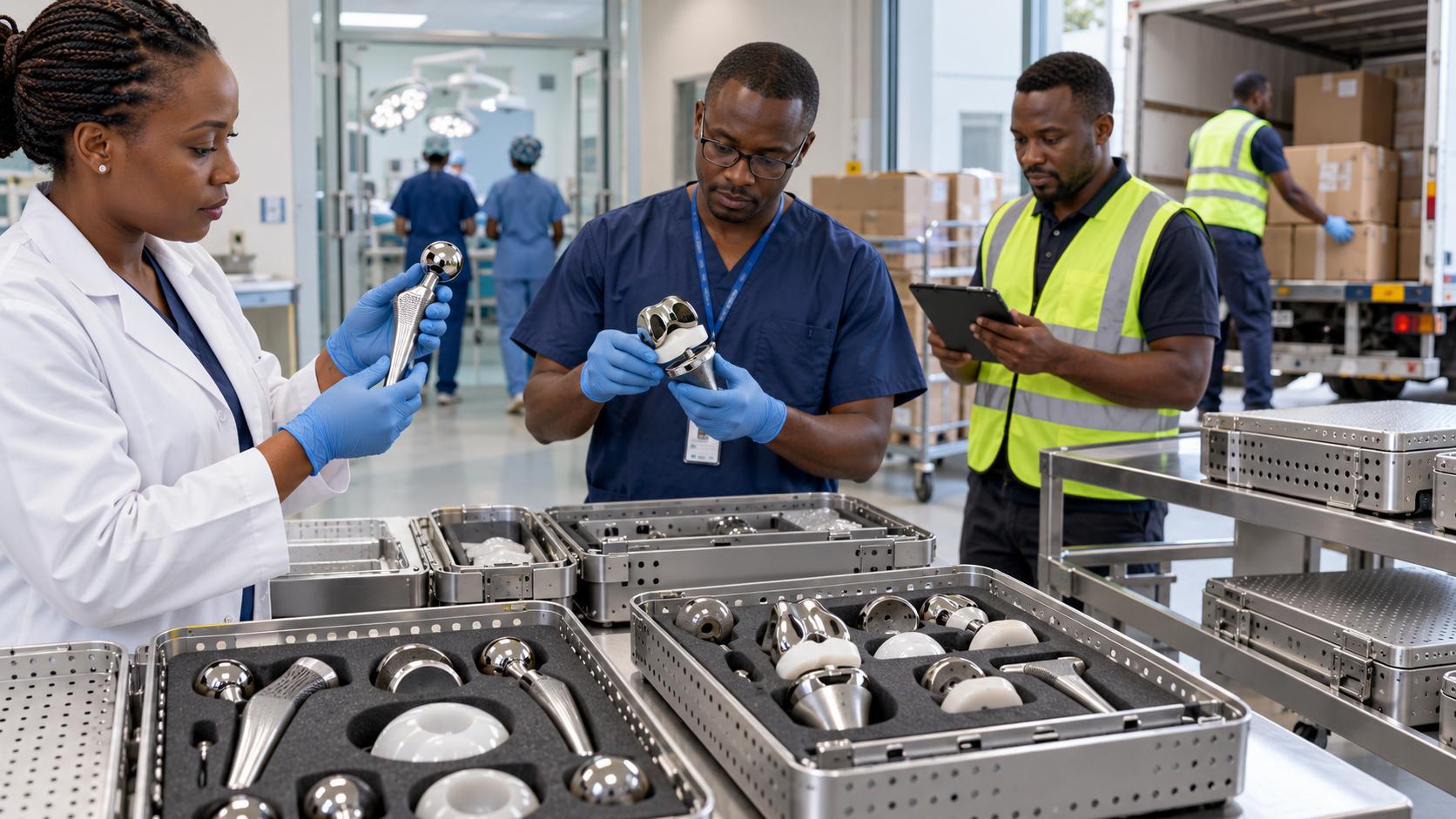
For Kenya, the best cooperation model should connect local market access with Ortonom Medical’s focused product portfolio. This allows hospitals and distribution partners to evaluate a more structured orthopedic pathway instead of a general product list.
| Distribution area | General medical distribution need | Orthopedic implant distribution need |
|---|---|---|
| Product scope | Many unrelated categories | Focused hip and knee systems |
| Stock model | Basic inventory availability | Size planning and replenishment |
| Instruments | Optional accessory handling | Required surgical workflow support |
| Documentation | Standard product records | Traceability and usage records |
| Cooperation | Product supply relationship | Long term hospital program support |
What Kenyan hospitals need from orthopedic implant distributors
Kenyan hospitals evaluating orthopedic implant cooperation need suppliers and distributors that can reduce uncertainty. In hip and knee replacement surgery, a missing component, unavailable size, incomplete tray, or weak documentation process can affect the surgical schedule.
The hospital’s purchasing team needs reliable product information and clear commercial communication. Orthopedic surgeons need confidence in the product pathway and instrument compatibility. Operating theatre teams need readiness before scheduled cases. Sterile services teams need organized instruments and preparation routines.
A strong distributor or supplier relationship must support all these hospital needs together. Ortonom Medical can help build this framework by presenting its OrtoHip and OrtoKnee systems as part of a complete arthroplasty support model for Kenyan hospitals.
Ortonom Medical hip systems for Kenya
Hip replacement programs are a key area for hospitals evaluating orthopedic implant supply in Kenya. A hospital or distributor searching for hip implant supplier Kenya needs clarity on product pathways, component availability, instrument requirements, and revision readiness.
Ortonom Medical’s hip portfolio includes OrtoHip Bipolar Hip System, OrtoHip K2 Revision Hip System, and OrtoHip Total Hip System. These systems address different hospital needs in hip arthroplasty while staying within one focused product family.

OrtoHip Bipolar Hip System can support hospitals that require a defined bipolar hip pathway. OrtoHip Total Hip System is relevant for total hip replacement programs where acetabular components, femoral components, trials, and instruments must be coordinated. OrtoHip K2 Revision Hip System supports institutions preparing for revision hip procedures and more complex arthroplasty planning.
Ortonom Medical hip portfolio
- OrtoHip Bipolar Hip System
- OrtoHip K2 Revision Hip System
- OrtoHip Total Hip System
For Kenyan hospitals and distributors, this portfolio helps create a clearer hip arthroplasty discussion. Instead of treating hip implants as isolated products, the supplier relationship can include stock planning, instrumentation, documentation, and long term cooperation.
Ortonom Medical knee systems for Kenya
Knee replacement is another important area in orthopedic hospital programs. Hospitals and distributors evaluating knee implant supplier Kenya need product availability, instrument readiness, stock continuity, and clear usage documentation.
Ortonom Medical’s knee portfolio includes OrtoKnee Fixed Knee System, OrtoKnee Revision Knee System, and OrtoKnee Mobile Knee System. This range supports fixed, mobile, and revision knee pathways within a focused arthroplasty portfolio.
OrtoKnee Fixed Knee System can support structured primary knee replacement programs. OrtoKnee Mobile Knee System provides another option for hospitals evaluating mobile knee arthroplasty pathways. OrtoKnee Revision Knee System is important for hospitals that want to prepare for complex knee cases and revision capability.
Ortonom Medical knee portfolio
- OrtoKnee Fixed Knee System
- OrtoKnee Revision Knee System
- OrtoKnee Mobile Knee System
For Kenyan procurement teams and distribution partners, the value of these systems increases when product supply is connected to instruments, traceability, training support, and periodic stock review.
Choosing a medical distributor for orthopedic hospital programs
Hospitals and healthcare organizations should evaluate medical distributors carefully when the product category is orthopedic implants. A general distributor may be able to deliver products, but arthroplasty requires operational depth and clear responsibilities.
The first evaluation point is product focus. The hospital should ask whether the distributor understands hip and knee implant systems or whether orthopedic implants are only one small part of a broad catalog. A focused approach usually creates clearer communication between the supplier, hospital, and surgical team.
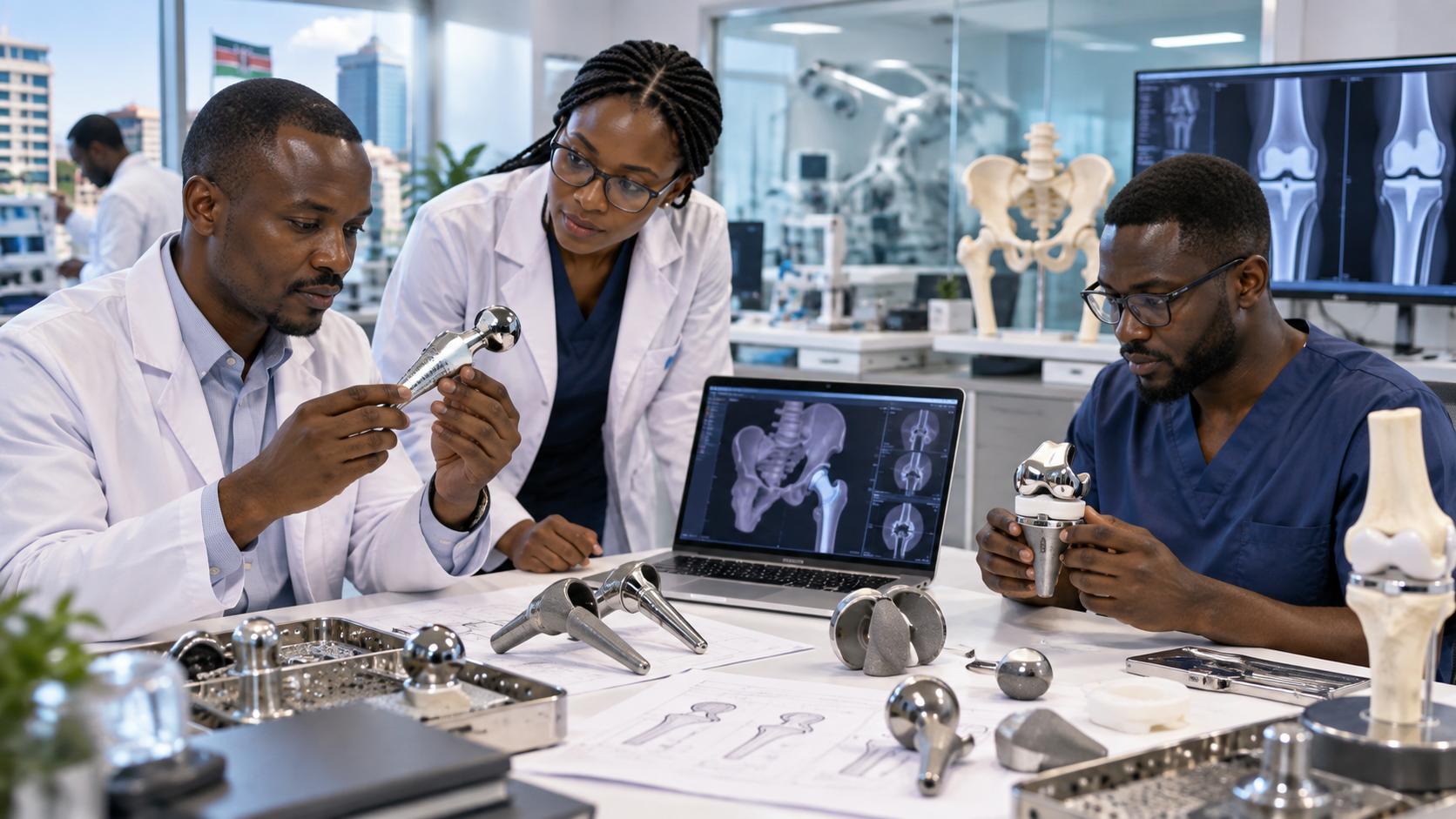
The second evaluation point is continuity. Hospitals need to understand how product availability will be maintained after the first order. This includes core sizes, replenishment timelines, urgent request handling, and documentation flow.
Important evaluation questions include:
- Which hip and knee implant systems are available
- Which procedures each system supports
- Which sizes should be planned as core stock
- Which instruments and trays are required
- How lot information and traceability will be recorded
- How replenishment will be managed after surgical use
- How urgent requirements will be escalated
- How supplier or distributor performance will be reviewed
Hospital procurement and medical distributors in Kenya
Hospital procurement teams in Kenya must balance budget, product quality, supplier reliability, documentation, and long term availability. In orthopedic implants, this balance becomes even more important because product supply is connected directly to surgical planning.
A purchasing committee should not evaluate hip and knee implant systems only by unit price. The hospital should consider whether the supplier can support the full arthroplasty pathway. A lower upfront price may not create value if the hospital later faces stock gaps, incomplete trays, weak records, or repeated urgent orders.
Ortonom Medical can support this procurement conversation by offering a focused portfolio and a structured cooperation model. The goal is to help Kenyan hospitals move from isolated implant purchasing toward predictable orthopedic program support.
| Procurement factor | Why it matters | Recommended supplier response |
|---|---|---|
| Product scope | Prevents mismatched expectations | Define OrtoHip and OrtoKnee systems |
| Availability | Protects surgical schedules | Plan core stock and replenishment |
| Documentation | Supports governance | Provide traceability and usage records |
| Instrument readiness | Supports operating room workflow | Define tray preparation routines |
| Review process | Improves long term cooperation | Hold periodic stock and performance reviews |
Documentation and traceability in orthopedic implant distribution
Documentation is one of the most important parts of orthopedic implant distribution. Hospitals need accurate product references, lot numbers, usage records, and traceability processes. These records support patient documentation, inventory control, internal audits, and supplier accountability.
A distributor that cannot support documentation clearly may create operational problems for the hospital. Even if products are delivered, weak records can make replenishment, tracking, and review more difficult.
For Ortonom Medical’s hip and knee systems, documentation should be connected to each product pathway. Kenyan hospitals and distribution partners should understand which system is used, which components are included, and how product usage will be recorded after surgery.
Instrument readiness and surgical workflow
In hip and knee arthroplasty, instruments are part of the complete system. An implant may be available, but surgery can still be delayed if instruments are incomplete, damaged, unavailable, or not prepared correctly.
Kenyan hospitals evaluating medical distributors for orthopedic products should include instrument readiness in supplier discussions. This means clarifying tray content, preparation routines, inspection steps, missing item reporting, and responsibilities between hospital and distributor.
Ortonom Medical’s OrtoHip and OrtoKnee systems should be presented with clear instrument planning. This helps surgeons, operating room teams, and sterile services teams work with greater confidence before scheduled cases.
Long term cooperation with Kenyan healthcare partners
Medical distributors in Kenya can play an important role in connecting international manufacturers with hospitals, orthopedic departments, and healthcare groups. However, the strongest cooperation is not based only on product movement. It is based on clear product scope, stable supply, hospital communication, documentation, and ongoing support.
Ortonom Medical can build cooperation with Kenyan healthcare partners around a focused hip and knee arthroplasty portfolio. This helps avoid confusion with unrelated medical categories and creates a stronger value proposition for orthopedic hospital programs.
A long term cooperation model should define the selected products, expected case volume, stock planning, instrument responsibilities, traceability process, training support, and performance review rhythm. These details help both the manufacturer and local partner support hospitals more reliably.
Key cooperation elements include:
- Selected OrtoHip and OrtoKnee systems
- Target hospital and orthopedic department profile
- Core stock and replenishment rules
- Instrument tray responsibilities
- Documentation and traceability process
- Communication and training support
- Periodic performance review
Kenya within East Africa’s orthopedic growth strategy
Kenya is strategically important for East Africa because of its healthcare infrastructure, private hospital activity, specialist services, and regional commercial connections. For orthopedic implant distribution, Kenya can become a strong entry point for structured arthroplasty cooperation.
A Kenya focused article can also support broader regional visibility. The same supply and hospital readiness logic can connect naturally with Tanzania, Uganda, Rwanda, Ethiopia, and wider African healthcare markets. However, the primary message should remain focused on Kenyan hospitals and distribution partners.
For Ortonom Medical, Kenya represents an opportunity to build relationships with healthcare organizations that need focused hip and knee implant systems. The message should be clear: Ortonom Medical is not a general medical equipment supplier. It is a focused orthopedic implant manufacturer and partner for hip and knee arthroplasty programs.
Related searches that support the Kenya content cluster
The keyword medical distributors in Kenya can be supported by related search terms that reflect different levels of intent. These terms help connect broad medical distribution traffic with Ortonom Medical’s orthopedic implant focus.
Relevant terms include orthopedic implant supplier Kenya, hip implant supplier Kenya, knee implant supplier Kenya, medical equipment distributors Kenya, hospital medical suppliers Kenya, arthroplasty implants Kenya, orthopedic distributor Kenya, hip and knee prosthesis Kenya, and orthopedic medical equipment Kenya.
These terms should be used naturally in sections where they match the topic. Product terms belong in the OrtoHip and OrtoKnee sections. Procurement terms belong in hospital purchasing sections. Distributor terms belong in cooperation and long term partnership sections.
Why Kenyan hospitals and distributors can consider Ortonom Medical
Kenyan hospitals and medical distributors need reliable partners that can support product clarity, supply continuity, instrument readiness, documentation, and long term cooperation. Ortonom Medical offers a focused portfolio centered on hip and knee arthroplasty rather than a broad catalog of unrelated medical equipment.
The OrtoHip portfolio supports bipolar, total hip, and revision hip pathways. The OrtoKnee portfolio supports fixed, mobile, and revision knee pathways. Together, these systems create a structured product base for hospital discussions and distributor cooperation.
For hospitals, orthopedic specialists, procurement teams, and distribution partners in Kenya, Ortonom Medical offers a focused pathway from general medical distributor search intent to specialized hip and knee arthroplasty cooperation.
Medical distributors in Kenya is a valuable keyword for reaching hospitals, procurement teams, healthcare groups, and local partners looking for reliable medical device cooperation. For Ortonom Medical, the opportunity is strongest when this broad search intent is guided toward orthopedic implant systems for hip and knee arthroplasty.
Ortonom Medical supports this need with OrtoHip Bipolar Hip System, OrtoHip K2 Revision Hip System, OrtoHip Total Hip System, OrtoKnee Fixed Knee System, OrtoKnee Revision Knee System, and OrtoKnee Mobile Knee System.
For Kenyan hospitals and distribution partners, Ortonom Medical offers a focused cooperation model based on product clarity, surgical readiness, stock continuity, documentation, traceability, and long term orthopedic program support.