



Orthopedic Specialist Instrument Sets
Orthopedic specialist instrument sets are the physical foundation of every hip and knee arthroplasty procedure. While implants receive most of the attention, instrument sets determine how accurately those implants are positioned. When instruments follow a clear surgical logic, alignment becomes predictable and outcomes become repeatable.
Orthopedic specialists rely on instruments that communicate the procedure visually. Each tool must appear at the right moment, in the right order, and with the right markings. When instrument sets are disorganized or inconsistent, cognitive load increases and the risk of intraoperative errors rises. Clear instrument flow protects focus and efficiency.
Hospital committees also evaluate instrument sets carefully during approval processes. They consider not only the design but also durability, serviceability, and CSSD compatibility. Instrument sets that support efficient sterilization cycles and predictable maintenance schedules reduce operational friction across departments.
For this reason, Orthopedic specialist instrument sets are evaluated as complete clinical systems rather than accessory components. Their design directly affects surgical reliability, staff confidence, and long-term program stability.
How orthopedic specialists evaluate instrument set design
Orthopedic specialists evaluate instrument sets based on clarity and usability. The sequence of instruments must match the surgical workflow exactly. When trays mirror the clinical steps, surgeons and scrub teams can anticipate each action naturally.
Visibility is equally important. Laser markings, orientation indicators, and size references must remain readable under operating room lighting. Specialists depend on visual confirmation to ensure correct positioning and sizing throughout the procedure.
Instrument ergonomics also influence surgical precision. Handles must allow stable grip even with gloved hands. Weight balance must reduce fatigue during longer procedures. These factors improve surgeon control and reduce variability.
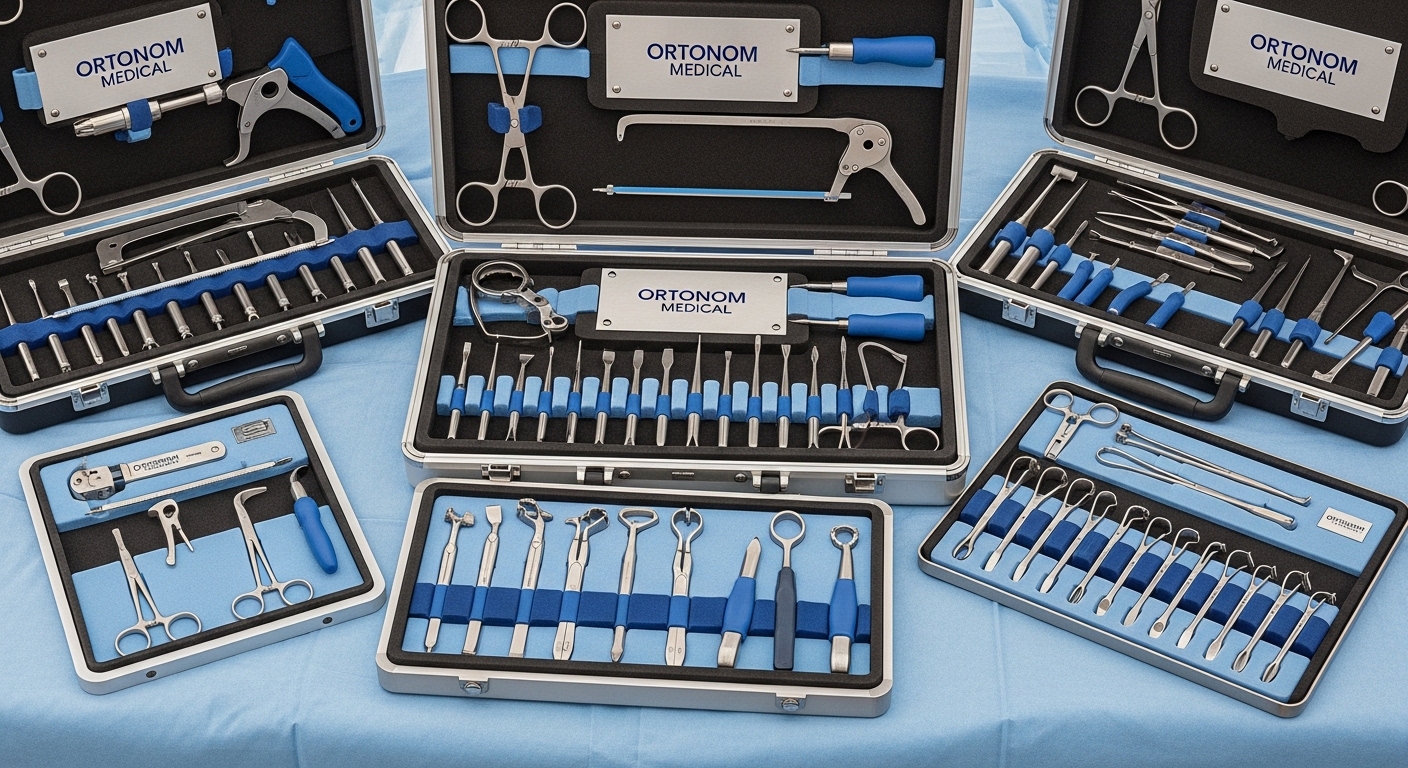
Orthopedic specialist instrument sets must also support different levels of experience. Well-designed instruments allow experienced surgeons to move efficiently while helping newer surgeons follow a safe and structured pathway.
Ortonom Medical instrument sets and clinical workflow integration
Ortonom Medical develops Orthopedic specialist instrument sets that follow the natural rhythm of hip and knee arthroplasty. Each tray is organized according to procedural sequence rather than catalog grouping. This alignment reduces confusion and improves intraoperative efficiency.
Hip instrument sets include canal preparation tools, broaches, trial heads, and implant seating instruments in logical progression. Each step flows naturally into the next. Surgeons can maintain focus without searching for tools.
Knee instrument sets include alignment guides, resection blocks, trial components, and final fixation instruments arranged according to surgical order. This structure supports consistent bone preparation and implant positioning.
By aligning instrument layout with surgical logic, Ortonom Medical ensures Orthopedic specialist instrument sets support both speed and precision. The operating room becomes calmer and more predictable.
Orthopedic specialist instrument sets must withstand repeated sterilization cycles without performance degradation. Hospitals expect instruments to maintain structural integrity and measurement accuracy over long service periods.
Ortonom Medical instruments use materials selected for durability and sterilization stability. Surface treatments protect against corrosion and mechanical wear. This ensures consistent performance over time.
Sterilization departments also evaluate tray design. Instruments must allow efficient cleaning, drainage, and packaging. Trays must support standard sterilization protocols without requiring special handling procedures.
Reliable instrument sets reduce repair frequency, minimize downtime, and improve hospital operational efficiency. This reliability strengthens trust between orthopedic specialists and implant providers.
Training advantages of structured instrument systems
Orthopedic specialist instrument sets play a critical role in surgical training. Structured trays help surgeons and operating room staff understand procedural flow more quickly. This improves training efficiency and reduces onboarding time.
Ortonom Medical provides training programs aligned with instrument layout. Surgeons learn using the same sequence they will follow in the operating room. This consistency improves confidence and reduces errors.
Visual clarity and consistent organization allow teams to communicate more effectively during procedures. Staff can anticipate instrument needs without verbal clarification, improving surgical flow.
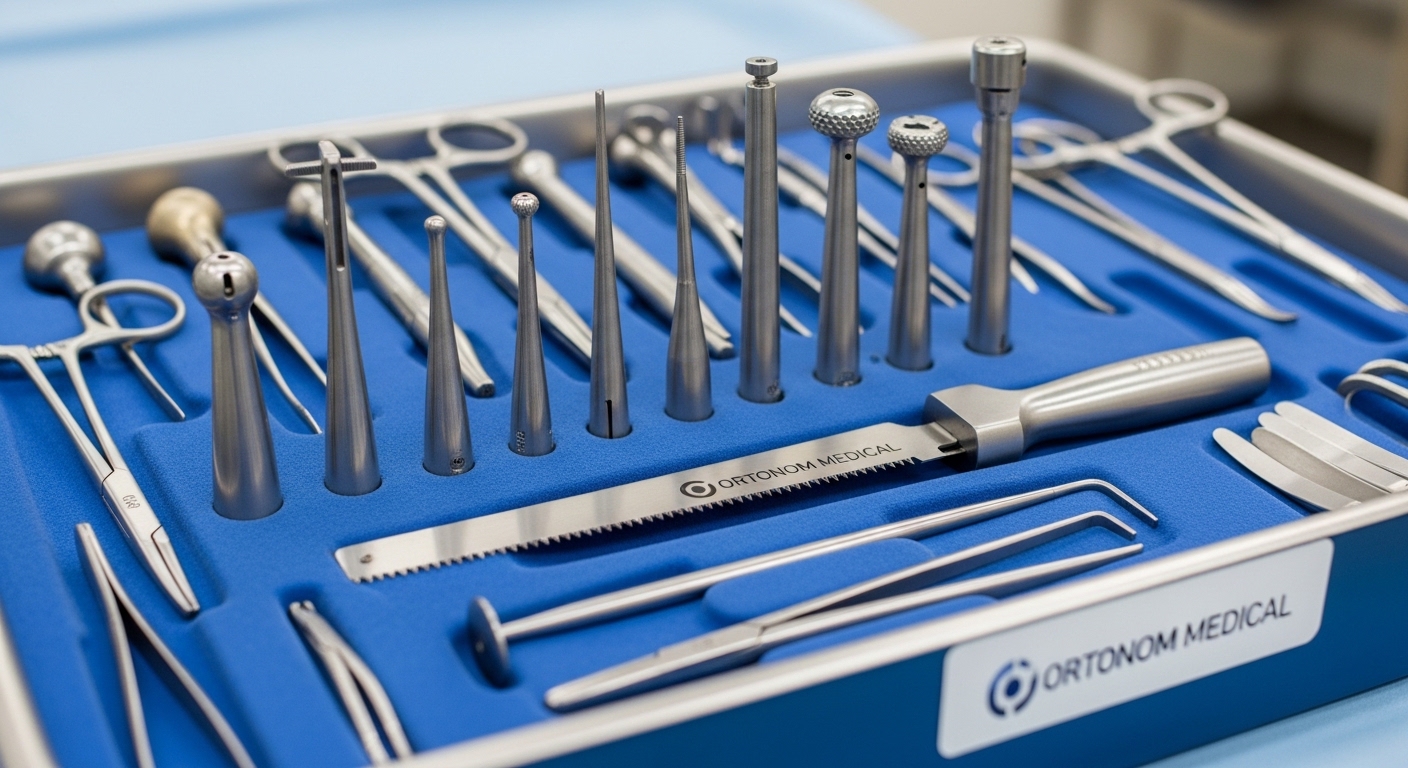
This structured approach allows hospitals to expand arthroplasty programs safely. Orthopedic specialist instrument sets become a reliable teaching and operational tool.
Instrument logistics and hospital supply continuity
Orthopedic specialist instrument sets must be available when needed. Missing or delayed instruments can disrupt surgical schedules and affect patient care. Reliable logistics are therefore essential.
Ortonom Medical implements inventory and maintenance strategies designed to ensure continuous instrument availability. Critical instrument sets remain accessible locally, while backup systems support continuity.
Preventive maintenance programs ensure instruments remain in optimal condition. This reduces unexpected failures and improves long-term reliability.
Consistent instrument availability supports orthopedic specialists and strengthens hospital confidence in implant programs.
Orthopedic specialist instrument sets are a critical factor in hospital tenders and consultant evaluations. Consultants assess instrument usability, durability, and training compatibility before approving implant systems.
Hospitals prefer instrument systems that simplify surgical workflow and reduce training complexity. This improves clinical efficiency and patient outcomes.
Documentation supporting instrument design, maintenance, and sterilization compatibility strengthens tender applications. Hospitals value transparency and structured support.
Ortonom Medical instrument systems provide this clarity and consistency, improving success rates in orthopedic specialist hospital approvals.
Instrument system overview and clinical applications
| Instrument Set | Clinical Use | Key Features | Training Benefits |
|---|---|---|---|
| Hip Primary Instrument Set | Total hip arthroplasty | Structured broach progression and implant seating tools | Supports consistent hip reconstruction training |
| Knee Primary Instrument Set | Total knee arthroplasty | Alignment guides and resection blocks in procedural order | Improves implant positioning accuracy |
| Hip Partial Instrument Set | Bipolar and partial hip procedures | Simplified implant selection and placement tools | Supports trauma and geriatric procedures |
| Revision Instrument Set | Complex arthroplasty | Implant removal and reconstruction tools | Enables advanced surgical procedures |
These Orthopedic specialist instrument sets provide comprehensive support for hospital arthroplasty programs across Africa.
Supporting orthopedic specialists across Africa
Orthopedic specialist instrument sets must perform reliably across diverse healthcare systems. Hospitals in South Africa, Morocco, Algeria, Egypt, Nigeria, Kenya, Tanzania, Ghana, Senegal, Namibia, Cameroon, Guinea, Libya, Gabon, Côte d’Ivoire, and DRC face different operational challenges.
Ortonom Medical provides consistent instrument systems that support these varied environments. Standardized design allows orthopedic specialists to work confidently regardless of location.

Training, documentation, and logistics support ensure smooth program implementation. Hospitals benefit from stable and predictable surgical workflows.
Orthopedic specialist instrument sets therefore serve as the operational backbone of successful arthroplasty programs across Africa.
Instrument systems as the foundation of orthopedic implant programs
Orthopedic specialist instrument sets define the success of arthroplasty programs. They support surgical precision, staff training, and operational stability. Hospitals depend on instrument reliability to maintain consistent patient outcomes.
Ortonom Medical designs instrument systems to support orthopedic specialists, hospital committees, and healthcare providers. Structured instrument sets improve surgical performance and simplify training.
Reliable instruments strengthen hospital confidence and improve program sustainability. Orthopedic specialist instrument sets therefore represent a critical component of modern orthopedic care.
Hospitals and distributors seeking dependable arthroplasty programs can rely on Ortonom Medical instrument systems to support long-term clinical success.