



Orthopedic Suppliers in Kenya
Orthopedic suppliers in Kenya are judged on one thing first: whether they can keep surgery moving without surprises. In a market where private hospitals, specialist centers, and growing surgical departments must protect theatre time, the “best supplier” is the one that delivers predictable readiness. That readiness is not only product availability. It includes correct sizes, complete sets, reliable replenishment, and support that stays consistent when teams rotate.
Orthopedic suppliers in Kenya also sit inside a trust chain. Surgeons want a partner that reduces variability and supports repeatable routines. Procurement teams want traceability, clear documentation, and pricing stability. OR and sterile services teams want instrument discipline that prevents missing items and reprocessing confusion. When any link breaks, cases get delayed, emergency purchasing increases, and confidence drops quickly.
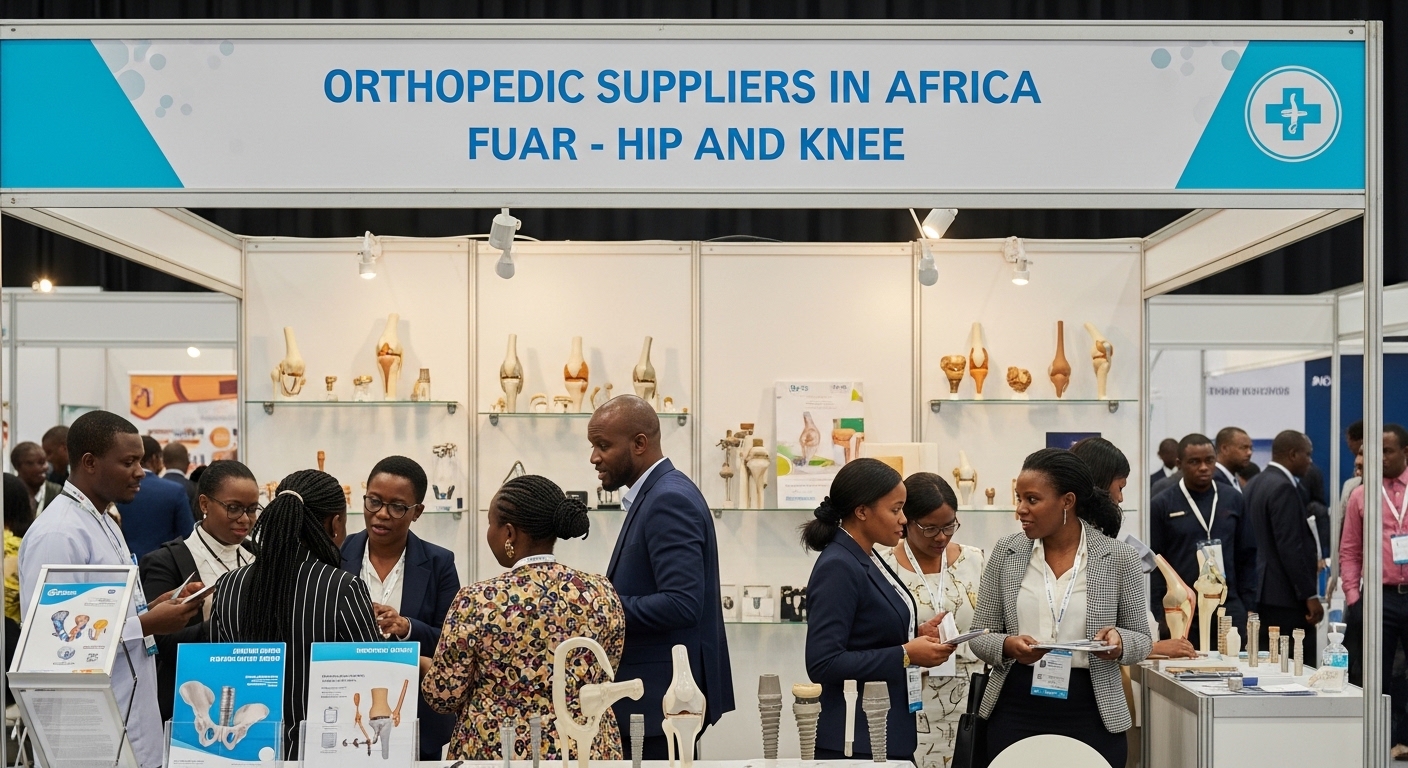
Ortonom Medical supports Kenyan hospitals and healthcare organizations as a hip and knee implant manufacturer with a program-first mindset. The goal is to help facilities move from evaluation to routine arthroplasty delivery with controlled operational risk. That means supporting the full adoption system, not just shipment.
Kenya’s orthopedic purchasing reality
Kenya’s orthopedic demand is shaped by increasing elective procedure volume, higher patient expectations, and a growing preference for predictable scheduling. Hospitals that succeed in this environment build orthopedic services like a program, not as a series of one-off purchases. That naturally raises the bar for suppliers because supply reliability becomes part of clinical performance.
A practical way to understand orthopedic suppliers in Kenya is to look at where friction usually happens. Delays occur when a planned case meets an unplanned gap: a missing size, an incomplete tray, a late delivery, or unclear handling routines. Those gaps are rarely caused by a single mistake. They come from weak system design, unclear responsibilities, and inconsistent routines across departments.
The supplier that wins long-term in Kenya is typically the one that removes these gaps through structured planning. That includes a core-stock logic aligned to real case volume, defined reorder points, predictable replenishment, and hospital-friendly processes that are easy to run day after day.
What “surgical readiness” means for Kenyan hospitals
Surgical readiness is not a slogan. It is the ability to start cases on time with the correct implants, the correct sizes, and complete instrumentation prepared according to stable routines. For orthopedic suppliers in Kenya, readiness is the proof point that transforms a vendor into a partner.
In arthroplasty, readiness depends on predictable availability of core items. Hospitals want the high-runner components on hand, not promised. They want a replenishment model that matches real usage, not theoretical forecasts. They also want a clear plan for urgent exceptions that does not turn every issue into a crisis.
Readiness also includes documentation and coordination. Teams need clear product and instrument information, consistent handling rules, and a shared language across surgeons, OR staff, and sterile services. When readiness is treated as a controlled process, the hospital’s scheduling reliability improves and program growth becomes easier.
How to evaluate orthopedic suppliers in Kenya without wasting time
Hospitals often lose time comparing suppliers using generic checklists that do not reflect OR realities. A better approach is to evaluate suppliers based on failure-prevention. Ask how the partner prevents cancellations and delays, not how they describe a product.
A practical evaluation focuses on three areas: supply continuity, instrument discipline, and support responsiveness. The supplier should be able to explain how core sizes are defined, how stock is monitored, and how replenishment cadence is managed. They should show how tray completeness is protected and how reprocessing guidance is kept consistent.
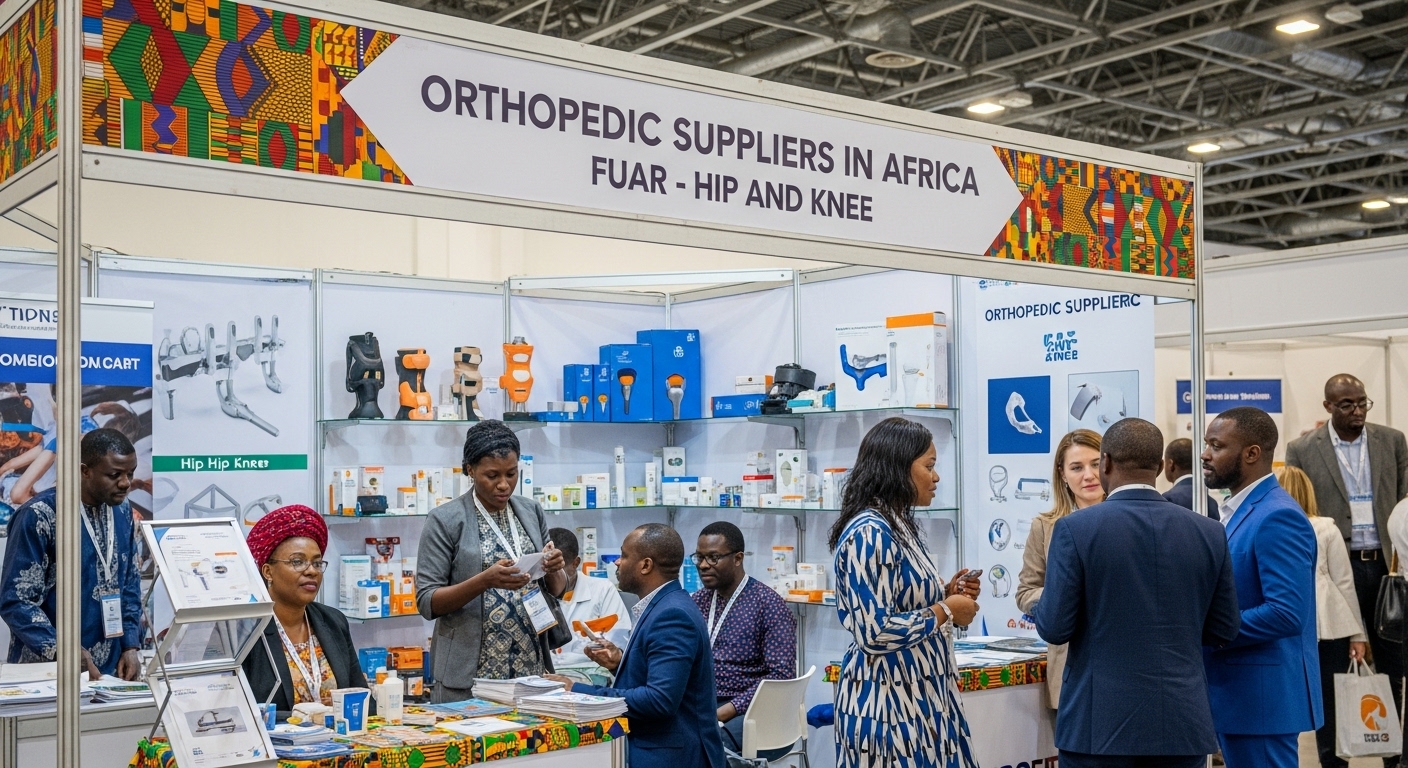
Below is a decision table Kenyan hospitals can use to compare orthopedic suppliers quickly:
| Evaluation area | What to check | What “good” looks like in Kenya |
|---|---|---|
| Core availability | Are high-runner sizes consistently available | Min levels, reorder points, predictable refill cadence |
| Instrument completeness | Do trays arrive complete and stay complete | Tray maps, readiness checks, discrepancy escalation |
| Response speed | What happens when something is urgent | Clear urgent pathway and defined time response |
| Traceability | Can the hospital audit lots and usage | Simple capture routine and consistent reporting |
| Continuity | Can the partner scale with the program | Stable routines that hold when volume increases |
This style of evaluation favors suppliers that can execute under pressure, which is exactly what Kenyan arthroplasty programs require.
What orthopedic surgeons in Kenya care about most
Surgeons care about outcomes, but they feel supplier quality through workflow stability. If the same implant system behaves consistently and the same instruments are always ready, surgeons can focus on technique rather than troubleshooting. That is why supplier discipline quickly becomes surgeon confidence.
For orthopedic suppliers in Kenya, surgeon trust is often built around predictability: predictable sizing logic, predictable instrumentation behavior, and predictable availability. A supplier that can keep the same routine across cases reduces intraoperative variability and supports smoother case flow, especially in busy theatres.
Surgeons also notice when a supplier’s support model is mature. Mature support means clear documentation, a stable training approach, and a partner who can manage first cases carefully while protecting theatre efficiency. When that maturity is visible, adoption becomes easier because clinical leadership feels less exposed to program risk.
Sterile services and tray discipline in Kenyan workflows
In real hospitals, sterile services performance is a major adoption driver. Even strong implants fail operationally when trays are incomplete, reprocessing steps are unclear, or inspection routines are inconsistent. Orthopedic suppliers in Kenya that treat sterile services as an afterthought usually create ongoing friction.
A strong approach starts with simple tray logic. Clear tray maps, consistent labeling, and predictable assembly routines reduce mistakes. It also includes inspection points and maintenance habits that keep instruments reliable. When sterile services teams have clarity, they become a stabilizing force for the entire program.
Hospitals also need a predictable loop for discrepancies. Missing instruments, damaged parts, or unclear handling rules must follow a defined escalation path. If escalation is informal, problems repeat. If escalation is structured, problems get resolved and prevented, which is how stable arthroplasty programs are built.
Ortonom Medical and a program-first approach for Kenya
Ortonom Medical supports Kenyan hospitals with hip and knee arthroplasty systems designed for program continuity. The objective is to help hospitals build predictable joint replacement delivery with clear routines, stable availability planning, and support that does not collapse after the first few cases.

Ortonom Medical hip systems include:
- OrtoHip Bipolar Hip System
- OrtoHip Total Hip System
- OrtoHip K2 Revision Hip System
Ortonom Medical knee systems include:
- OrtoKnee Fixed Knee System
- OrtoKnee Mobile Knee System
- OrtoKnee Revision Knee System
This range supports hospitals that want continuity across primary workflows and revision pathways. It also supports hospitals that prefer fewer vendor relationships and more consistent program routines, which becomes increasingly important as Kenyan orthopedic services scale.
A Kenya-focused implementation playbook that hospitals can run
A strong supplier should deliver an implementation playbook that hospital teams can operate without constant external dependence. Orthopedic suppliers in Kenya earn trust when they make the hospital more stable, not more dependent. That means clear routines, measurable controls, and an approach that can be repeated as staffing changes.
Below is a practical implementation checklist that Kenyan hospitals can use with suppliers during adoption:
- Define procedure scope and core size list for planned case volume
- Set minimum levels and reorder points for high-runner items
- Agree on replenishment cadence and an urgent exception pathway
- Establish tray readiness checks before scheduled lists
- Align sterile services reprocessing and inspection routines
- Standardize usage capture for traceability and reporting
- Review performance monthly and adjust stock levels based on trends
This playbook is designed to prevent predictable failures. It makes adoption easier for procurement, safer for surgeons, and more stable for theatre managers.
To keep the program measurable, hospitals can track a small KPI set:
| KPI | What it tells the hospital | Why it matters in Kenya |
|---|---|---|
| Stockout events | Items unavailable when needed | Direct driver of cancellations |
| Tray discrepancy rate | Missing or mismatched instruments | Predicts OR delays |
| Urgent delivery count | How often the system fails planning | Signals weak replenishment |
| Expiry loss | Waste from poor stock design | Indicates inventory discipline |
| Case start delays | Delays tied to supply readiness | Visible impact on theatre |
When these KPIs move in the right direction, suppliers are not just delivering products, they are improving hospital performance.
What success looks like for orthopedic suppliers in Kenya
Success is not an initial order. Success is a program that runs smoothly week after week. Cases start on time, core sizes remain available, and instrument sets are consistently complete. Surgeons feel confident because the workflow is stable and exceptions are handled predictably.
From a hospital leadership perspective, success is operational clarity. Fewer cancellations, fewer emergency purchases, fewer last-minute substitutions, and better cost visibility per case. These outcomes matter because they protect patient experience and theatre utilization while making orthopedic growth financially defensible.
For Ortonom Medical, success in Kenya means being a long-term program partner for hip and knee arthroplasty. That partnership is built through disciplined supply planning, predictable support, and routines that keep working as hospitals expand orthopedic capacity.