



Prosthesis Manufacturers
Prosthesis manufacturers are selected by African hospitals through a practical question: can this partner help us run reliable hip and knee arthroplasty programs without supply gaps, missing instruments, or workflow instability? For hospitals, the decision is not only about a device. It is about whether the manufacturer can support repeatable clinical routines, predictable availability, and hospital agreements that remain stable after the first order.
Prosthesis manufacturers working in the orthopedic field must also understand that African healthcare markets are not looking for vague general medical supply. The strongest opportunity is in focused arthroplasty partnerships where hip and knee systems are supported with clear product pathways, instrument discipline, stock planning, and structured implementation. Hospitals want fewer surprises and more control.
Ortonom Medical focuses on hip and knee implant systems for hospitals and healthcare organizations. The goal is to support African hospitals with a focused portfolio and a program first approach that helps decision makers move from evaluation to long term cooperation. This article explains how prosthesis manufacturers can win hospital agreements in Africa by proving reliability, readiness, and product clarity.
Why prosthesis manufacturers must think like hospital program partners
Hospitals do not experience prosthesis manufacturers as product catalogs. They experience them through weekly performance. If cases begin on time, core sizes remain available, and instrument sets are ready, the manufacturer becomes trusted. If delays, substitutions, or missing components appear repeatedly, the relationship weakens quickly.
A hospital agreement is usually built around risk control. Procurement wants to know how availability will be protected. Surgeons want consistency in clinical workflow. Theatre managers want fewer disruptions. Sterile services teams want clear tray handling and inspection routines. If a manufacturer cannot answer these needs together, the hospital may hesitate even if the implant line looks attractive.
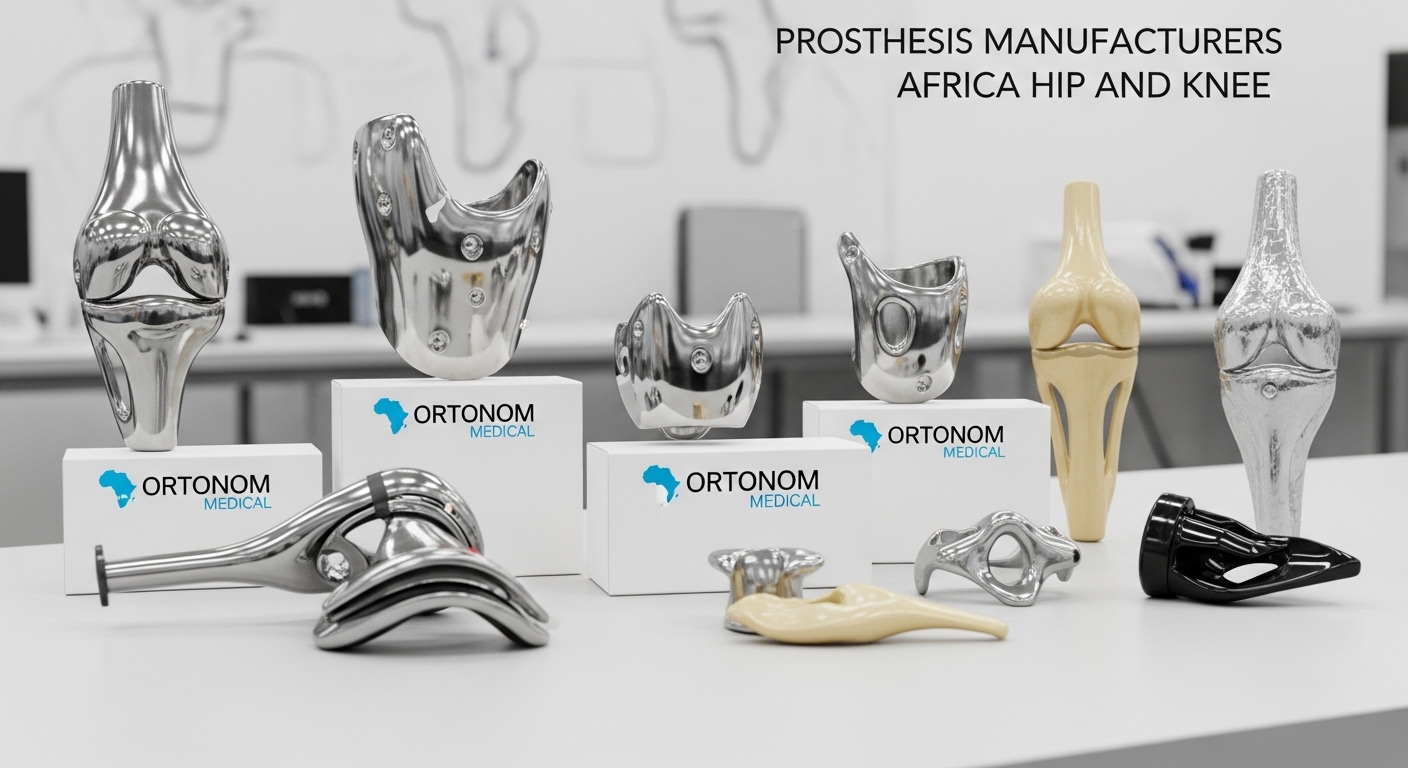
Program thinking is especially important for African hospitals because many markets are expanding orthopedic capacity. A hospital may begin with routine hip and knee cases, then gradually increase volume or complexity. Prosthesis manufacturers that can support this growth with stable routines are better positioned for long term agreements.
Africa target markets and what hospital agreements require
African hospital agreements become stronger when market focus is specific. A generic Africa message is not enough when hospitals in each region face different procurement, logistics, and program growth realities. Ortonom Medical’s target countries include South Africa Gauteng, Morocco, Algeria, Egypt, Nigeria, Ghana, Kenya, Tanzania, Libya, Gabon, Senegal, Namibia, Cameroon, Guinea, DRC, and Côte d’Ivoire.
In South Africa Gauteng and Namibia, hospitals often place strong emphasis on theatre schedule protection and fast response. In Morocco, Algeria, Egypt, and Libya, governance, documentation, and auditable routines can be decisive. In Nigeria, Ghana, Senegal, Côte d’Ivoire, and Guinea, program growth and multi site expansion create demand for scalable availability. In Kenya and Tanzania, hospitals often value readiness routines that help orthopedic services grow without operational chaos. In Cameroon, DRC, and Gabon, predictable execution and continuity can strongly influence trust.
For prosthesis manufacturers, the lesson is clear. Hospitals want a partner who understands their regional operating pressure. A manufacturer that connects product supply, documentation, training support, and replenishment planning to each market’s reality will sound more credible than a supplier offering generic promises.
| Region focus | Target markets | Hospital priority | Manufacturer proof point |
|---|---|---|---|
| Southern Africa | South Africa Gauteng and Namibia | Schedule protection and response | Core sizes ready and urgent pathway defined |
| North Africa | Morocco Algeria Egypt and Libya | Governance and documentation | Auditable routines and clear reporting |
| West Africa | Nigeria Ghana Senegal Côte d’Ivoire and Guinea | Scaling without disruption | Repeatable program model across sites |
| East Africa | Kenya and Tanzania | Readiness while volume grows | Simple routines hospital teams can execute |
| Central Africa | Cameroon DRC and Gabon | Continuity under constraints | Predictable supply and stable support |
Ortonom Medical product portfolio for focused arthroplasty programs
Hospitals prefer prosthesis manufacturers with a focused product portfolio because focus supports standardization. When a manufacturer tries to be everything to everyone, the message becomes weak. In orthopedic arthroplasty, clarity is stronger. Ortonom Medical’s portfolio is built around hip and knee systems that support hospital programs and long term cooperation.
Ortonom Medical hip systems include OrtoHip Bipolar Hip System, OrtoHip Total Hip System, and OrtoHip K2 Revision Hip System. These products support hospitals that want a stable hip pathway with continuity from routine coverage to revision readiness. For African hospitals, this matters because a program should not collapse when case complexity increases.
Ortonom Medical knee systems include OrtoKnee Fixed Knee System, OrtoKnee Mobile Knee System, and OrtoKnee Revision Knee System. These systems help hospitals build knee programs with consistent workflows and a clear revision pathway. Together, the OrtoHip and OrtoKnee lines allow hospitals to evaluate Ortonom Medical as a focused arthroplasty partner rather than a broad unrelated medical supplier.
Product lines to include in hospital discussions:
- OrtoHip Bipolar Hip System
- OrtoHip Total Hip System
- OrtoHip K2 Revision Hip System
- OrtoKnee Fixed Knee System
- OrtoKnee Mobile Knee System
- OrtoKnee Revision Knee System
How hospitals evaluate prosthesis manufacturers before agreement
Hospital decision makers usually evaluate prosthesis manufacturers through several departments. Surgeons assess clinical workflow and system confidence. Procurement evaluates availability, pricing structure, documentation, and traceability. Theatre leadership looks at schedule stability. Sterile services checks whether instruments and trays can be managed reliably. A manufacturer must speak to the whole decision chain.
The fastest path to agreement is to reduce unanswered risk. Hospitals need to see how the program will run after approval. They want clarity on stock levels, replenishment cadence, traceability routines, and escalation when urgent situations occur. If those details are missing, the decision becomes slower because every department sees a possible failure point.
A strong manufacturer presentation should show how routine delivery will be protected. It should explain what products are included, how core sizes are managed, how instruments are supported, how reporting works, and how the hospital can scale from early cases to regular weekly volume.
| Evaluation area | What hospitals check | What strong manufacturers provide |
|---|---|---|
| Product focus | Is the portfolio relevant to hip and knee programs | Clear OrtoHip and OrtoKnee pathway |
| Availability | Can planned lists be protected | Core size rules and replenishment cadence |
| Instrument readiness | Can sets remain complete and usable | Tray checks and discrepancy escalation |
| Governance | Can the program be audited | Usage capture and reporting routines |
| Growth support | Can the program scale | Repeatable model for more sites and higher volume |
Building hospital agreements around availability and continuity
Availability is one of the strongest trust signals for prosthesis manufacturers. Hospitals can accept many things, but they cannot accept repeated cancellations caused by stock gaps. In arthroplasty, the correct component must be available when the case is scheduled. Promises do not protect theatre time. Routines do.
A strong availability model begins with defining core sizes for hip and knee programs. It then sets minimum availability rules, reorder points, and replenishment cadence. The model should be simple enough for hospital teams to understand and strict enough for procurement to monitor. This is especially important in Egypt, South Africa Gauteng, Nigeria, Morocco, Algeria, and Kenya where high volume or premium expectations make delays highly visible.
Continuity also includes handling exceptions. Urgent cases, unexpected size requirements, packaging issues, or instrument discrepancies must follow a defined escalation process. If every exception becomes improvised, the hospital loses confidence. If every exception follows a known pathway, the program feels controlled.
Operational controls hospitals expect:
- Core size planning for hip and knee systems
- Minimum stock levels for high runner components
- Predictable replenishment cadence
- Cycle count and discrepancy escalation routines
- Expiry control and packaging integrity checks
- Urgent pathway for time sensitive cases
- Reporting that hospital leadership can review
Instrument discipline and sterile services confidence
A prosthesis manufacturer may have strong implants, but the hospital program can still fail if instruments are not managed properly. In hip and knee arthroplasty, instrument readiness directly affects schedule stability. Missing tools, incomplete trays, unclear inspection routines, or inconsistent reprocessing can delay cases and create frustration across departments.
Sterile services teams need clarity. They need tray maps, inspection points, handling routines, and escalation pathways when something is missing or damaged. When sterile services can manage the system confidently, the entire program becomes more stable. This is often underestimated until volume increases.
For African hospital agreements, instrument discipline should be presented as part of the value proposition. It shows that the manufacturer understands hospital reality. It also reassures surgeons because predictable instruments support predictable technique.
Clinical support without turning the article into general medical content
Clinical support in this context does not mean offering every kind of healthcare service. It means supporting hip and knee arthroplasty adoption in a disciplined and focused way. Prosthesis manufacturers should avoid sounding like broad medical equipment suppliers when their true strength is orthopedic implants.
Hospitals value support that protects routine use. That includes product orientation, workflow explanation, documentation clarity, and refresh routines when teams change. The purpose is to reduce variability and help the hospital maintain consistent practice over time.
A staged support model is usually easier for hospitals to accept because it matches how programs actually grow. Early support protects first cases. Follow up support stabilizes routine use. Refresh support keeps the program consistent as staff rotates or volume increases.
| Support stage | Audience | Purpose | Hospital benefit |
|---|---|---|---|
| Program orientation | Surgeons and OR leads | Introduce product pathway and workflow | Faster adoption with fewer gaps |
| Early case support | Core surgical team | Stabilize first cases and routines | Reduced early disruption |
| Continuity refresh | Rotating staff and site champions | Maintain consistency over time | Stable performance as volume grows |
Turning product interest into hospital agreements
A hospital agreement usually starts with interest but only moves forward when the program looks executable. That is where many prosthesis manufacturers lose momentum. They present products, but they do not present the operating model. Hospitals need both.
For Ortonom Medical, the agreement story should connect the product portfolio to the hospital’s operational concerns. OrtoHip and OrtoKnee systems should be positioned as part of a structured program that protects scheduling, supports standardization, and gives procurement measurable routines. This is more persuasive than product naming alone.
Hospitals in South Africa Gauteng, Morocco, Algeria, Egypt, Nigeria, Ghana, Kenya, Tanzania, Libya, Gabon, Senegal, Namibia, Cameroon, Guinea, DRC, and Côte d’Ivoire are not identical, but they share the same agreement logic. They want predictable delivery, controlled risk, and a partner who can support daily hospital reality.
Closing perspective
Prosthesis manufacturers that succeed in African hospital markets are the ones that prove reliability before the agreement is signed. Hospitals want focused arthroplasty partners who understand hip and knee programs, not broad claims that drift into unrelated medical categories. They want product clarity, operational discipline, and support that helps them run stable programs.
Ortonom Medical is positioned around that focused need. With OrtoHip Bipolar Hip System, OrtoHip Total Hip System, OrtoHip K2 Revision Hip System, OrtoKnee Fixed Knee System, OrtoKnee Mobile Knee System, and OrtoKnee Revision Knee System, hospitals can evaluate a clear hip and knee arthroplasty platform built for program continuity, hospital agreements, and long term reliability across African markets.