



PS Knee Prosthesis
Posterior-stabilized (PS) design removes the need for a functional posterior cruciate ligament (PCL) and controls rollback with a cam-post mechanism. In practical terms, surgeons choose PS constructs when the PCL is deficient, when they want more predictable femoral rollback, or when soft-tissue balancing would benefit from the additional mechanical constraint provided by the post. In this article, we walk through how our portfolio translates the PS philosophy into day-to-day surgical confidence.
Across varied case mixes—from primary osteoarthritis to complex deformity—PS knees have proven attractive because the post engages at mid-flexion and supports a controlled femoral rollback arc. This consistency can reduce paradoxical motion and help deliver stable mid-flexion kinematics. For hospitals building standardized pathways, the repeatability of a ps knee replacement program becomes a strategic lever for quality.
The clinical conversation is not only about mechanics; it is also about training and enablement. Ortonom Medical pairs design choices with clear technique guidance so that surgeons and OR teams can deliver the same level of precision case after case. Distributors benefit from this clarity: the more consistent the OR experience, the stronger the word of mouth, procurement confidence, and reorder discipline.
Finally, the PS approach respects how orthopedics has always been practiced—through trust, mentorship, and well-understood instrumentation—while leaning into data, checklists, and modern educational media. That blend is how we scale a ps knee prosthesis program in new markets without losing the craftsmanship that surgeons value.
Product Architecture: From Components to Cohesion
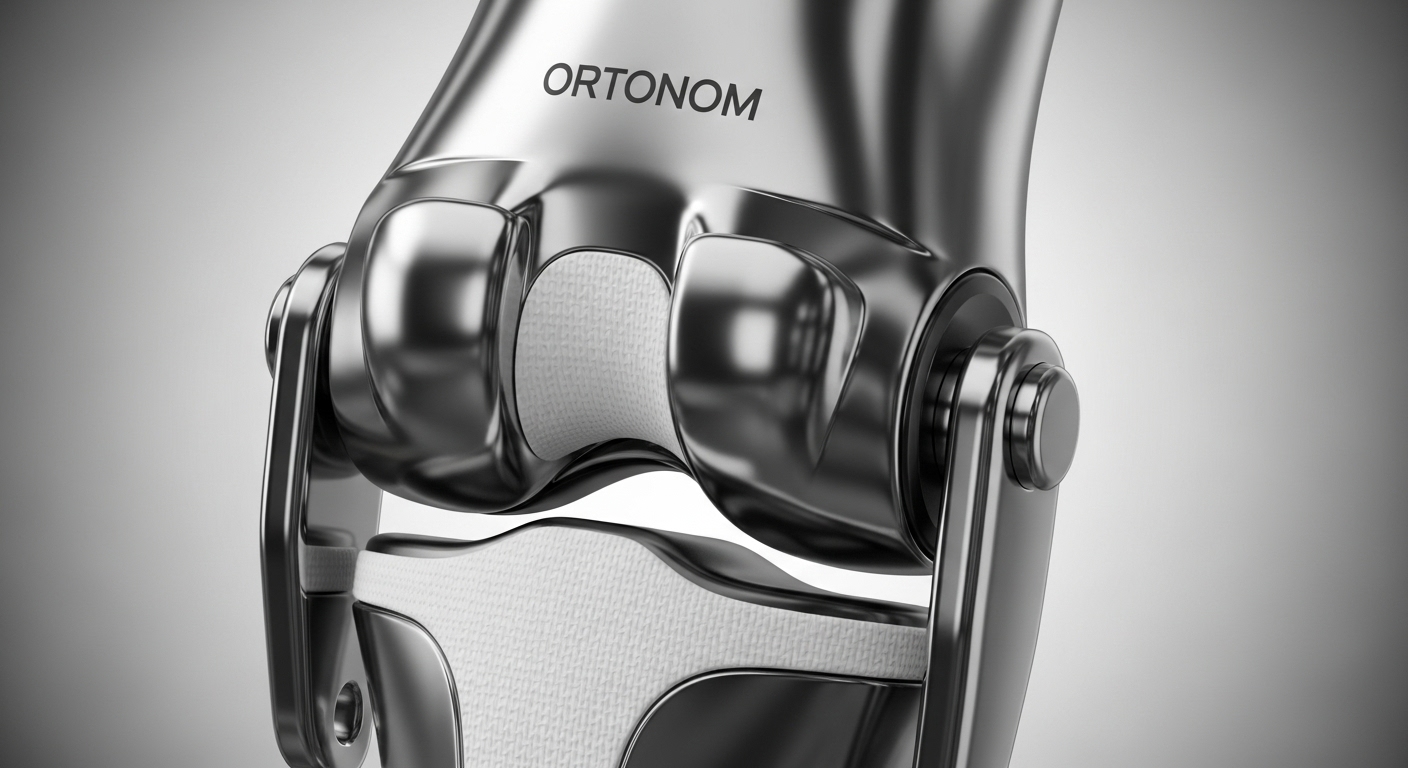
A ps knee implant from Ortonom Medical is built as a family of interoperable components: femoral component, tibial baseplate, polyethylene insert (PS post), and patella. Each part is validated to work as a system, minimizing sizing guesswork and streamlining instrument selection. Surgeons can focus on alignment and soft-tissue balance while relying on predictable engagement of the cam-post pair.
- Femoral component. Contoured condyles, a deepened trochlear groove, and polished cam surfaces support smooth post engagement under load. Multiple sizes help match anatomy, and posterior condyle geometry aims to preserve flexion stability without over-constraint. Surface finishes are engineered for wear performance and scratch resistance during trials.
- Tibial baseplate. Options for keel or stem extensions, cemented or cementless philosophies, and a stable platform for the PS polyethylene insert. The locking interface is designed for secure fixation while allowing efficient insert exchange during trialing. Anatomic footprints help with coverage and reduce the risk of overhang.
- Polyethylene insert (PS). The post height and ramp shapes are tuned for mid-flexion stability and rollback control. Thickness options support gap management after bone resections. Highly cross-linked UHMWPE options are available according to hospital preference and regulatory status, helping manage wear while maintaining mechanical integrity.
- Patella. Dome and anatomical options integrate with the femoral groove. Implant choice can be tailored to surgeon preference, with attention to tracking, contact pressure, and resurfacing strategy. Our instrumentation supports consistent alignment and resection depth.
When these elements come together, a ps knee prosthesis behaves like a coherent system rather than a parts list. The result is easier teaching for new scrub teams, faster learning curves for surgeons, and more predictable recovery pathways for patients.
Instrumentation & Technique: Teachability at the Core
We believe a ps knee implant program succeeds on the strength of its instruments and the clarity of its technique. Our sets prioritize repeatable bone cuts, intuitive alignment references, and efficient trialing steps. Color-coded blocks and labeled handles make the flow obvious even for staff rotating between specialties.
Technique guides are written to highlight “why” as much as “how.” For example, the sequencing around distal femoral and proximal tibial cuts is paired with gap assessment and balancing tips, so the cam-post engagement arrives as a consequence of sound fundamentals. Short technique videos supplement the printed IFU, and bilingual decks (EN/FR) support distributor workshops across North and Sub-Saharan Africa.
Field enablement continues after launch. We plan supervised cases, gather feedback from surgeons, and tune stock matrices accordingly. Early case reviews often reveal preferred insert thickness clusters; that intelligence feeds reorder logic so your warehouse carries the right sizes. This loop, simple and traditional, is the backbone of reliable service.
Above all, we maintain humility at the OR table. Our role is to help surgeons deliver safe, efficient ps knee replacement procedures with instrumentation they can trust. When teams feel supported, adoption grows naturally and sustainably.
Specifications Snapshot & Size Logic (Table)
Before tenders or private evaluations, many hospitals request a quick view of sizes and options. The snapshot below helps committees and scrub teams see how the pieces align without diving into the full technique file.
| Component | Options Summary | Typical Range |
|---|---|---|
| Femoral component | Multiple sizes; PS cam geometry; cemented/cementless philosophies per market | Sizes 1–9 (example) |
| Tibial baseplate | Keel or stem extensions; anatomic footprints; cemented/cementless | Sizes A–H (example) |
| PS insert | Highly cross-linked UHMWPE; thickness steps | 9–15 mm (example) |
| Patella | Dome/anatomic designs | Ø 26–38 mm (example) |
This framework is intentionally simple; local registrations determine the exact catalog. Your Ortonom coordinator will map approved references and translate them into a stocking plan for your site. The aim is classic: never miss a case, never carry excess.
Equally important is the size-matching logic that underpins the trays. Clear correspondence between femoral sizes, tibial footprints, and insert thicknesses reduces trial-and-error time. That speeds up ps knee replacement workflows while lowering the risk of soft-tissue irritation from overhang.
Hospitals also ask about compatibility. Our design philosophy is to maintain consistency within a system so that once a team learns the flow, subsequent cases feel familiar. That familiarity translates into fewer intraoperative surprises and steadier outcomes for a ps knee prosthesis program.
Finally, remember that every catalog is anchored to regulatory status. We align your tender responses with the approved references in your country, then map them to a starter stock matrix so your ps knee implant launches with confidence and predictable replenishment.
Logistics, Compliance & After-Sales (with SLAs)
Documentation first. We provide structured technical files, labeling templates, and IFUs that align with hospital committee expectations. Your regulatory manager gets a clear SLA so submissions move without surprises. For new distributors, we share tender-ready boilerplates to accelerate onboarding.
Stock discipline next. Together we define safety stock for femoral components, tibial baseplates, and inserts, then set reorder points tied to case volume. Early weeks of a ps knee implant launch focus on capturing surgeon preferences—insert thickness, cement technique—so the matrix quickly reflects reality. Where helpful, we can stage inventory at regional hubs to shorten lead times.
Training cadence anchors reputation. Launch workshops cover anatomy, resection flow, and pitfalls unique to ps knee replacement, followed by shadowed first cases. Quarterly refreshers keep new nurses and junior registrars in step with senior surgeons. The format is traditional—face-to-face, case-based—but supported by modern video and checklists.
Finally, service is the promise you make and keep. Fast instrument turnaround, clear sterilization guidance, and responsive troubleshooting convert first wins into long-term loyalty. That is how distributors build a franchise that lasts in orthopedics: through dependable follow-through, not noise.

Frequently Asked Questions (Clinical & Commercial)
Q1. When do surgeons prefer a PS construct over CR?
When the PCL is deficient or balancing would be unpredictable with retention. The cam-post delivers a mechanical check on rollback, giving many teams the confidence to standardize a ps knee prosthesis pathway in primary cases that present with ligament attenuation or significant deformity.Q2. How do we forecast inserts and sizes?
Start with a broad spread for the first 20–30 cases, then narrow based on consumption. Many sites discover a bell-curve around mid-sizes and mid-thickness inserts. Your Ortonom team will help translate that signal into reorder logic so your ps knee implant stock stays lean and ready.Q3. What about cementless options?
Market-dependent. Some hospitals favor cementless tibial and femoral fixation, others prefer cemented for workflow and familiarity. We’ll align configuration and instrumentation with local registrations and surgeon preference—without complicating your ps knee replacement inventory.Q4. How do we introduce the system to new hospitals?
Lead with teachability. Demonstrate the technique flow, engage scrub teams early, and offer supervised initial cases. When committees see that training, documentation, and supply are predictable, approval follows—and word of mouth grows.
Country-Ready Enablement (Distributor Snapshot)
Distributors across Africa ask for clarity on who does what and when. The table below summarizes our baseline launch support; we tailor it by country and hospital type.
| Item | Ortonom Provides | Partner Commits | Typical Timing |
|---|---|---|---|
| Regulatory dossier | Technical files, labeling, IFUs | Local submission & tracking | 5–15 business days per pack |
| Launch training | Surgeon/nurse workshops + videos | Venue & attendee organization | Within 30 days of appointment |
| Instrument readiness | Tray checklists; maintenance guidance | CSSD capacity & plan | Pre-launch + quarterly |
| Inventory policy | Stock matrix; reorder points | Safety stock & reporting | At contract; monthly review |
| Field support | Case shadowing (remote/in-person) | Case scheduling & feedback | First 3–6 months |
Beyond the baseline, we co-design a hospital-specific roadmap: target procedures, surgeon champions, and a calendar for refreshers. That planning honors traditional relationship-building while giving administrators the predictability they expect.
We also prepare bilingual decks (EN/FR) and, where relevant, Arabic summaries for committee presentations. Clear visuals of the cam-post mechanism help non-surgeon stakeholders understand why a ps knee replacement pathway can standardize outcomes.
Metrics matter. We encourage partners to track case cadence, insert thickness distribution, and instrument turnaround times. Those signals inform smarter orders and keep your ps knee prosthesis inventory aligned with reality.
Lastly, feedback loops are formalized. Post-case debriefs, quarterly reviews, and incident-report pathways ensure that surgeons and OR managers always feel heard—and that your ps knee implant program keeps improving.
Call to Action
If you lead a hospital or distribution business seeking a dependable partner for ps knee replacement, we would value a technical conversation. Ortonom Medical combines focused design with traditional, hands-on enablement so your teams can deliver safe, efficient surgery. Let’s map your first cases, align stock, and build a teaching culture that keeps surgeons confident and patients moving.
Our commercial team can help you scope the first 90-day launch: instruments, sizes, training sessions, and reorder triggers. We’ll bring the documents and demos; you bring your market insight and hospital access.
Together, we can establish a lighthouse site that becomes the regional reference for technique and service. That is how sustainable adoption happens—quietly, consistently, and with pride in workmanship.
Start the conversation today. Your surgeons deserve dependable tools; your patients deserve dependable outcomes—and a ps knee prosthesis pathway designed to deliver both.