



Acetabular Cups Market
Acetabular cups market is becoming increasingly important for African hospitals that are expanding total hip arthroplasty programs and looking for dependable orthopedic implant partners. The discussion is no longer limited to product availability. Hospitals now evaluate whether a manufacturer can support stable stock planning, clear documentation, instrument readiness, and long term program continuity.
Acetabular cups market demand is closely connected to the growth of hip replacement procedures, private hospital investment, and the need for more structured arthroplasty services. In African markets, hospitals want manufacturers that can provide more than isolated components. They want a complete hip arthroplasty relationship that supports clinical confidence, procurement control, and predictable surgical scheduling.
Ortonom Medical focuses on hip and knee arthroplasty systems for hospitals, orthopedic specialists, healthcare groups, and distribution partners across Africa. Its hip portfolio includes systems that can support hospitals evaluating acetabular components as part of a broader total hip and revision strategy.
Why the acetabular cups market matters to African hospitals
Acetabular components are central to total hip arthroplasty programs. Hospitals evaluating a new hip system must consider how the cup platform fits into the complete implant pathway, how inventory will be managed, and whether the manufacturer can provide dependable support after the first order.
For African hospitals, the market opportunity is tied to program development. Some institutions are establishing total hip arthroplasty services for the first time, while others are increasing volume or preparing for more complex revision procedures. In both cases, decision makers need a clear and manageable product structure.
The strongest manufacturers in the acetabular cups market are those that understand hospital operations. Product quality is essential, but hospitals also require reliable supply, clear sizing strategies, organized instrumentation, traceability, and documented responsibilities between the hospital and its commercial partner.
From component evaluation to complete hip arthroplasty agreements
Hospitals rarely sign long term agreements for an acetabular cup alone. The component is usually evaluated within a complete total hip arthroplasty system. Surgeons assess clinical workflow, procurement teams examine availability and documentation, and operating theatre leaders focus on preparation and schedule reliability.
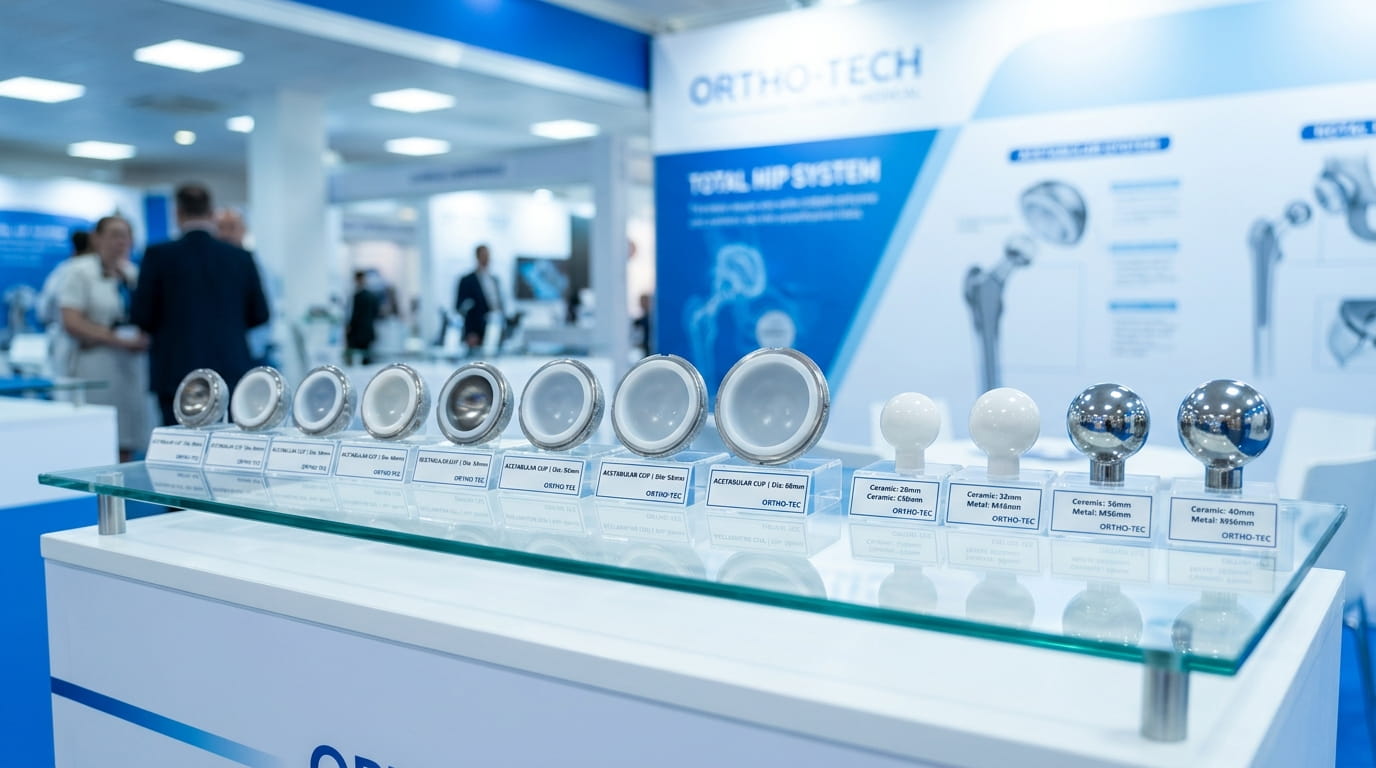
A manufacturer must therefore present the cup as part of a structured hip program. The proposal should explain how the acetabular component connects with femoral components, instrumentation, stock management, and the hospital’s intended case volume. This creates a more credible commercial discussion.
Ortonom Medical supports this broader approach through its focused hip portfolio. OrtoHip Total Hip System is particularly relevant to hospitals evaluating total hip arthroplasty pathways, while OrtoHip Bipolar Hip System and OrtoHip K2 Revision Hip System support continuity across additional hip indications and revision planning.
Ortonom Medical hip portfolio within the acetabular cups market
Ortonom Medical’s hip range allows hospitals to consider acetabular components within a structured manufacturer relationship. This is valuable because hospital programs become harder to manage when products, instruments, and supply routines are divided across too many unrelated vendors.
OrtoHip Total Hip System is the central platform for hospitals evaluating total hip arthroplasty and acetabular cup requirements. It allows the hospital to discuss cup availability, sizing strategy, instrumentation, and surgical workflow within one coordinated system.
OrtoHip Bipolar Hip System supports hospitals that need a focused bipolar pathway, while OrtoHip K2 Revision Hip System helps strengthen long term program continuity when revision capability becomes necessary. Together, these systems create a more complete hip arthroplasty proposition.
Ortonom Medical hip systems
- OrtoHip Bipolar Hip System
- OrtoHip K2 Revision Hip System
- OrtoHip Total Hip System
The wider Ortonom Medical portfolio also includes knee systems for hospitals that want a complete arthroplasty partnership:
- OrtoKnee Fixed Knee System
- OrtoKnee Revision Knee System
- OrtoKnee Mobile Knee System
What hospitals evaluate before selecting an acetabular cup supplier
Hospitals evaluate several areas before approving a new acetabular cup platform. Surgeons focus on system confidence and workflow. Procurement teams review product documentation, pricing, availability, and traceability. Sterile services teams consider instrument handling and preparation requirements.
The supplier must reduce uncertainty across all of these areas. A strong commercial proposal should explain what is available, how stock will be protected, how instruments will be managed, and what support is available during implementation.
Hospitals also want to understand how the manufacturer will respond when volume changes. A small program may need a controlled starter inventory, while a high volume hospital may require broader size coverage and a faster replenishment cycle.
| Evaluation area | Hospital question | Manufacturer response |
|---|---|---|
| Product structure | How does the cup fit into the total hip system | Present the complete implant pathway |
| Size availability | Will planned cases be protected | Define core sizes and stock levels |
| Instrument readiness | Can sets be prepared consistently | Provide clear tray and inspection routines |
| Documentation | Can the system be audited | Support traceability and usage records |
| Growth capacity | Can supply scale with procedure volume | Offer adaptable replenishment planning |
Regional growth opportunities across African healthcare markets
The acetabular cups market should not be approached with one generic Africa strategy. Hospital systems, private healthcare investment, procurement expectations, and logistics conditions vary between regions. Manufacturers need to adapt their partnership model accordingly.
In South Africa Gauteng and Namibia, hospitals may place strong emphasis on surgical schedule protection, inventory visibility, and rapid response. In Morocco, Algeria, Egypt, and Libya, documentation, governance, and formal procurement procedures can carry significant weight.
Nigeria, Ghana, Senegal, Côte d’Ivoire, and Guinea offer opportunities where private hospitals and orthopedic services are expanding. Kenya and Tanzania also represent important East African markets for structured hip arthroplasty programs. In Cameroon, DRC, and Gabon, continuity and realistic supply planning can become decisive.
| African region | Priority markets | Main commercial requirement |
| Southern Africa | South Africa Gauteng and Namibia | Schedule protection and responsive supply |
| North Africa | Morocco Algeria Egypt and Libya | Documentation governance and traceability |
| West Africa | Nigeria Ghana Senegal Côte d’Ivoire and Guinea | Scalable stock and program growth |
| East Africa | Kenya and Tanzania | Structured implementation and readiness |
| Central Africa | Cameroon DRC and Gabon | Continuity and realistic replenishment |
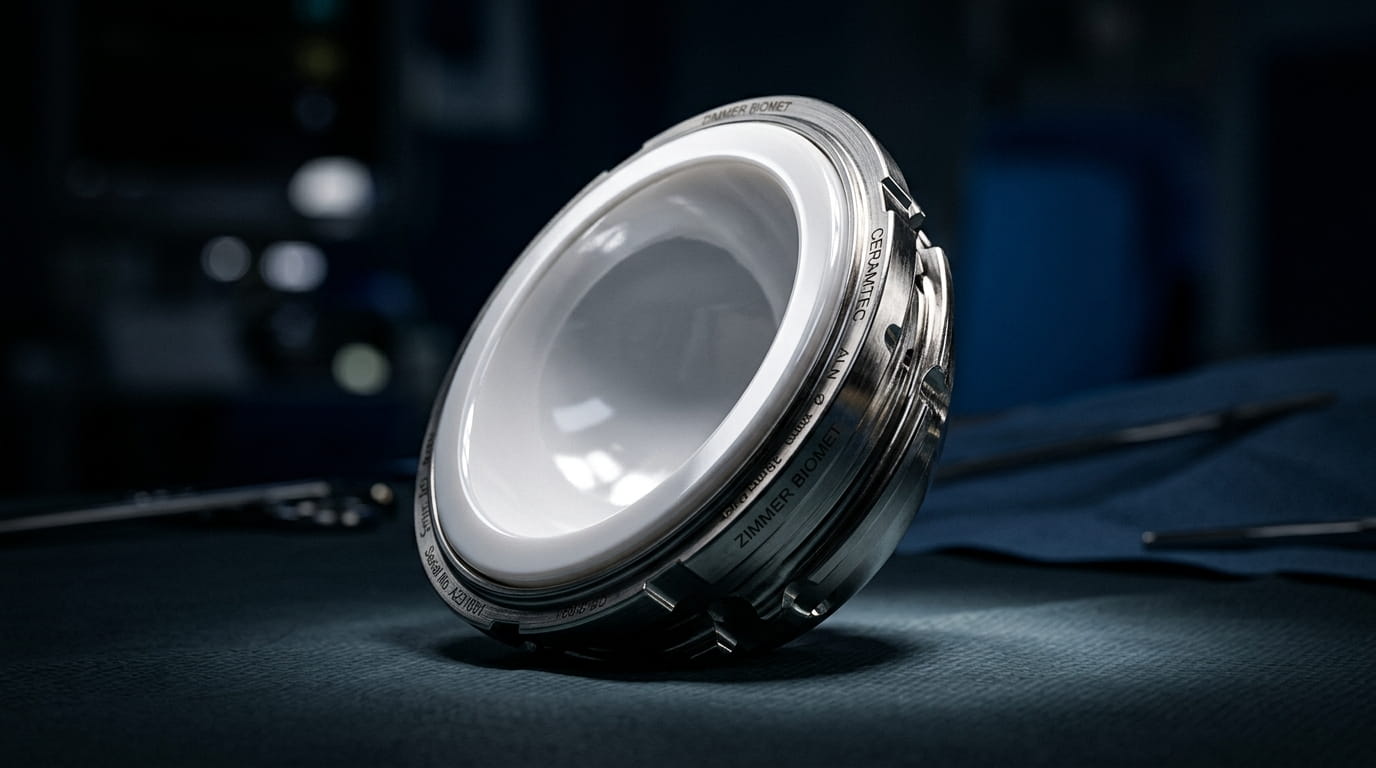
Stock planning is one of the most important areas in the acetabular cups market. A hospital may have a scheduled total hip case, but the procedure can still be disrupted if the required cup size or related component is unavailable.
A strong inventory model begins with expected procedure volume and the hospital’s preferred clinical pathway. The manufacturer and hospital should define which sizes are most likely to be used, which components must remain continuously available, and how replenishment will be triggered.
The stock model should also remain flexible. Case mix can change, and unexpected size requirements may occur. Hospitals need a partner that can review usage data and adjust inventory without allowing stock levels to become uncontrolled.
Essential stock planning areas include:
- Core acetabular cup sizes
- Minimum stock levels
- Usage based reorder points
- Planned replenishment frequency
- Packaging and expiry control
- Emergency request procedures
- Monthly inventory review
Instrumentation and sterile services readiness
Acetabular cup programs depend on reliable instrumentation. Even when the correct implant is available, an incomplete or incorrectly prepared instrument set can delay surgery. This makes instrument readiness a central part of the hospital agreement.
Manufacturers and local partners should provide clear tray organization, inspection routines, and escalation procedures. Sterile services teams need to understand how the instruments are arranged, how they should be checked, and what to do if an item is missing or damaged.
Instrument readiness also affects surgeon confidence. Consistent preparation reduces distractions and supports a more predictable surgical workflow. Hospitals are more likely to trust manufacturers that treat instrumentation as part of the complete system rather than as a secondary issue.
Documentation and traceability for acetabular components
Hospital procurement committees expect clear documentation for acetabular components. Product identification, lot information, usage records, and implant traceability must be managed in a way that is reliable and easy to audit.
The strongest documentation systems are simple enough for daily hospital use. If record keeping becomes too complicated, compliance may decrease. Manufacturers should therefore support practical routines that capture the necessary information without creating unnecessary administrative pressure.
For multi site hospital groups, documentation should be standardized. Consistent forms and reporting routines help management compare usage, monitor inventory, and maintain the same governance structure across several facilities.
Creating a hospital implementation plan
A hospital agreement becomes more effective when implementation is planned before the first case. The manufacturer and hospital should agree on products, expected volumes, instrument preparation, storage, reporting, and escalation contacts.
The first stage should include product orientation for surgeons, operating theatre teams, procurement, and sterile services. Each group needs to understand its role. This prevents confusion during the early phase of the program.
After implementation, the hospital and manufacturer should review performance. Stock use, tray readiness, documentation quality, and surgical schedule stability should be monitored. These reviews help identify problems before procedure volume increases.
Recommended implementation stages
- Define hospital case volume and product scope
- Confirm acetabular cup and related component availability
- Prepare instruments and sterile services routines
- Establish traceability and reporting procedures
- Support early cases and review operational performance
- Adjust stock levels based on real usage
Why African hospitals can consider Ortonom Medical
African hospitals evaluating the acetabular cups market need a manufacturer with a focused arthroplasty portfolio and a clear partnership model. Ortonom Medical concentrates on hip and knee systems rather than presenting an unrelated general medical catalog.
OrtoHip Total Hip System provides a relevant platform for hospitals evaluating acetabular cup solutions within a complete total hip program. OrtoHip Bipolar Hip System and OrtoHip K2 Revision Hip System strengthen the broader hip pathway and support long term program continuity.
The OrtoKnee portfolio also allows hospitals to consider a wider arthroplasty relationship. OrtoKnee Fixed Knee System, OrtoKnee Revision Knee System, and OrtoKnee Mobile Knee System can support healthcare groups seeking to standardize both hip and knee programs with one focused manufacturer.
Converting market demand into long term hospital cooperation
Growth in the acetabular cups market creates opportunity, but hospital demand only becomes a stable business relationship when the operating model is clear. Hospitals need more than a quotation. They need confidence that products, instruments, documentation, and replenishment will remain reliable over time.
Manufacturers should approach hospitals with a program proposal rather than a product list. The proposal should reflect case volume, hospital size, clinical pathways, stock needs, and whether the agreement will cover one site or several facilities.
Ortonom Medical can support this process by combining a focused product portfolio with structured cooperation. The objective is to help hospitals build predictable hip arthroplasty programs while creating long term commercial relationships across African markets.
Acetabular cups market growth in Africa is closely connected to the development of total hip arthroplasty programs and the demand for reliable orthopedic implant partnerships. Hospitals want manufacturers that can provide product quality, stable supply, instrument readiness, documentation, traceability, and structured implementation.
Ortonom Medical supports this requirement through OrtoHip Total Hip System, OrtoHip Bipolar Hip System, and OrtoHip K2 Revision Hip System. Its wider portfolio also includes OrtoKnee Fixed Knee System, OrtoKnee Revision Knee System, and OrtoKnee Mobile Knee System.
For hospitals in South Africa Gauteng, Morocco, Algeria, Egypt, Nigeria, Ghana, Kenya, Tanzania, Libya, Gabon, Senegal, Namibia, Cameroon, Guinea, DRC, and Côte d’Ivoire, Ortonom Medical offers the basis for focused hip and knee arthroplasty cooperation. The goal is to transform acetabular cup demand into stable hospital agreements that support surgical continuity and long term program growth.