



Attachment Plate
Attachment plate is an important search term for hospitals and orthopedic teams evaluating fixation strategies around complex hip and knee pathways. In arthroplasty focused environments, attachment plate solutions may be considered when additional fixation support is required around an existing implant or in situations where standard screw positioning is limited. For hospitals, however, product selection is only one part of the decision.
Attachment plate procurement also requires dependable documentation, instrument readiness, implant compatibility planning, and a supply model that protects the surgical schedule. Hospitals need to understand how the plate fits into the intended fixation construct, which instruments are required, and how the selected solution will be available when a complex case is scheduled.
Ortonom Medical focuses on hip and knee arthroplasty systems for hospitals, orthopedic specialists, healthcare groups, and commercial partners across Africa. Within this focused strategy, attachment plate related discussions can form part of a broader conversation about arthroplasty continuity, revision readiness, and hospital agreements that support complex orthopedic pathways.
Why attachment plate planning matters in arthroplasty focused hospitals
Hospitals developing hip and knee replacement programs must also consider how they will manage complications and complex cases. Primary arthroplasty may represent most procedures, but hospital readiness is measured by the ability to respond when additional fixation or revision planning becomes necessary.
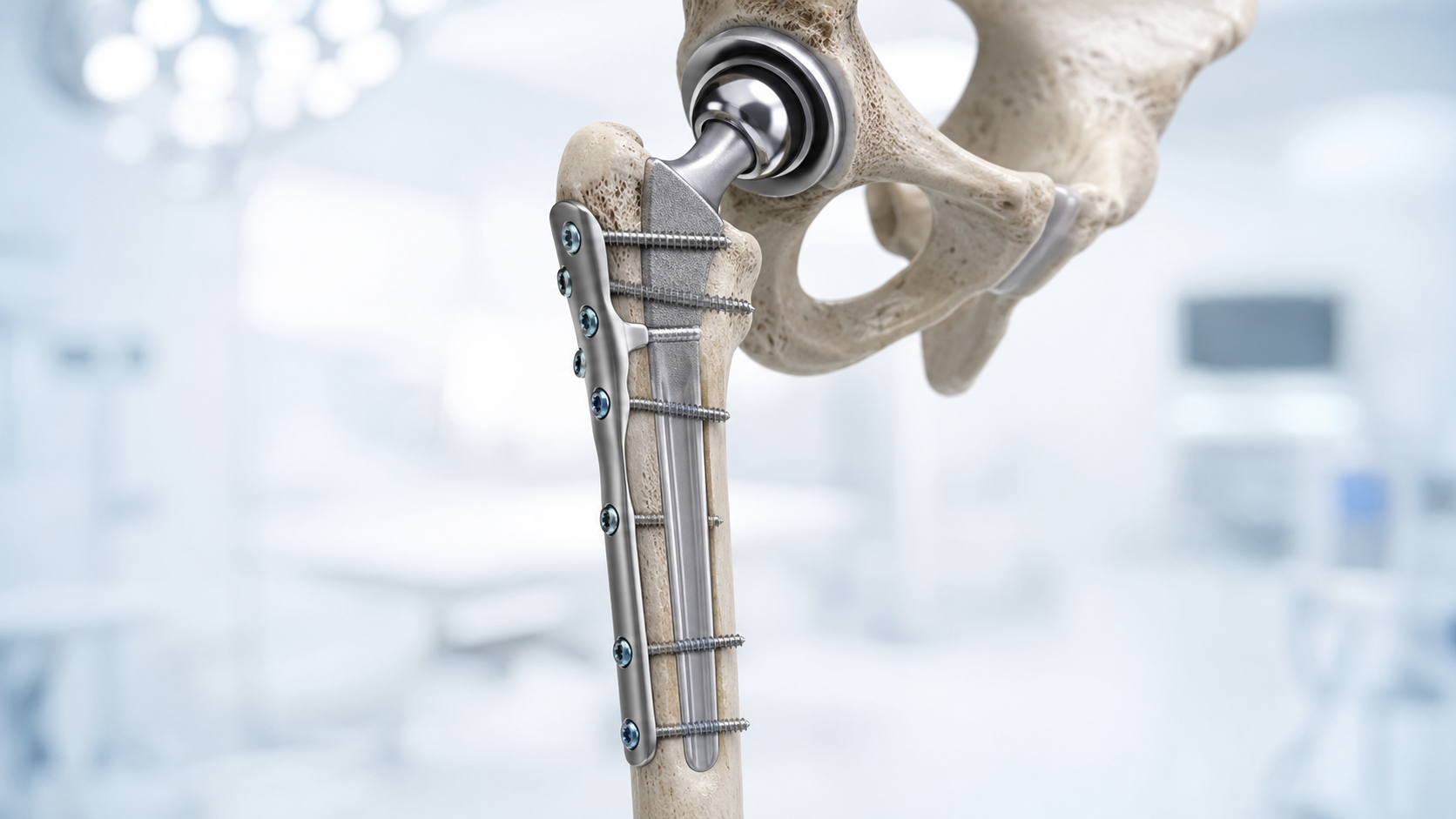
An attachment plate is generally discussed as an adjunct fixation component rather than a complete implant system on its own. Locking attachment plates may be used with compatible plating systems to support fixation around prosthetic stems or other intramedullary implants where conventional screw placement can be restricted.
For hospital procurement teams, this means the decision cannot be separated from the wider surgical pathway. The plate design, compatible screws, instruments, implant location, and intended fixation strategy all need to be evaluated together. A hospital agreement must therefore cover more than the attachment plate itself.
Complex orthopedic readiness as part of hospital agreements
Hospital agreements are stronger when complex case readiness is discussed before an urgent need appears. If fixation requirements are only considered after a complication or periprosthetic fracture occurs, procurement teams may face delays, incomplete product availability, and uncertain responsibilities.
A structured agreement can define which products are included, what documentation is required, how instruments will be supplied, and how urgent requests will be managed. This gives surgeons and operating theatre teams a clearer framework when treatment planning becomes more demanding.
African hospitals increasingly value commercial partners that can support program continuity. They want to know that primary hip and knee services will remain stable while more complex revision or fixation needs can be addressed through organized planning and reliable communication.
How an attachment plate fits into the wider orthopedic pathway
Attachment plate products should not be presented as isolated catalog items. Their value depends on how they interact with the complete fixation system and the clinical situation being addressed. Hospitals need a clear explanation of the intended use environment and all required supporting components.
In periprosthetic and peri-implant fracture pathways, locking attachment plates may provide additional screw positioning options around an existing stem or implant. Their function is linked to compatible plates and fixation hardware rather than independent use.
This is why product discussions should include the main plate, attachment component, connection mechanism, compatible screws, and associated instrumentation. When these elements are reviewed as a coordinated construct, the hospital can evaluate readiness more accurately.
| Evaluation area | Hospital question | Required commercial response |
|---|---|---|
| Fixation pathway | Where does the attachment plate fit | Explain the complete construct |
| Compatibility | Which plates and screws are required | Provide a clear compatibility framework |
| Instrumentation | What must be prepared before surgery | Define tray contents and checks |
| Availability | Can urgent cases be supported | Establish stock and escalation rules |
| Documentation | Can the implant pathway be audited | Provide traceability and usage records |
Ortonom Medical products supporting arthroplasty continuity
Ortonom Medical’s primary focus is the development of structured hip and knee arthroplasty partnerships. Its portfolio allows hospitals to build clear primary and revision pathways while maintaining one focused manufacturer relationship.
The hip portfolio includes OrtoHip Bipolar Hip System, OrtoHip K2 Revision Hip System, and OrtoHip Total Hip System. These systems support hospitals planning bipolar, total hip, and revision hip services within an organized program.
The knee portfolio includes OrtoKnee Fixed Knee System, OrtoKnee Revision Knee System, and OrtoKnee Mobile Knee System. These products allow hospitals to discuss fixed, mobile, and revision knee pathways with a manufacturer concentrated on arthroplasty.
Ortonom Medical hip and knee systems
- OrtoHip Bipolar Hip System
- OrtoHip K2 Revision Hip System
- OrtoHip Total Hip System
- OrtoKnee Fixed Knee System
- OrtoKnee Revision Knee System
- OrtoKnee Mobile Knee System
These systems remain the foundation of Ortonom Medical’s hospital cooperation model. Attachment plate related planning can be positioned within the broader objective of helping hospitals prepare for complex orthopedic situations surrounding hip and knee replacement programs.
Protecting complex surgical cases through supply planning
Complex orthopedic cases are especially sensitive to supply failures. A missing attachment component, incompatible screw, or incomplete instrument set can prevent the planned fixation strategy from being performed as expected. Hospitals therefore need more detailed stock planning than they may require for routine consumables.
The first step is defining the complete required construct. Procurement should not order only the plate name. The hospital and commercial partner should confirm compatible components, expected configurations, instrumentation, and alternative options before finalizing availability.
The second step is building a realistic stock model. Not every attachment plate configuration needs the same inventory level, but the hospital must know which components are considered essential. For urgent fracture pathways, response procedures and lead times must also be clearly documented.
Important supply planning areas include:
- Compatible plate and attachment component combinations
- Required screw types and sizes
- Connection components
- Dedicated instruments
- Minimum stock for essential configurations
- Urgent order and escalation procedures
- Packaging integrity and expiry controls
What African hospitals expect from orthopedic partners
Hospitals across Africa do not want to work with suppliers that only respond after a problem occurs. They want partners that help them anticipate product, instrumentation, and documentation needs before complex cases reach the operating theatre.
In South Africa Gauteng and Namibia, rapid response and surgical schedule protection may be central to the agreement. In Morocco, Algeria, Egypt, and Libya, hospitals may give greater weight to documentation, product governance, and formal procurement procedures.
Nigeria, Ghana, Senegal, Côte d’Ivoire, and Guinea present opportunities for structured orthopedic partnerships as private hospital networks and surgical services develop. Kenya and Tanzania also require scalable readiness models that can support increasing arthroplasty activity.
Cameroon, DRC, and Gabon often require realistic logistics planning and dependable communication. In these markets, a commercial partner builds credibility by being transparent about product availability, replenishment, and urgent case support.
| African region | Priority markets | Hospital agreement focus |
| Southern Africa | South Africa Gauteng and Namibia | Fast response and schedule protection |
| North Africa | Morocco Algeria Egypt and Libya | Documentation and governance |
| West Africa | Nigeria Ghana Senegal Côte d’Ivoire and Guinea | Scalable supply and hospital growth |
| East Africa | Kenya and Tanzania | Program readiness and continuity |
| Central Africa | Cameroon DRC and Gabon | Realistic logistics and communication |
Instrument readiness for attachment plate procedures
Instrumentation is a critical part of attachment plate preparation. Even when the required implants are in stock, the procedure may be delayed if the correct drill guides, screwdrivers, connection tools, or compatible instruments are unavailable.
Hospitals should use a preparation checklist before complex cases. The checklist must confirm plate compatibility, screw availability, instrument completeness, and the condition of all reusable equipment. Responsibility for this verification should be clearly assigned.
Sterile services teams also need accessible tray maps and inspection instructions. They must know how the instruments should be organized, which components require particular attention, and how missing or damaged items should be reported before the scheduled operation.
A reliable instrument routine may include:
- Confirming the planned attachment plate configuration
- Matching all required plates screws and connectors
- Verifying dedicated instruments and guides
- Inspecting reusable components
- Documenting tray completeness
- Escalating discrepancies before the operating list
Documentation and compatibility control
Attachment plate documentation must provide more than a product name. Hospitals require a clear record of component identity, compatibility, lot information, and intended configuration. This is especially important when several plates, screws, and connection elements form one fixation construct.
Compatibility control should be managed before the procedure. Procurement, theatre teams, and the commercial partner must work from the same product list. Informal assumptions about which components can be combined create unnecessary operational risk.
Traceability routines should also capture all implanted components. A structured record supports internal hospital governance, implant monitoring, stock reconciliation, and future case review. The process must remain practical enough for daily hospital use.
| Documentation requirement | Operational purpose |
| Product and component identification | Prevent selection errors |
| Compatibility records | Confirm the intended construct |
| Lot and traceability data | Support hospital governance |
| Instrument checklist | Protect theatre readiness |
| Usage and replenishment records | Maintain stock continuity |
| Escalation documentation | Resolve repeated discrepancies |
Supporting surgeons and hospital teams during implementation
The introduction of a new attachment plate solution requires coordination between orthopedic surgeons, theatre teams, procurement, and sterile services. Each department sees a different part of the pathway, so implementation should create one shared operating model.
Surgeons need product and workflow orientation that remains focused on the selected system. Theatre teams need clear preparation responsibilities. Procurement teams need defined product codes, stock levels, and reorder procedures. Sterile services need repeatable instrument handling routines.
Early implementation reviews can identify missing components, unclear tray organization, or documentation gaps before they become recurring problems. The goal is to stabilize hospital routines rather than treat every case as a separate emergency.
Connecting attachment plate readiness with revision programs
Hospitals with active revision arthroplasty services are more likely to encounter cases requiring advanced fixation planning. For this reason, attachment plate readiness should be discussed together with revision program development rather than as an unrelated product category.
OrtoHip K2 Revision Hip System and OrtoKnee Revision Knee System are important within Ortonom Medical’s revision focused portfolio. They help hospitals create defined revision pathways for hip and knee services while maintaining continuity with the wider OrtoHip and OrtoKnee range.
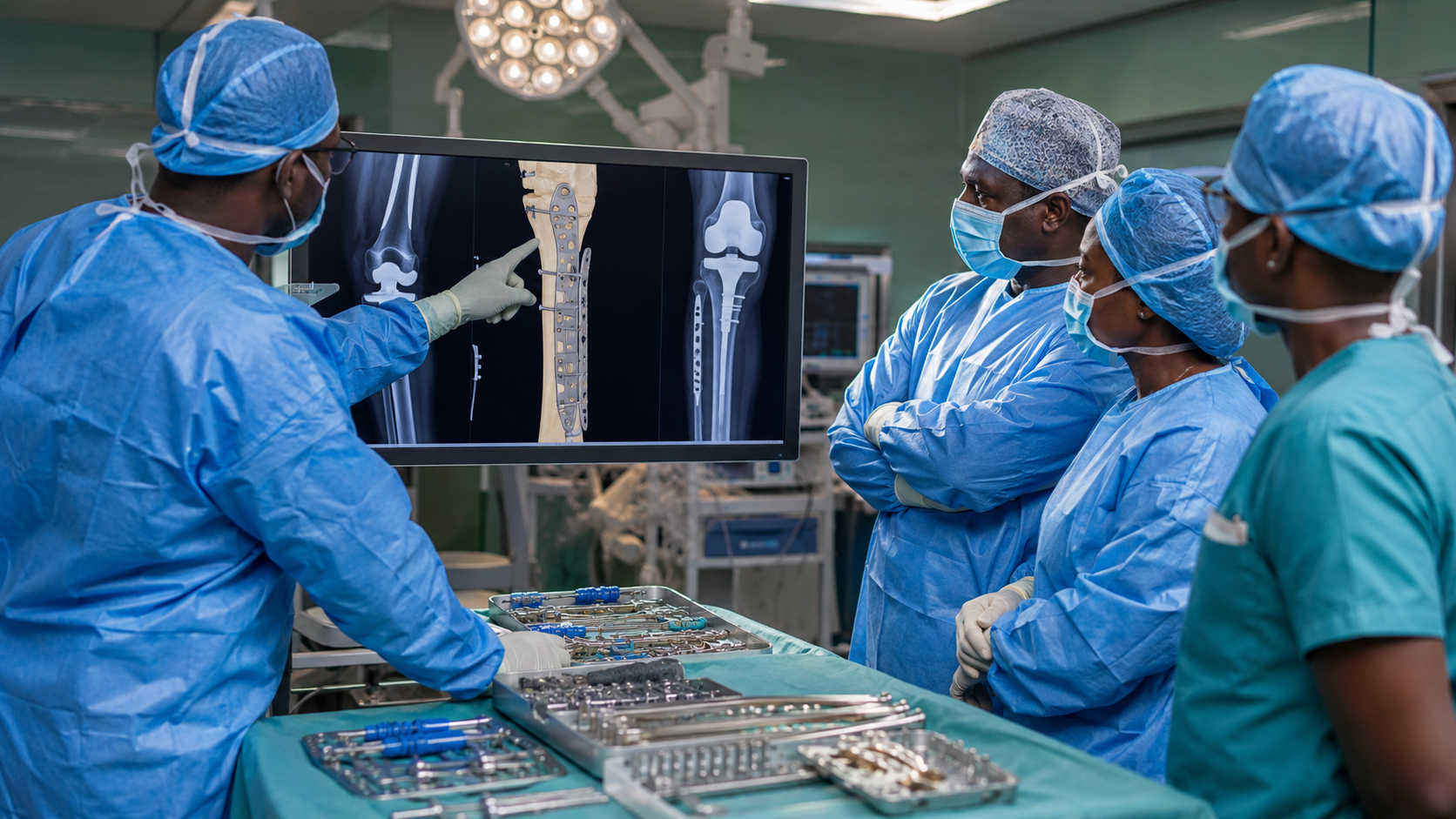
An attachment plate strategy does not replace a revision implant system. Instead, it can form part of the broader orthopedic planning required when hospitals manage periprosthetic fractures, peri-implant fractures, or fixation challenges surrounding existing implants.
This distinction helps procurement committees build more accurate agreements. The revision system supports the arthroplasty pathway, while fixation solutions and attachment components support specific fracture management requirements.
From product request to a structured hospital proposal
A hospital requesting an attachment plate should provide enough information for an accurate proposal. A product name alone may not identify the complete configuration required. The request should reflect the fixation pathway, compatible system, instrumentation, and urgency.
The commercial partner should then convert the request into a structured product and support plan. This plan should confirm availability, documentation, instruments, delivery expectations, and responsibilities for preparation.
For hospitals in the African target markets, this structured approach reduces repeated communication and helps prevent incomplete orders. It also allows procurement committees to evaluate the offer as a complete operational solution.
A hospital request may include:
- Intended fixation pathway
- Existing implant or stem context
- Required plate system
- Attachment component configuration
- Compatible screw requirements
- Instrumentation needs
- Planned surgery timeline
- Hospital delivery location
Why focused orthopedic cooperation matters
Attachment plate procurement should be part of a focused orthopedic relationship rather than a general medical supply discussion. Hospitals gain more value when their partner understands arthroplasty, revision pathways, instrument management, and complex fixation planning.
Ortonom Medical’s focused position in hip and knee arthroplasty supports this type of conversation. Its product portfolio allows hospitals to build clear primary and revision services, while broader orthopedic readiness discussions can address the operational requirements surrounding complex cases.
Long term hospital cooperation depends on transparency. Product scope, stock expectations, compatibility, documentation, and support responsibilities must all be defined before implementation. When these elements are clear, hospitals can manage complex orthopedic procedures with greater confidence.
Attachment plate planning is relevant to hospitals that want stronger readiness for complex fixation requirements around hip and knee arthroplasty programs. The product must be evaluated together with its compatible plate system, screws, instruments, documentation, and intended surgical pathway.
African hospitals need partners capable of transforming a product request into a structured operational proposal. Stable supply, compatibility control, instrument readiness, traceability, and defined escalation procedures all contribute to a more reliable hospital agreement.
Ortonom Medical supports African hospitals through OrtoHip Bipolar Hip System, OrtoHip K2 Revision Hip System, OrtoHip Total Hip System, OrtoKnee Fixed Knee System, OrtoKnee Revision Knee System, and OrtoKnee Mobile Knee System. These products form the foundation of focused hip and knee arthroplasty cooperation across South Africa Gauteng, Morocco, Algeria, Egypt, Nigeria, Ghana, Kenya, Tanzania, Libya, Gabon, Senegal, Namibia, Cameroon, Guinea, DRC, and Côte d’Ivoire.