



Cr Knee Prosthesis
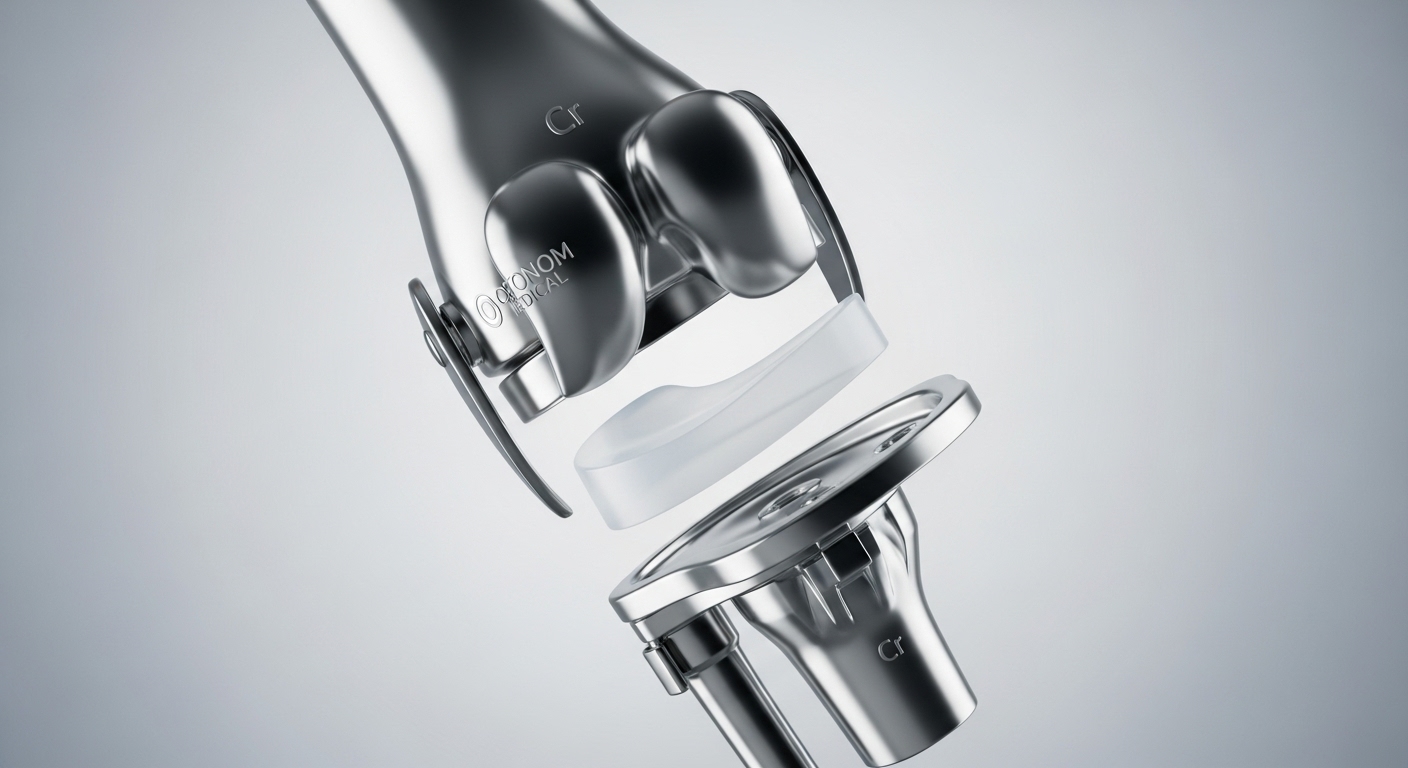
A Cr Knee Prosthesis (cruciate-retaining) preserves the posterior cruciate ligament (PCL) and relies on a femoral–tibial articular geometry that encourages natural rollback. For surgeons, this design choice can offer proprioception benefits and physiologic kinematics, particularly in primary osteoarthritis cases with an intact or reconstructable PCL. For distributors, understanding this clinical rationale is more than theory; it is the story you carry into committee rooms and operating theaters to differentiate value beyond price.
In everyday practice, the preserved PCL of a Cr Knee Prosthesis supports femoral rollback during flexion without a cam-post mechanism. That often translates to smoother mid-flexion stability and a gait that patients describe as “more natural.” Hospitals seeking standardization appreciate that CR pathways can be taught, measured, and repeated, which strengthens quality programs and simplifies instrument handling for rotating staff. When you can articulate this with clarity, your commercial conversations become collaborative rather than transactional.
Distributors also win by positioning the CR pathway as a spectrum rather than a single, rigid doctrine. While a Cr Knee Prosthesis suits many primary knees, surgeons still balance soft tissues meticulously; they value instruments that make gap assessment intuitive and sizing logical. Your credibility grows when you show how Ortonom’s technique helps teams troubleshoot alignment and balance while maintaining ligament preservation whenever appropriate.
Finally, a CR strategy aligns with the healthcare tradition of steady craftsmanship: respect anatomy, standardize steps, and avoid over-constraint whenever safely possible. Our role is to equip you with teachable instrumentation, bilingual training, and dossiers that pass on first submission. Your role is to bring local relationships and service discipline. Together we build programs that surgeons trust and administrators can forecast.
Ortonom Medical’s System Architecture for a Cr Knee Prosthesis
At Ortonom Medical, the Cr Knee Prosthesis is not a single item; it is a coherent system designed for predictable, repeatable outcomes. The portfolio centers on four interoperable components—femoral component, tibial baseplate, polyethylene insert, and patella—supported by instrument sets that make each cut, trial, and check unambiguous. This system thinking makes training faster and stock planning easier for every hospital you serve.
The femoral component features contoured condyles and a trochlear groove engineered for tracking, with surface finishes selected to resist wear and scratches during trialing. Sizes are laid out in an intuitive ladder so surgeons can jump up or down without second-guessing coverage. In a Cr Knee Prosthesis context, the femoral geometry cooperates with the preserved PCL to enable controlled rollback without cam-post engagement, which is a key talking point in surgeon briefings.
The tibial baseplate offers cemented and cementless philosophies (market dependent), keel or stem options, and anatomic footprints that reduce overhang. Locking interfaces are robust yet serviceable, allowing efficient insert exchanges during trials. Polyethylene inserts come in well-spaced thickness steps to support gap management after resections. For a Cr Knee Prosthesis program, this spread of thicknesses is what turns proper balancing into reliable sizing and fewer intraoperative surprises.
Patellar components (dome or anatomical) integrate with the femoral groove to support tracking and contact pressures. Our instrumentation aligns resection depth and patellar sizing with surgeon preference. When these pieces come together, hospitals perceive a system that is teachable for new staff, familiar for experienced teams, and friendly to procurement cycles that demand repeatability. That is why committees respond well to Ortonom’s “system, not parts” narrative.
Instrumentation, Surgical Technique, and Teachability
A good Cr Knee Prosthesis is only as strong as the instruments that deliver it. We prioritize alignment blocks with clear references, cutting guides that simplify distal femoral and proximal tibial resections, and trial components that make gap assessment obvious. Handles and trays are labeled, with color coding that helps scrub teams stay oriented even when staffing rotates or cases stack back-to-back.
Technique matters as much as hardware. Our surgical technique guides emphasize sequencing, gap balancing, and verification steps so that preservation of the PCL works for the surgeon—rather than against workflow. Training assets include short video modules and bilingual (EN/FR) decks for workshops. This is where traditional mentoring meets modern enablement: reps earn respect by solving practical problems in the OR, not by reciting catalog pages about a Cr Knee Prosthesis.
After launch, enablement continues. We plan supervised first cases, then formalize debriefs to capture insert thickness preferences, patellar resurfacing patterns, and alignment nuances. Those insights inform reorder logic, so your warehouse carries the sizes that actually move. The result is a calm supply cadence: no heroics, no panic, just the steady reliability that surgeons and administrators prize.
Teachability also protects margins. When instruments are intuitive and the technique is consistent, operative times stabilize and instrument wear drops. That translates to fewer emergency shipments and fewer tray rebuilds—two hidden costs that silently erode profitability. A Cr Knee Prosthesis program built on teachability is, in practice, a program built for sustainable business.
Country Opportunity Snapshot for Distributorship
We align your expansion with the countries you highlighted earlier: Democratic Republic of the Congo, Ethiopia, Somalia, Sudan, Algeria, Libya, Gabon, Senegal, Namibia, Cameroon, and Guinea. Each market blends public tenders with private opportunities. Use the table to stage launches, tailor messaging, and plan training and stock. Your Cr Knee Prosthesis narrative should be consistent, then localized for language, tender norms, and logistics corridors.
| Country | Business Languages | First Target Cities | Dominant Channels | Distributor Profile Fit |
|---|---|---|---|---|
| D.R. Congo | French | Kinshasa, Lubumbashi | Public tenders + private | Tender literacy; hospital ties; bilingual field team |
| Ethiopia | Amharic/English | Addis Ababa | Private hospitals + NGO | Clinical education capability; OR training culture |
| Somalia | Somali/Arabic | Mogadishu, Hargeisa | Private clinics/hospitals | Agile import; fast service response |
| Sudan | Arabic | Khartoum | Public tenders | Documentation rigor; committee relationships |
| Algeria | Arabic/French | Algiers, Oran | Public + private | Arabic-FR materials; capital equipment experience |
| Libya | Arabic | Tripoli, Benghazi | Private sector | Quick OR support; surgeon access |
| Gabon | French | Libreville, Port-Gentil | Public tenders | Francophone dossiers; steady after-sales |
| Senegal | French | Dakar | Private + tenders | In-theater training strength; references focus |
| Namibia | English | Windhoek | Private hospitals | Inventory discipline; service SLAs |
| Cameroon | French/English | Douala, Yaoundé | Mixed channels | Bilingual sales engineering; KOL access |
| Guinea | French | Conakry | Public tenders | Documentation + after-sales footprint |
Start with two lighthouse markets—one francophone (e.g., Senegal or Gabon) and one anglophone (e.g., Namibia or Ethiopia). Build early clinical references around a Cr Knee Prosthesis structure: clear technique, instrument readiness, and a stock matrix that anticipates insert thickness clusters. With initial wins, scale into adjacent countries sharing language or logistics lanes to reuse assets and training.
Committees want proof, not promises. Capture 10–12 clean cases per lighthouse hospital, summarize outcomes in bilingual briefs, and link those briefs to a consistent set of dossiers. When teams see reliable case cadence and professional documentation, they move from curiosity to adoption. That is the traditional way to win business—now accelerated by structured enablement.
Bilingualism is a multiplier. Prepare EN/FR slide pairs and, for North Africa, short Arabic summaries of the Cr Knee Prosthesis pathway. Consistency across languages shows maturity and reduces the “new vendor” risk perception. It also shortens Q&A time in committee, letting clinical considerations drive decisions rather than paperwork friction.
Compliance, Logistics, and After-Sales—Promises You Can Keep
Procurement leaders value two constants: files that pass first time and stock that arrives as promised. We design your Cr Knee Prosthesis rollout around conservative lead times, transparent scope, and responsive communication. The table below clarifies responsibilities so your public claims match day-to-day reality.

| Item | Ortonom Medical Provides | Partner Commits | Typical Timeline |
|---|---|---|---|
| Regulatory Dossier | Technical files, labels, IFUs (committee-ready) | Local submission & tracking | 5–15 business days per package |
| Launch Training | Surgeon/nurse workshops; EN/FR decks; videos | Venue, attendee organization | ≤ 30 days from appointment |
| Instrument Readiness | Tray checklists; sterilization guidance | CSSD capacity & maintenance plan | Pre-launch + quarterly |
| Inventory Policy | Stock matrix; reorder points; consignment options | Safety stock & monthly reporting | Agreed at contract |
| Field Support | Case shadowing (remote/in-person); troubleshooting | Case scheduling; feedback loop | First 3–6 months |
| Country Copy | Bilingual brochures; listing text | Localization; response SLAs | Live at launch; quarterly updates |
Logistics is engineered around predictability. Fast movers—mid sizes and common insert thicknesses—should be staged in country; long-tail sizes rotate from regional hubs. Reorder points must follow case cadence, not guesses. A steady pipeline for the Cr Knee Prosthesis line prevents stockouts that damage reputation and dead stock that ties up cash.
Documentation is a living asset. Expect periodic audits and label tweaks by market. We maintain version-controlled masters so updates flow from factory to distributor to hospital without confusion. Your regulatory manager will have a named counterpart at Ortonom; this old-school accountability saves modern time and keeps your Cr Knee Prosthesis story consistent.
Service sustains adoption. Quick instrument turnaround, clear incident paths, and proactive check-ins after early cases tell surgeons, “We’re here, and we’re listening.” Over months, that reliability becomes your brand. Many tenders are decided as much by confidence in service as by line-item pricing—especially for systems like a Cr Knee Prosthesis where intraoperative support matters.
90-Day Go-to-Market Plan for a Cr Knee Prosthesis Line
Prepare (Weeks 1–3). Finalize bilingual listing copy, the specification snapshot table, and the launch deck. Confirm the local regulatory bundle and pre-clear customs documentation. Build the starter stock matrix and align consignment for fast movers. Identify lighthouse surgeons in one francophone and one anglophone city to anchor your Cr Knee Prosthesis narrative with early cases.
Train (Weeks 4–6). Run workshops for surgeons and scrub teams; schedule supervised first cases. Emphasize resections, soft-tissue balance with PCL preservation, and insert selection logic. Capture common questions and publish concise answers in your committee briefs. This is traditional teaching, scaled with short videos and checklists so rotating staff stay aligned on the Cr Knee Prosthesis pathway.
Execute (Weeks 7–10). Complete 10–12 cases per lighthouse site. Debrief with teams, adjust inventory (especially insert thickness distribution), and tune instrument maintenance cadence with CSSD. Publish honest lead times—if a lane is slower, say so; if you find a faster corridor, reflect it. Reliability beats bravado and makes your Cr Knee Prosthesis supply plan believable.
Scale (Weeks 11–13). Add a second country in the same language corridor to reuse assets. Approach public tenders once private references are documented. Provide committees with bilingual case summaries, stable lead times, and a clear after-sales plan. This method—proof first, paperwork perfect—respects the way healthcare decisions have long been made while using modern enablement to move faster.
Call to Action for Prospective Distributors
If you have hospital access, a service-first culture, and the discipline to run honest logistics, Ortonom Medical would value a technical conversation. We’ll bring the dossiers, training power, and system architecture; you’ll bring local insight and field strength. Together, we can launch a Cr Knee Prosthesis program that surgeons trust and hospitals can forecast.
Our invitation is simple: choose one lighthouse hospital, schedule your launch workshops, and align a starter stock matrix that fits realistic case cadence. Within 90 days, you can be running live cases, documenting outcomes, and building the references that open public tenders. That is how a Cr Knee Prosthesis franchise takes root—quietly, consistently, with pride in workmanship.
Ortonom Medical blends old-school reliability with forward-looking enablement. We respect how decisions are traditionally made—through evidence, service, and steady presence—while giving your team the modern tools to deliver predictable results. Let’s start the first cases, earn trust in the OR, and grow from there—one successful Cr Knee Prosthesis at a time.