



Knee and Hip Implants Morocco
Morocco’s surgical community is modernizing fast while preserving a classic, relationship-driven way of doing business. That mix creates a clear opening for partners who can supply Knee and Hip Implants Morocco programs with disciplined products, teachable instruments, and steady after-sales support. Ortonom Medical focuses on orthopedic prostheses supported by complete instrument sets, so your message to hospital committees is simple and practical: one coherent system, taught well, supported well, and ready for repeatable outcomes. When your local access meets our manufacturing rigor, trust builds quickly and sustainably.
Urban centers such as Casablanca, Rabat, and Tangier are increasing arthroplasty volumes as trauma survivorship improves and active lifestyles extend into later decades. Regional hubs like Marrakech, Fes, Agadir, and Oujda are following the same arc, demanding predictable supply, bilingual documentation, and OR presence during early cases. In that environment, a distributor who anchors Knee and Hip Implants Morocco with conservative lead times and audit-ready files becomes the calm option committees prefer under pressure.
Procurement leaders in Morocco are measured on reliability as much as on price. They want fewer brands with clearer accountability, documents that pass on the first submission, and stock that arrives when promised. Ortonom treats dossiers, labels, and IFUs as part of the product, not an afterthought, so the Knee and Hip Implants Morocco proposal you bring to a committee is easier to approve and safer to schedule. This discipline shortens the runway from purchase order to the first case and from the first case to steady reorders.
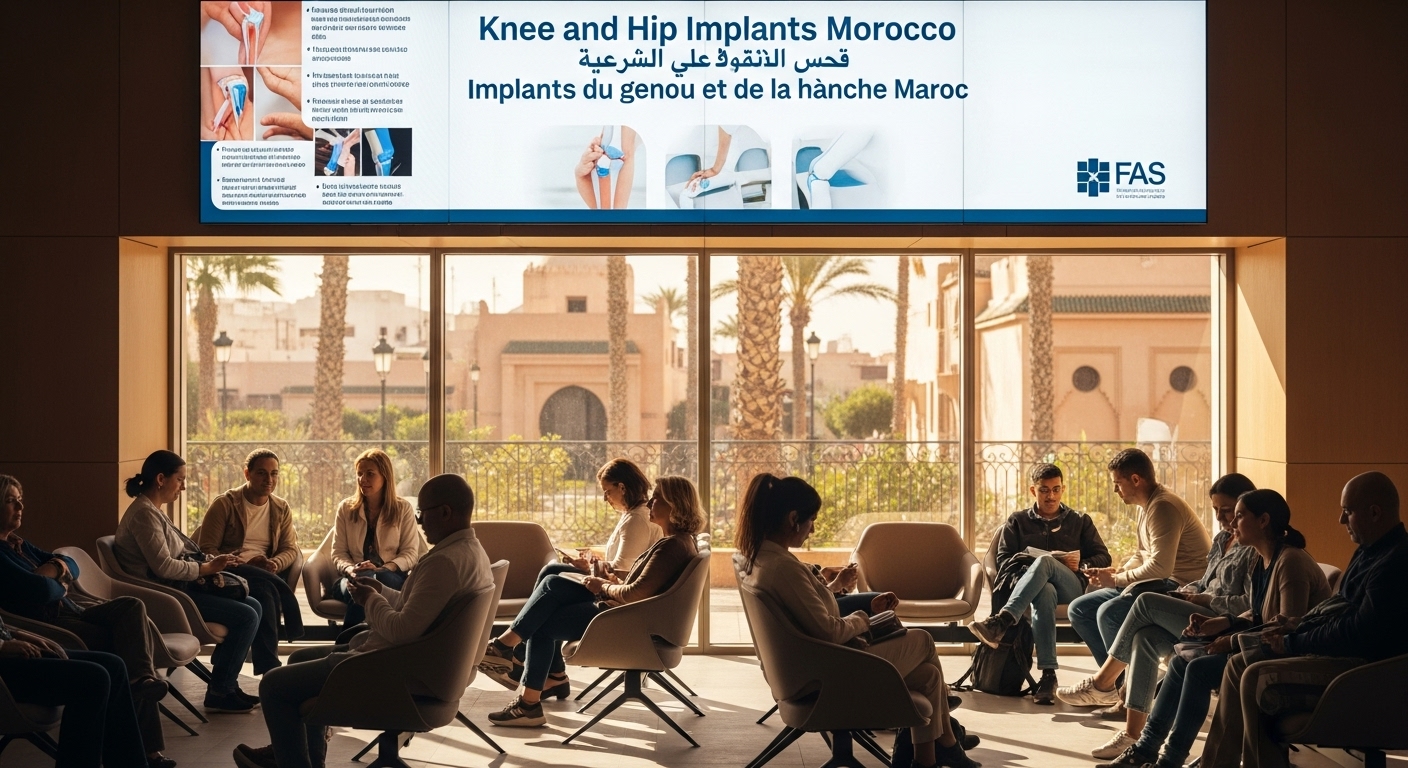
Surgeons and scrub teams value instruments that feel familiar on the second case as they did on the first. Staff rotation and visiting surgeons are common, so teachability is currency. Ortonom’s families for knee and hip are designed as an ecosystem rather than a parts bin, which means steps are intuitive, trials are logical, and labels are readable under pressure. This is how Knee and Hip Implants Morocco becomes a dependable pathway instead of a collection of SKUs.
What Ortonom Medical brings to Moroccan hospitals
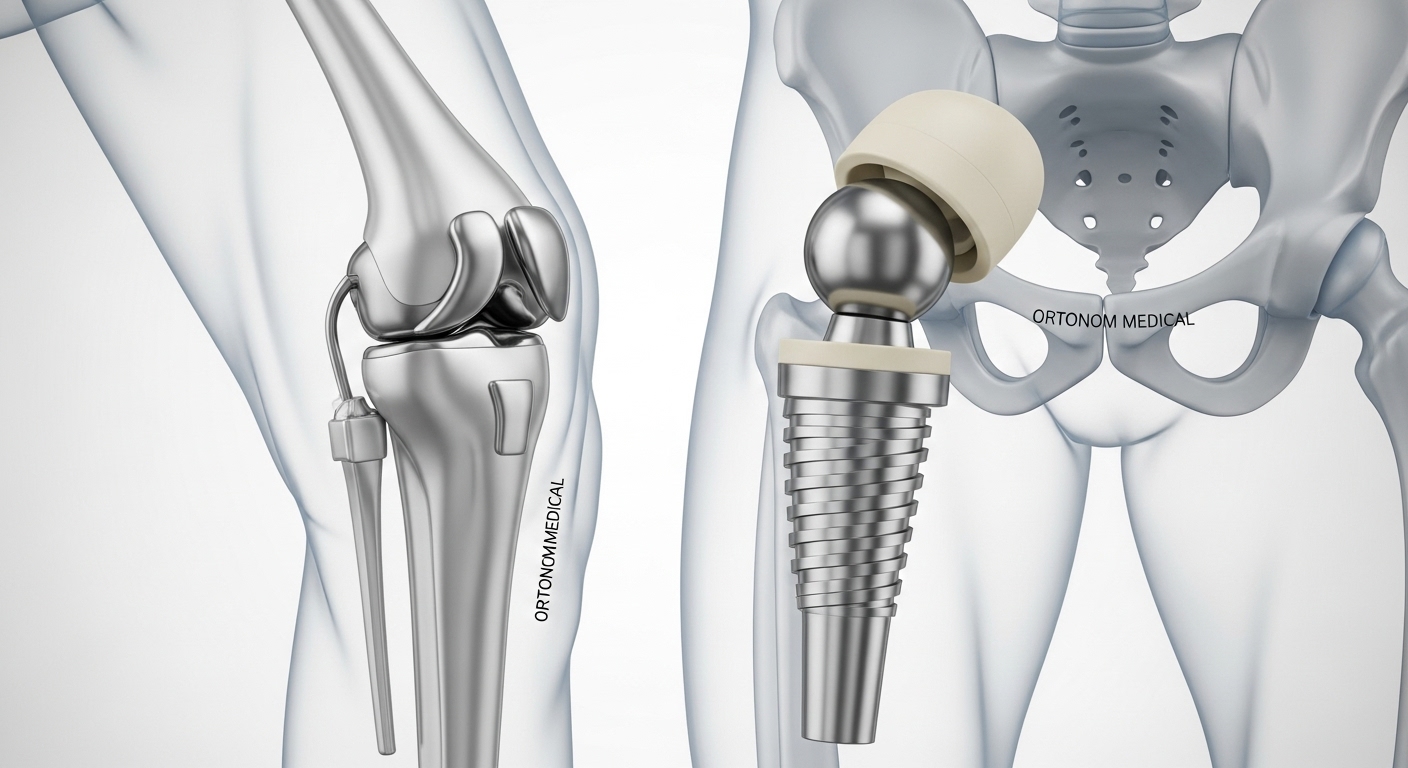
Ortonom Medical’s portfolio centers on knee and hip prostheses paired with complete, teachable instrument sets. In knee arthroplasty, the femoral component, tibial baseplate, polyethylene insert, and patella are validated to work together across sizes, and trial components make gap logic unambiguous. In hip reconstruction, stems, cups, and heads are engineered for stable fixation and surface integrity, with instrumentation that supports alignment and reproducibility. This coherence allows you to present Knee and Hip Implants Morocco as a surgical pathway, not just a price list.
Documentation is treated as a clinical tool. Technical files, labels, and IFUs are formatted in committee-ready layouts, accompanied by tray checklists that sterilization teams can adopt immediately. Your regulatory manager submits once and moves forward rather than re-formatting for weeks. For a partner promoting Knee and Hip Implants Morocco, fewer document surprises translate into earlier revenue recognition, fewer escalations, and stronger credibility inside hospital networks.
Enablement is continuous, not a one-time event. We deliver bilingual EN FR training decks, concise technique videos, and pocket checklists that OR staff can use between cases. Launch workshops emphasize verification steps and common pitfalls, and our team shadows early cases to reinforce calm execution. Feedback from those first cases feeds your stock logic—insert thickness distribution, patella strategy, alignment preferences—so the starter matrix for Knee and Hip Implants Morocco mirrors real usage.
Service closes the loop. Fast instrument turnaround, accessible spares, and clear incident pathways are what convert a strong first week into a stable first year. We coordinate preventive maintenance with CSSD, offer consignment for fast movers, and maintain simple shared dashboards. Over time, this steady rhythm becomes your signature as the trusted provider of Knee and Hip Implants Morocco.
Surgical enablement and teachability in the OR
Hospitals buy confidence as much as components. That is why we make the technique visible—sequencing of cuts, gap assessment, alignment references, and verification steps that new staff can follow. When scrub teams open a tray and see labels, color cues, and a logical order, anxiety drops and outcomes improve. Teachable Knee and Hip Implants Morocco programs reduce variability and earn surgeon loyalty case after case.
Workshops focus on the moves that matter. For knees, we emphasize distal and posterior femoral resections, tibial slope and rotation, insert selection, and patellar tracking. For hips, we prioritize femoral preparation, cup orientation, offset management, and leg-length checks. Short video modules reinforce identical steps so rotating staff can refresh in minutes. When instruction and instruments tell the same story, Knee and Hip Implants Morocco becomes easy to scale.
Post-launch supervision matters. We accompany the first cases and document lessons learned. If a site favors mid-thickness inserts or a particular patellar strategy, we update the matrix and the training emphasis. The goal is to keep the system familiar while keeping the stock honest. Over a few months, disciplined follow-through turns into reputation, and reputation turns into reorders—exactly what you want from a Knee and Hip Implants Morocco program.
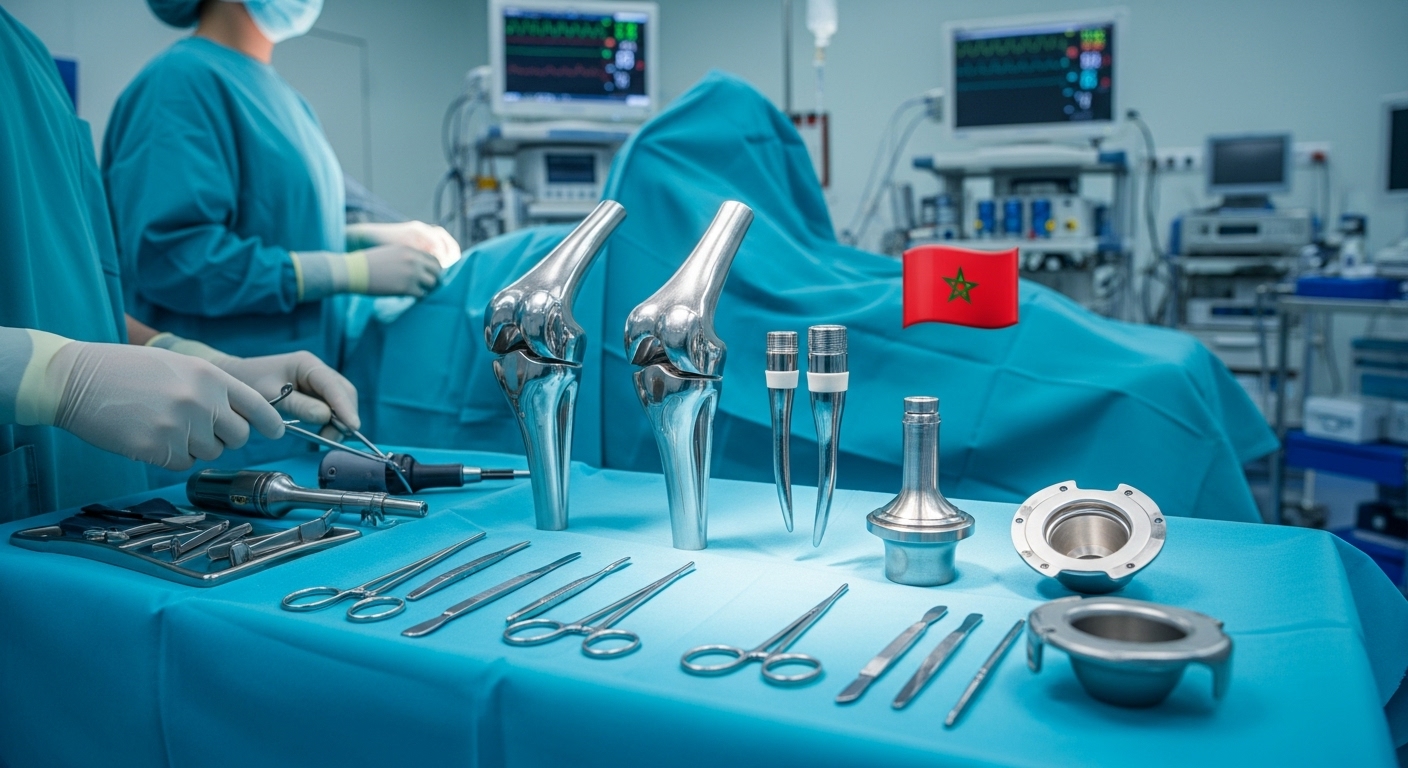
Teachability protects margin. Stable operative times, fewer tray rebuilds, and less emergency freight quietly compound in your P and L. Administrators notice when instrument sets return on time and when the tenth case runs as calmly as the first. In competitive rooms, the vendor who makes life easier usually wins—another reason Knee and Hip Implants Morocco anchored by Ortonom becomes the safe choice.
Morocco market entry roadmap
Winning Morocco requires clarity, presence, and respect for tradition. Begin with a lighthouse hospital in Casablanca or Rabat to anchor scale, then add a fast-moving secondary site in Tangier or Marrakech to demonstrate repeatability. Keep the narrative local: show how your trays, sizes, and service SLAs match each hospital’s scheduling and sterilization cadence. A Knee and Hip Implants Morocco partner who adapts to OR rhythms earns advocates from surgeons to finance.
Stakeholder mapping is non-negotiable. List the chief surgeon, nursing lead, procurement officer, CSSD manager, and finance controller for each target hospital. Capture their constraints and define what “good” means to them—fewer tray rebuilds, on-time replenishment, fewer label edits. Those notes become local copy for brochures and tender pages. Preparation reads as respect in Morocco’s business culture, and respect moves decisions for Knee and Hip Implants Morocco proposals.
Bilingual assets save time. EN materials cover many clinical interactions, while FR assets are essential for committee packs and regional coordination. Add brief Arabic summaries for front-line logistics or patient education where helpful. A provider who publishes consistent, readable materials around Knee and Hip Implants Morocco earns fast alignment across departments that rarely meet at once.
Use simple data to keep promises. Track instrument turnaround, insert thickness distribution, and shelf age of slow movers. Review monthly and adjust before drift appears. When committees ask how you prevent stockouts and dead stock, show your method and the change you made after the last review. A Knee and Hip Implants Morocco partner who “shows the homework” is the one invited into multi-year frameworks.
Morocco hospital and city snapshot
The table helps you sequence launches, align training calendars, and shape a starter stock matrix that matches early case cadence.
| City or Region | Typical Channels | First Focus Procedures | What Wins Quickly | Notes for Distributor |
|---|---|---|---|---|
| Casablanca | Private plus public tenders | Primary knee and hip | OR presence and fast instrument turnaround | Anchor lighthouse references |
| Rabat | Public teaching and private | Standardized knee pathways | Bilingual briefs and conservative lead times | Strong CSSD coordination |
| Tangier | Private hospitals | Knee primary familiar flows | Clear IFUs and service SLAs | Emphasize sterilization guidance |
| Marrakech | Private plus NGO | Sports-related knee and trauma | Calm service and reliable replenishment | Capture data to tune inserts |
| Fes Meknes | Public and private | Mixed orthopedic load | Documentation that passes first time | Build references for tenders |
| Agadir | Private | Knee primary | Quick troubleshooting and video refreshers | Stage fast movers locally |
| Oujda | Public | Primary knee with teaching rotation | Realistic timelines and committee-ready files | Pair training with maintenance plans |
Product snapshot for knee and hip systems
Place this table after your narrative in proposals and launch packs. It is not a substitute for teaching; it guides it.
| Family | System | Core features | Typical use cases | Training focus |
|---|---|---|---|---|
| OrtoKnee | Fixed Knee System | CR pathway option, intuitive size ladder, robust locking interface | Primary knee with intact or reconstructable PCL | Gap logic, insert selection, patellar tracking |
| OrtoKnee | Mobile Knee System | Mobile-bearing inserts, mid-flexion stability emphasis | Higher-demand primaries | Rotation checks, tibial alignment consistency |
| OrtoKnee | Revision Knee System | Augments, stems, constraint options | Complex or revision TKA | Constraint selection, bone defect management |
| OrtoHip | Total Hip System | Press-fit and cemented options, alignment cues | Primary THA | Offset management, leg-length checks |
| OrtoHip | Bipolar Hip System | Bipolar head options, streamlined instrumentation | Fracture management | Capsule handling, stability checks |
| OrtoHip | K2 Revision Hip System | Modular stems, multiple fixation strategies | Complex or revision THA | Taper integrity, extraction workflows |
These families let you position Knee and Hip Implants Morocco as a coherent system with clear answers on size coverage, insert logic, patellar strategy, offset, and leg length. Questions become decisions rather than debates.
Clarity on roles prevents disappointment and protects credibility. Use this RACI-style table in proposals and launch packs so your public claims match day-to-day reality.
| Item | Ortonom Medical provides | Partner commits | Typical timeline |
|---|---|---|---|
| Regulatory dossier | Technical files, labels, IFUs committee-ready | Local submission, tracking, meeting attendance | 5–15 business days per pack |
| Launch training | Surgeon and nurse workshops EN FR videos | Venue, attendee coordination, refresher plan | Within 30 days of appointment |
| Instrument readiness | Tray checklists, sterilization guidance, maintenance | CSSD capacity, maintenance schedule | Pre-launch plus quarterly |
| Inventory policy | Stock matrix, reorder points, consignment options | Safety stock, monthly reporting | At contract, reviewed monthly |
| Field support | Case shadowing remote and in person troubleshooting | Case scheduling, structured feedback | First 3–6 months |
| Country copy | Bilingual brochures, listing text, FAQs | Localization, response SLAs | Live at launch, quarterly updates |
By publishing and keeping these commitments, your Knee and Hip Implants Morocco program gains a reputation for calm, predictable execution—the kind administrators and surgeons reward with renewals.
Operations, compliance, and logistics you can keep
Procurement leaders want two outcomes above all: files that pass on the first try and stock that arrives when promised. We set conservative lead times, define what can be consigned locally, and convert early case data into reorder logic. In tender rooms, those truths are worth more than slogans. The Knee and Hip Implants Morocco provider who keeps calm schedules becomes the default choice when stakes are high.
Compliance is continuous, not a one-off upload. Expect audits, label tweaks, and IFU updates as hospital protocols evolve. Ortonom maintains version-controlled masters so updates flow cleanly from factory to distributor to hospital. Your regulatory manager will have a named counterpart at Ortonom—old-fashioned accountability that saves modern time. This rhythm protects deals and keeps the Knee and Hip Implants Morocco pipeline on track.
Logistics should be “boring” in the best sense. Stage fast movers—mid sizes and common insert thicknesses—in country; rotate long-tail sizes from regional hubs. Tie reorder points to real case cadence rather than optimistic forecasts. Publish those rules in proposals and committee briefs. Over a few quarters, predictable performance becomes your moat for Knee and Hip Implants Morocco.
Service makes loyalty visible. Quick instrument turnaround, defined incident paths, and scheduled check-ins after early cases prove that support is a strategy, not a cost. Administrators remember who solved problems quickly. Surgeons remember who stood next to them when it mattered. In renewals, that memory often beats a small price edge—another reason your Knee and Hip Implants Morocco program compounds quietly over time.
Ninety-day launch plan and partner invitation
Prepare weeks 1–3. Finalize bilingual decks, IFUs, and a one-page spec snapshot. Confirm the regulatory bundle and pre-clear customs documents where possible. Build a starter stock matrix aligned to expected case cadence at your two lighthouse hospitals in Morocco. Book workshop dates and block theater slots for first supervised cases. Position your story clearly around being the calm, credible provider of Knee and Hip Implants Morocco.
Train weeks 4–6. Run workshops for surgeons and scrub teams and supervise first cases. Emphasize verification steps that protect outcomes: distal femoral resection checks, tibial slope and rotation, patella tracking in trial for knees, and cup orientation, offset, and leg-length checks for hips. Capture preferences and update checklists, FAQs, and reorder logic.
Execute weeks 7–10. Complete ten to twelve cases per site. Debrief with teams, tune inventory—especially insert thickness distribution—and align instrument maintenance with CSSD. Publish honest lead times and keep them. If a logistics lane slows, inform committees early and propose a workaround you can keep.
Scale weeks 11–13. Add one more Moroccan hospital and prepare the next-region pack for neighboring markets where your assets can be reused with minimal change. Approach public frameworks once private references are documented. Provide outcome summaries, stable SLAs, and a clear after-sales plan. This blend of tradition and transparency is what sustains success for Knee and Hip Implants Morocco.
If you bring hospital access, field discipline, and a service-first culture, Ortonom Medical will bring focused implants, teachable instruments, and dossiers that pass. Let us schedule the first workshops, run the first cases, and build references that open tenders and renewals—one successful procedure at a time with Knee and Hip Implants Morocco.