



Medical Equipment Distributor in Tanzania
Tanzania’s surgical ecosystem is modernizing while preserving a relationship-driven way of doing business. That mix favors partners who can act as a calm, Medical Equipment Distributor in Tanzania—bringing disciplined orthopedic products, teachable instruments, and predictable service. Ortonom Medical focuses on knee and hip implant systems supported by complete instrument sets and committee-ready documentation. When your hospital access meets our manufacturing rigor, decisions become easier for administrators and surgeons alike.
Across Dar es Salaam, Dodoma, Arusha, Mwanza, Mbeya and Zanzibar, arthroplasty volumes are expected to rise as trauma survivorship improves and active lifestyles extend into later decades. Committees increasingly evaluate suppliers on predictability as much as on price—clear documents, conservative lead times, and dependable stock. A partner positioned as the Medical Equipment Distributor in Tanzania who leads with dossiers, training, and logistics discipline will feel reassuring to procurement teams working under pressure.
Surgeon and scrub-team rotation is a reality in Tanzania, and visiting surgeons are common. That is why teachability in the OR matters: instruments must be intuitive, trays must match the operative sequence, and verification steps must be visible. Ortonom’s knee and hip families are designed as an ecosystem rather than a loose pile of SKUs, so steps are logical, trials are clear, and labels are readable under stress. This is how a Medical Equipment Distributor in Tanzania can anchor smoother launches and repeatable outcomes.

Procurement leaders also want fewer escalations after the first case. Ortonom treats technical files, IFUs, labels, tray checklists, and sterilization guidance as part of the product—not an afterthought. That approach shortens the path from the first order to the first case, and from the first case to steady reorders. It is a traditional, methodical way to earn trust while using modern tools to keep every promise.
What Ortonom Medical brings to Tanzanian hospitals
Ortonom Medical’s portfolio centers on knee and hip prostheses paired with complete, teachable instrument sets. In knee arthroplasty, the femoral component, tibial baseplate, polyethylene insert, and patella are validated to work together across sizes; trial components make gap logic unambiguous. In hip reconstruction, stems, cups, and heads are engineered for stable fixation and surface integrity with instrumentation that supports alignment and reproducibility. This coherence lets a Medical Equipment Distributor in Tanzania present a surgical pathway, not just a price list.
Documentation is treated as a clinical tool. We provide committee-ready technical files, bilingual IFUs (EN/FR), labeling packs, and CSSD-adoptable tray checklists. These materials reduce reformatting cycles and speed regulatory or hospital committee submissions. For a Medical Equipment Distributor in Tanzania, fewer document surprises translate into earlier revenue recognition and a stronger internal reputation with hospital networks.
Enablement is continuous, not a one-time event. Ortonom delivers concise technique videos and pocket checklists that staff can review between cases. Launch workshops emphasize verification steps—distal and posterior femoral resections, tibial slope and rotation, insert selection, patellar tracking; for hips, cup orientation, offset management, and leg-length checks. Early case shadowing turns good training into calm execution on the floor.
Service closes the loop. Fast instrument turnaround, accessible spares, and clear incident pathways convert a strong first week into a stable first year. We coordinate preventive maintenance with CSSD, offer consignment for fast movers, and maintain simple shared dashboards. Over time, this steady rhythm becomes your signature as the trusted Medical Equipment Distributor in Tanzania.
Compliance and committee-ready dossiers
Hospital committees often decide on paperwork—and on how calmly that paperwork moves. Ortonom’s dossiers are organized to pass on the first submission, with conservative timelines and clearly assigned responsibilities. Technical files cover specifications, risk, verification/validation, biocompatibility evidence, and labeling alignment. IFUs are clear and bilingual, including QR links to short technique modules.
Labels and UDI packs are prepared to match local needs, with sterilization, batch, and traceability details presented in consistent formats. Tray checklists are designed so CSSD can adopt them immediately without rebuilding the order of instruments. For a Medical Equipment Distributor in Tanzania, this reduces friction, cuts avoidable delays, and makes your timeline believable to procurement.
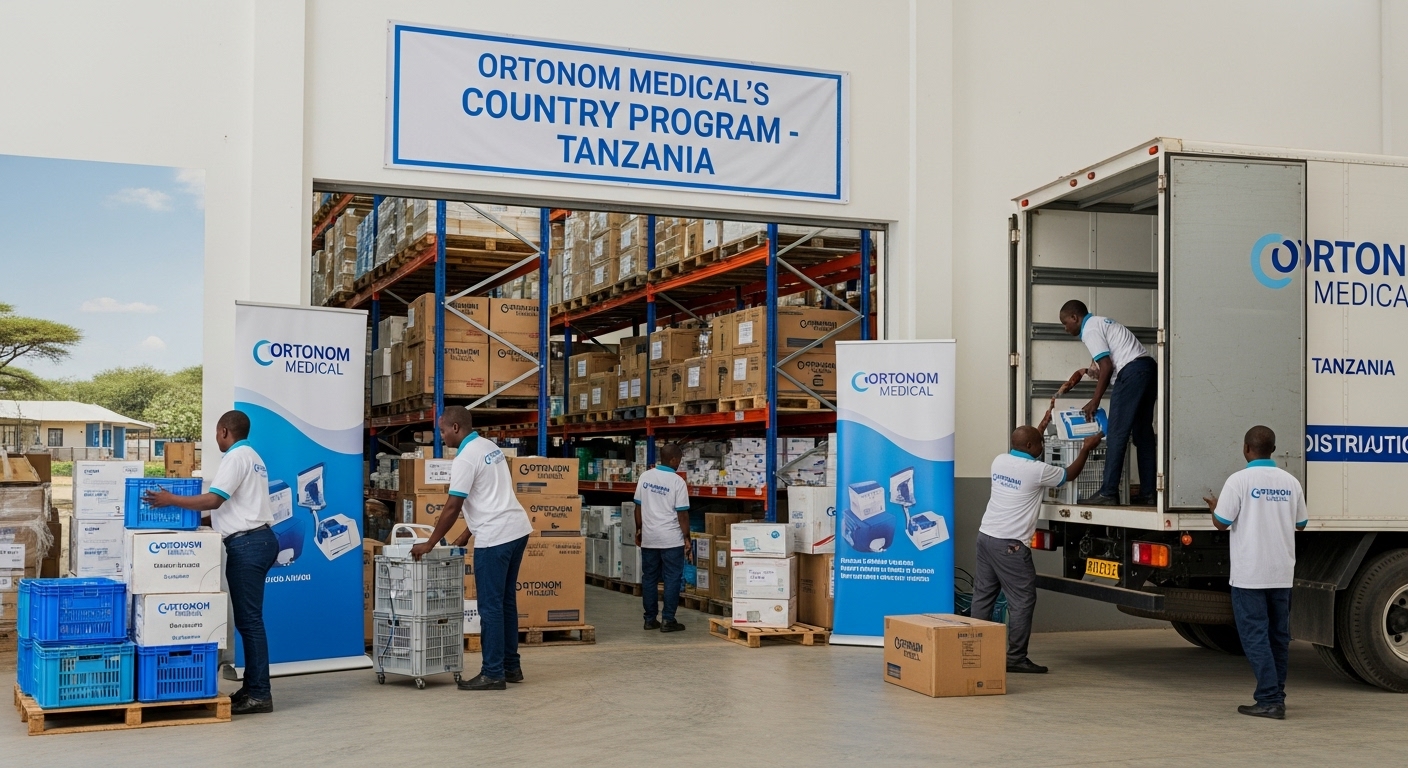
Because protocols evolve, compliance is continuous rather than a one-off upload. We maintain version-controlled masters so updates flow cleanly from factory to distributor to hospital. Your regulatory manager will have a named counterpart at Ortonom—traditional accountability that saves modern time. That rhythm protects deals and keeps committees comfortable with your submissions.
When tenders open, being the Medical Equipment Distributor in Tanzania with dossiers, IFUs, and labels already aligned is an advantage that shows respect for the committee’s process. Respect is remembered when renewals are on the table.
Training, teachability, and a 90-day launch plan
Hospitals buy confidence as much as components. Teachable systems lower anxiety in the OR and compress learning curves for rotating staff. We make technique visible—sequence of cuts, gap assessment, alignment references, and verification steps the team can follow without debate. When instruction and instrumentation tell the same story, launches scale smoothly.
Workshops are practical and focused on the moves that matter. For knees, we emphasize distal and posterior femoral resections, tibial slope and rotation, insert selection, and patellar tracking in trial. For hips, we prioritize femoral preparation, cup orientation, offset management, and leg-length checks. Short video modules reinforce identical steps so teams can refresh in minutes.
We accompany early cases and capture lessons learned. If a site favors mid-thickness inserts or a particular patellar strategy, we tune the stock matrix and update the training emphasis. This “train-shadow-adjust” loop keeps the system familiar while keeping the stock honest—exactly what a Medical Equipment Distributor in Tanzania needs to protect schedules and margins.
Below is the 90-day plan we recommend for Tanzania. It is deliberately conservative; promises kept matter more than promises made.
| Phase | Focus | What happens | Outcome |
|---|---|---|---|
| Weeks 1–3 | Prepare | Finalize decks, IFUs, one-page spec snapshot; confirm regulatory bundle; build starter stock matrix; reserve theatre slots | Clear story and ready paperwork |
| Weeks 4–6 | Train | Workshops for surgeons and scrub teams; supervise first cases; emphasize verification steps | Calm execution under supervision |
| Weeks 7–10 | Execute | 10–12 cases per site; debrief; tune insert thickness distribution; align CSSD maintenance | Stable cadence and honest stock |
| Weeks 11–13 | Scale | Add one hospital; publish outcome summary; approach public frameworks | Repeatability and references |
Product snapshot for knee and hip systems
Ortonom families are built to make decisions easy for committees and for the floor. The table below is a quick memory aid for proposals and launch packs; it guides teaching rather than replacing it.
| Family | System | Core features | Typical use cases | Training focus |
|---|---|---|---|---|
| OrtoKnee | Fixed Knee System | CR pathway, intuitive size ladder, robust locking | Primary TKA with intact/reconstructable PCL | Gap logic, insert selection, patellar tracking |
| OrtoKnee | Mobile Knee System | Mobile-bearing inserts, mid-flexion stability | Higher-demand primaries | Rotation checks, tibial alignment consistency |
| OrtoKnee | Revision Knee System | Augments, stems, constraint options | Complex or revision TKA | Constraint selection, defect management |
| OrtoHip | Total Hip System | Press-fit and cemented options, alignment cues | Primary THA | Cup orientation, offset, leg length |
| OrtoHip | Bipolar Hip System | Bipolar head options, streamlined instrumentation | Fracture management and geriatrics | Capsule handling, stability checks |
| OrtoHip | K2 Revision Hip System | Modular stems, multiple fixation strategies | Complex or revision THA | Taper integrity, extraction workflows |
For a Medical Equipment Distributor in Tanzania, this snapshot turns questions into decisions: size coverage, insert logic, patellar strategy, offset, and leg length are addressed up front, reducing meeting time and uncertainty.
Inventory and logistics you can keep
Logistics should be “boring” in the best sense—predictable, visible, and honest. Stage fast movers in-country: median sizes and common insert thicknesses for knees, common stem and head combinations for hips. Rotate long-tail sizes from regional hubs so cash isn’t trapped while availability stays high.
Tie reorder points to real case cadence rather than optimistic forecasts. Publish those rules in proposals and committee briefs, then keep them. Over a few quarters, predictable performance becomes your moat. This is how a Medical Equipment Distributor in Tanzania becomes the default choice when the stakes are high.
Instrument turnaround is another quiet differentiator. Clear cleaning/packing guidance, shareable dashboards for tray status, and planned maintenance windows reduce last-minute scrambles. When the tenth case runs as calmly as the first, surgeons and administrators both notice—and they remember at renewal time.
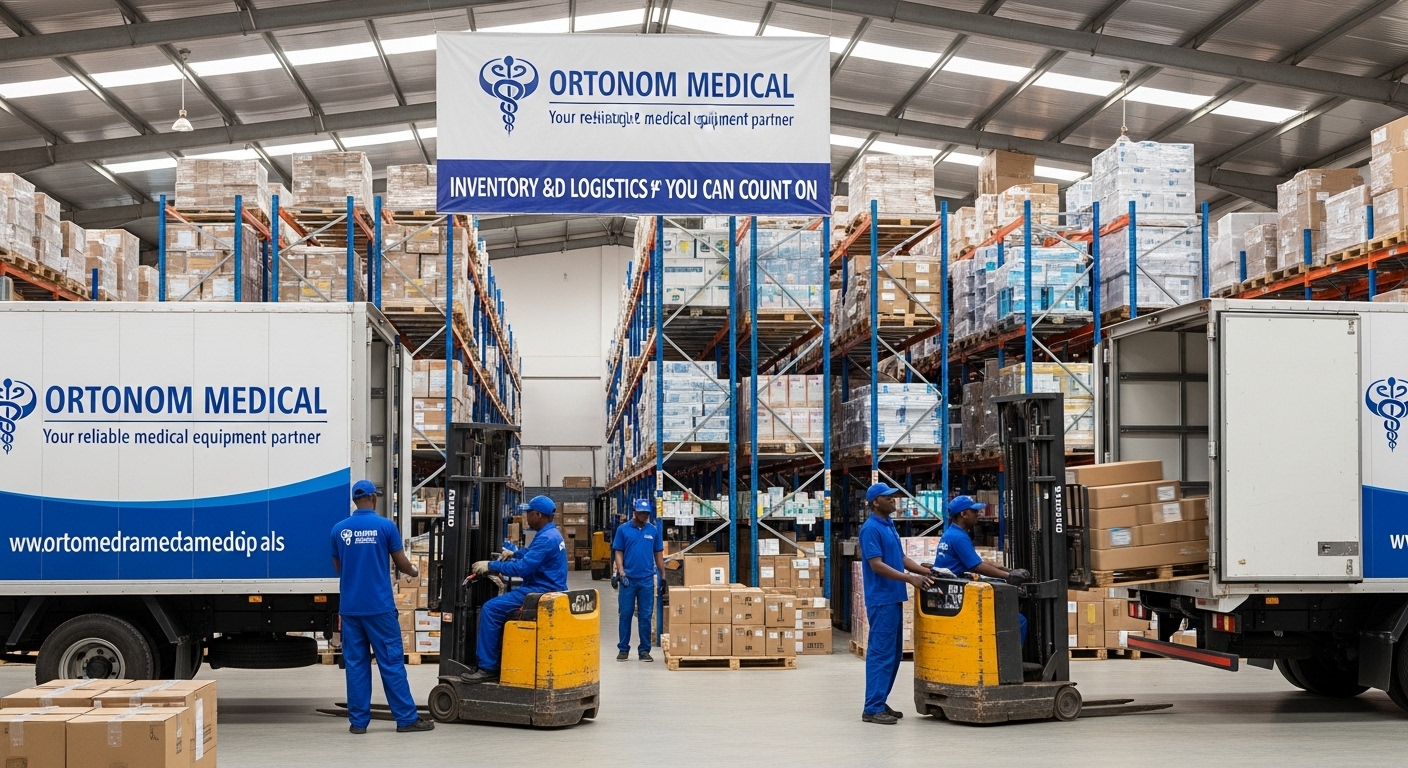
If a logistics lane slows, communicate early with a realistic workaround you can keep. Under-promise and over-deliver is an old principle that earns modern trust.
Stakeholder mapping and city-level rollout
Winning Tanzania requires clarity, presence, and respect for tradition. Begin with a lighthouse hospital in Dar es Salaam to anchor scale, then add a fast-moving secondary site in Dodoma or Arusha to prove repeatability. Keep the narrative local: show how trays, sizes, and service SLAs match each hospital’s scheduling and sterilization cadence. A Medical Equipment Distributor in Tanzania who adapts to OR rhythms earns advocates from surgeons to finance.
Stakeholder mapping is non-negotiable. For each target hospital, list the chief surgeon, nursing lead, procurement officer, CSSD manager, and finance controller. Capture constraints and define what “good” means to each—fewer tray rebuilds, on-time replenishment, fewer label edits. Those notes become local copy for brochures and tender pages. Preparation reads as respect in Tanzanian business culture, and respect moves decisions.
Bilingual assets save time. English covers many clinical interactions; add concise French and short Swahili summaries where helpful—for logistics, patient education, or CSR initiatives. A provider who publishes consistent, readable materials around orthopedic implants will align departments that seldom meet together.
Use simple data to keep promises. Track instrument turnaround, insert thickness distribution, and shelf age of slow movers. Review monthly and adjust before drift appears. When committees ask how you prevent stockouts and dead stock, show your method and the last change you made. A Medical Equipment Distributor in Tanzania who “shows the homework” gets invited into multi-year frameworks.
Tanzania city snapshot
| City / Region | Typical channels | First-focus procedures | What wins quickly | Note for distributor |
|---|---|---|---|---|
| Dar es Salaam | Private + public tenders | Primary knee and hip | OR presence, fast instrument turnaround | Anchor lighthouse references |
| Dodoma | Public/teaching | Standardized knee pathways | Bilingual briefs, conservative lead times | Tight CSSD coordination |
| Arusha | Private/NGO mix | Sports/trauma-related knees | Clear IFUs and service SLAs | Emphasize sterilization guidance |
| Mwanza | Public + mission | Primary knees, growing hips | Quick troubleshooting, video refreshers | Stage fast movers locally |
| Mbeya | Public/regional | Primary knees | Documentation that passes first time | Build references for tenders |
| Zanzibar | Private/regional | Balanced knee/hip load | Calm service, reliable replenishment | Pair training with maintenance plan |
Clarity on roles prevents disappointment and protects credibility. Use this RACI-style framework in proposals and launch packs so public claims match day-to-day reality. It also gives a Medical Equipment Distributor in Tanzania a simple checklist to manage execution.
We provide technical files, IFUs, labels, tray checklists, and maintenance guidance. Partners commit to local submissions, venue coordination, and structured feedback after early cases. Together we define consignment rules for fast movers, stock-age reviews for slow movers, and a cadence for incident resolution. Below is a typical division of work.
| Item | Ortonom provides | Partner commits | Typical timeline |
|---|---|---|---|
| Regulatory dossier | Technical files, labels, IFUs (committee-ready) | Local submission, tracking, meeting attendance | 5–15 business days per pack |
| Launch training | Surgeon & nurse workshops, EN/FR videos | Venue, attendee coordination, refresher plan | ≤ 30 days after appointment |
| Instrument readiness | Tray checklists, sterilization guidance, maintenance | CSSD capacity, maintenance schedule | Pre-launch + quarterly |
| Inventory policy | Stock matrix, reorder points, consignment options | Safety stock, monthly reporting | At contract + monthly review |
| Field support | Case shadowing, remote/on-site troubleshooting | Case scheduling, structured feedback | First 3–6 months |
| Country copy | Bilingual brochures, listing text, FAQs | Localization, response SLAs | Live at launch + quarterly updates |
A framework like this calms discussions in tender rooms. It shows that the Medical Equipment Distributor in Tanzania has a plan that honors both tradition and modern accountability.
FAQs that committees actually ask
Do you support public tenders? Yes. We maintain committee-ready documents and bilingual packs, and we align timelines conservatively so dates are met without drama.
Can we consign fast movers? Yes. We agree on safety stock and monthly reporting; mid-sizes and common insert thicknesses are typical candidates.
Are IFUs bilingual? Yes—English and French, with short video modules accessible via QR codes for quick refreshers between cases.
How do you prevent stockouts and dead stock? We tie reorder points to real case cadence, review insert usage monthly, and rotate long-tail sizes from regional hubs. The method and latest adjustment are shared transparently.
Closing invitation
If you bring hospital access, field discipline, and a service-first culture, Ortonom Medical will bring focused implants, teachable instruments, and dossiers that pass. Together we can position you as the calm, reliable Medical Equipment Distributor in Tanzania—running first cases without drama, earning surgeon loyalty through teachability, and keeping procurement comfortable with predictable logistics.
Let’s schedule the first workshops, run the first supervised cases, and build references that open tenders and renewals—one successful procedure at a time.