



Medical Equipments for Hip and Knee Replacement Surgery
Medical equipments for hip and knee replacement surgery is an important search intent for hospitals, orthopedic departments, procurement teams, and healthcare organizations looking for reliable solutions in arthroplasty. Although the term medical equipments is broad, in orthopedic hospital programs the real need is often more specific. Hospitals are not only searching for general medical products. They are looking for focused implant systems, compatible instruments, stable supply, documentation, traceability, and long term support for hip and knee replacement procedures.
Medical equipments can refer to many different categories, from diagnostic devices to operating room tools, rehabilitation products, implants, hospital furniture, monitoring systems, and surgical accessories. However, Ortonom Medical focuses specifically on hip and knee implant systems. The company does not position itself as a supplier of unrelated medical equipment categories such as ear prostheses, dental devices, general hospital machines, or non orthopedic product groups.
For hospitals and healthcare partners, this focus creates a clearer value proposition. Ortonom Medical supports orthopedic arthroplasty programs with OrtoHip Bipolar Hip System, OrtoHip K2 Revision Hip System, OrtoHip Total Hip System, OrtoKnee Fixed Knee System, OrtoKnee Revision Knee System, and OrtoKnee Mobile Knee System. These systems are designed to support hospitals that need structured hip and knee replacement solutions instead of a broad but unfocused medical equipment catalog.
Why broad medical equipment searches need orthopedic focus
Many hospital buyers begin their search with a broad term such as medical equipments because they are exploring suppliers, categories, and available solutions. This is a natural starting point, especially for procurement teams that manage many clinical departments. However, the more serious the purchasing process becomes, the more specific the search must be.
A hospital preparing for hip and knee replacement surgery does not only need generic medical equipment. It needs implant systems, trial components, compatible surgical instruments, documentation, stock planning, and a reliable supplier relationship. These elements directly affect operating theatre readiness and surgical continuity.
This is why a focused article about medical equipments for hip and knee replacement surgery is more accurate than a general medical equipment article. It allows hospitals to understand that Ortonom Medical is relevant for orthopedic implant systems, especially hip and knee arthroplasty, while avoiding confusion with unrelated medical product categories.
Orthopedic medical equipments for hospitals
Orthopedic medical equipments for hospitals should be evaluated differently from general hospital supplies. In orthopedics, the product is connected to a surgical pathway. The implant, instruments, sterile preparation, stock control, lot traceability, and surgeon workflow must all work together.
Hospitals need a supplier that understands this pathway. A broad catalog provider may list many products, but arthroplasty programs require depth, not only variety. The hospital must know which implant systems are available, how instruments will be prepared, how cases will be supported, and how products will be replenished after use.
Ortonom Medical’s position is based on this focused orthopedic need. Instead of offering every type of medical equipment, the company supports hip and knee replacement surgery with dedicated OrtoHip and OrtoKnee systems for hospital programs.
| Search intent | What the hospital may need | Ortonom Medical focus |
|---|---|---|
| Medical equipments | General supplier discovery | Orthopedic implant systems |
| Orthopedic medical equipments | Products for orthopedic departments | Hip and knee arthroplasty systems |
| Medical equipments for hospitals | Hospital purchasing options | Implant supply and program support |
| Medical equipments for orthopedic surgery | Surgical orthopedic readiness | Implants instruments and documentation |
| Arthroplasty implants | Hip and knee replacement solutions | OrtoHip and OrtoKnee portfolio |
Medical equipments for orthopedic surgery
Medical equipments for orthopedic surgery must support the practical requirements of the operating room. In hip and knee replacement procedures, the surgical team needs more than an implant box. It needs correctly prepared instruments, compatible trial components, clear product references, and confidence that the required sizes are available before the case begins.
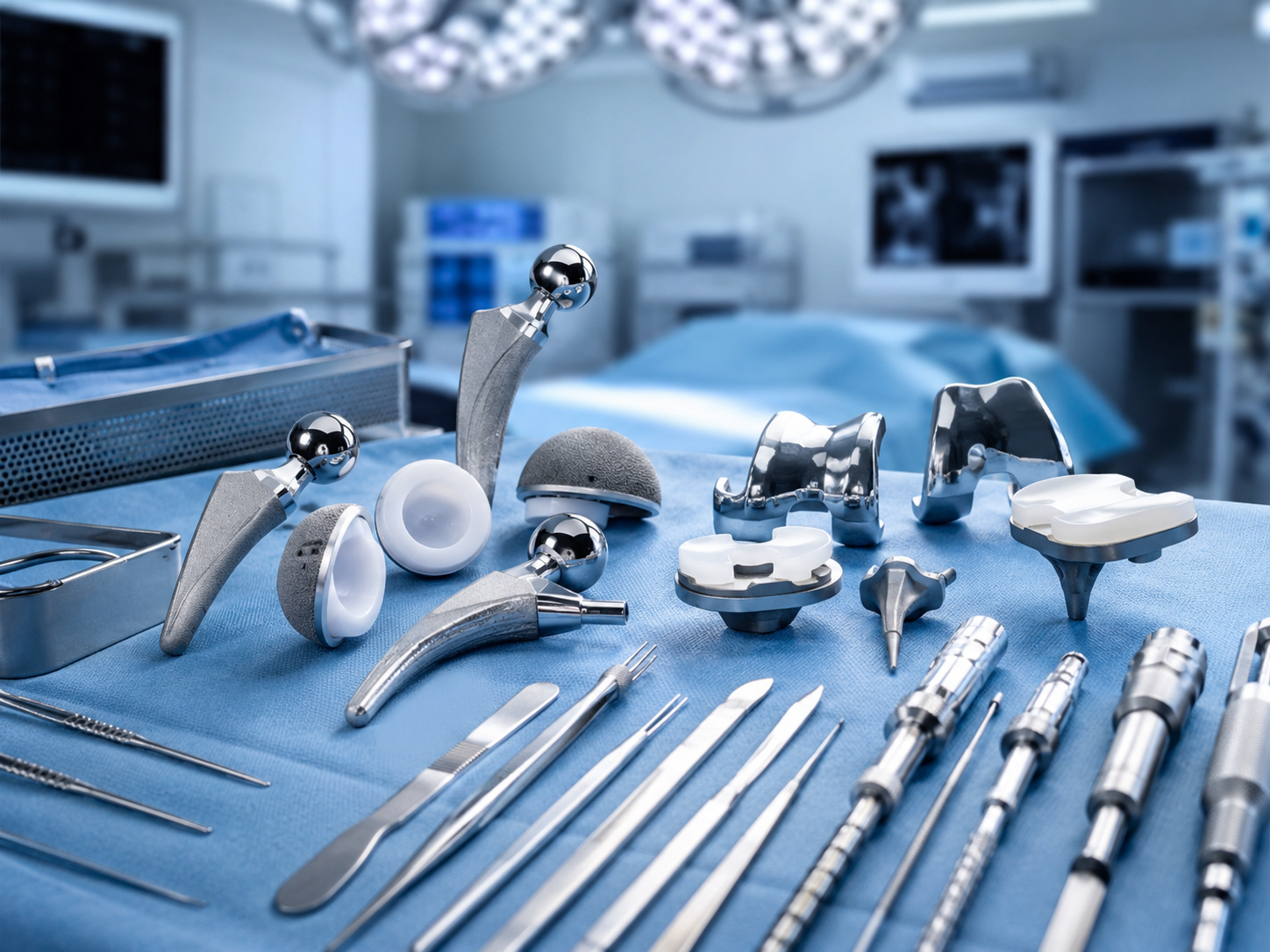
Operating theatre efficiency depends on preparation. If a tray is incomplete, if a trial component is missing, or if an implant size is unavailable, the procedure pathway can be disrupted. This is why orthopedic surgery equipment must be managed as a complete system rather than a loose collection of products.
For hospitals, the right supplier should help connect product availability with surgical readiness. Ortonom Medical supports this need by keeping the conversation centered on hip and knee arthroplasty, where product clarity and operational preparation are essential.
Hip replacement implants and Ortonom Medical hip systems
Hip replacement implants are a core part of orthopedic hospital programs. Hospitals evaluating medical equipments for hip replacement surgery need to consider the type of hip procedure, implant pathway, instrumentation, component availability, and documentation requirements.
Ortonom Medical’s hip portfolio includes OrtoHip Bipolar Hip System, OrtoHip K2 Revision Hip System, and OrtoHip Total Hip System. These systems support different hip arthroplasty needs while remaining within a focused orthopedic implant portfolio.
OrtoHip Bipolar Hip System can support hospitals that require a bipolar hip pathway. OrtoHip Total Hip System is relevant for total hip replacement programs where acetabular and femoral components must be coordinated with instruments and trialing routines. OrtoHip K2 Revision Hip System supports hospitals preparing for more complex revision hip procedures.
Ortonom Medical hip portfolio
- OrtoHip Bipolar Hip System
- OrtoHip K2 Revision Hip System
- OrtoHip Total Hip System
For hospitals, the benefit is not only product availability. The benefit is the ability to build a clearer hip replacement program supported by supply planning, instrument readiness, product documentation, and long term cooperation.
Knee replacement implants and Ortonom Medical knee systems
Knee replacement implants are another major area within medical equipments for orthopedic surgery. Hospitals need knee systems that can support primary procedures, revision needs, instrument preparation, stock continuity, and surgical workflow.
Ortonom Medical’s knee portfolio includes OrtoKnee Fixed Knee System, OrtoKnee Revision Knee System, and OrtoKnee Mobile Knee System. This range allows hospitals to evaluate fixed, mobile, and revision knee pathways under a focused supplier relationship.
OrtoKnee Fixed Knee System can support structured primary knee replacement programs. OrtoKnee Mobile Knee System provides another option for hospitals evaluating mobile knee arthroplasty pathways. OrtoKnee Revision Knee System is important for institutions preparing for complex knee cases and long term revision capability.
Ortonom Medical knee portfolio
- OrtoKnee Fixed Knee System
- OrtoKnee Revision Knee System
- OrtoKnee Mobile Knee System
For procurement teams and orthopedic departments, the value of these systems is strengthened when they are supported by clear stock routines, instrument planning, documentation, and supplier communication.
What hospitals should evaluate before choosing orthopedic medical equipments
Hospitals should not choose orthopedic medical equipments only by product name or unit price. In hip and knee replacement surgery, the full purchasing decision includes clinical usability, surgical workflow, supply reliability, documentation, and after sales coordination.
The first evaluation point is product scope. The hospital should confirm whether the supplier is truly focused on orthopedic arthroplasty or whether orthopedic implants are only a small part of a general catalog. A focused supplier can usually provide a clearer product pathway and more relevant operational discussion.
The second evaluation point is continuity. Hip and knee replacement programs need stable access to core sizes, compatible instruments, and replenishment routines. Without continuity, the hospital may face repeated delays, urgent purchases, and internal pressure across procurement and operating room teams.
Important evaluation questions include:
- Which hip and knee implant systems are available
- Which sizes should be planned as core stock
- Which instruments are required for each procedure pathway
- How product references and lot details will be documented
- How replenishment will be managed after usage
- How urgent requests will be handled
- How supplier performance will be reviewed over time
Medical equipments for hospitals and procurement teams
Medical equipments for hospitals must fit both clinical and administrative expectations. Orthopedic surgeons need confidence in the system. Procurement teams need clear documentation and predictable supply. Operating theatre teams need instruments and implants ready before surgery. Sterile services teams need organized trays and preparation routines.
A supplier that only presents products without explaining workflow may not be enough for a serious hospital program. Hip and knee replacement surgery requires coordination between departments. The supplier must understand this hospital structure and provide information that supports each team.
Ortonom Medical can support hospitals by presenting hip and knee implant systems within a structured cooperation model. This means the conversation can include products, instruments, documentation, supply continuity, and long term hospital agreements.
Instrument readiness in hip and knee replacement surgery
Instrument readiness is one of the most important parts of orthopedic surgery preparation. The implant may be available, but the surgery can still be affected if the required instruments are incomplete, unavailable, damaged, or not prepared correctly.
For hip replacement surgery, instruments and trials must support the selected OrtoHip pathway. For knee replacement surgery, instruments must match the selected OrtoKnee system and the expected surgical workflow. This coordination helps reduce uncertainty before the operation.
Hospitals should treat instrument readiness as part of the supplier evaluation process. The supplier should help define tray content, preparation responsibilities, inspection points, and escalation steps when an issue is identified.
| Readiness area | Why it matters | Hospital benefit |
| Instrument tray planning | Ensures correct tools are prepared | Reduces operating room disruption |
| Trial component availability | Supports surgical decision making | Improves workflow confidence |
| Implant size planning | Protects scheduled procedures | Reduces urgent stock pressure |
| Sterile preparation routines | Supports theatre readiness | Improves coordination |
| Escalation process | Handles missing or damaged items | Reduces last minute uncertainty |
Documentation and traceability for orthopedic implant systems
Documentation is not a secondary detail in orthopedic implant supply. Hospitals need accurate product references, lot information, usage records, and traceability processes. These details support patient records, internal audits, inventory control, and procurement accountability.
Medical equipments for hip and knee replacement surgery must be supported by documentation that hospital teams can actually use. If documentation is unclear or disconnected from product usage, the hospital may struggle to maintain consistency.
Ortonom Medical’s hip and knee implant systems should be presented with clear product information, traceability routines, and usage documentation. This gives procurement teams and clinical teams a more reliable framework for long term cooperation.
Why focus matters more than a broad medical equipment catalog
A broad medical equipment catalog may look attractive at first because it covers many categories. However, in orthopedic arthroplasty, focus is often more valuable than variety. Hospitals need depth in hip and knee replacement systems, not a long list of unrelated products.
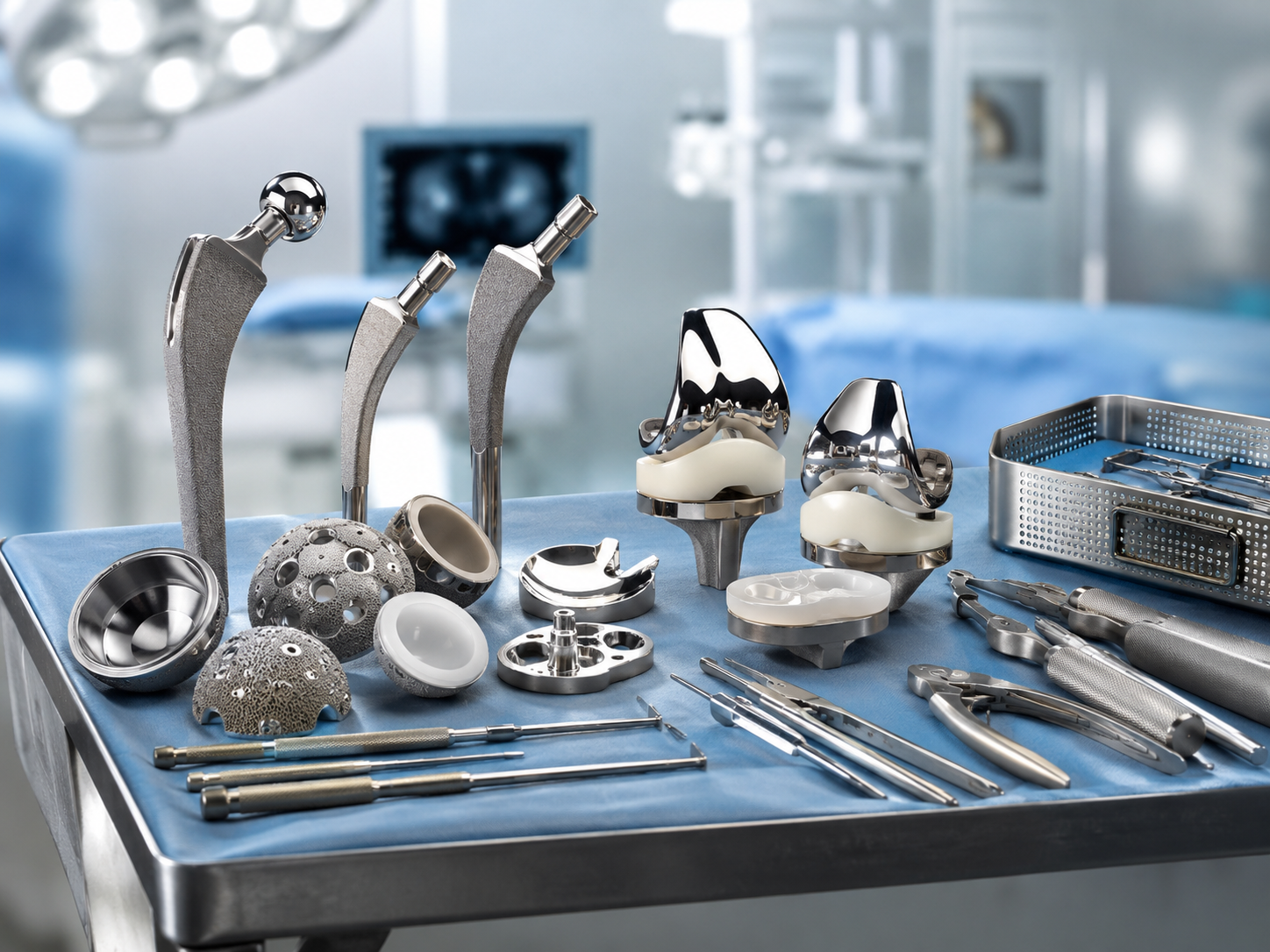
A supplier that focuses on arthroplasty can discuss product pathways, surgical workflow, implant sizes, revision readiness, instruments, documentation, and continuity in greater detail. This creates a stronger foundation for hospital trust.
Ortonom Medical’s focus on hip and knee implant systems allows the company to speak directly to orthopedic hospital needs. It also helps filter broad medical equipment traffic into the right audience. Visitors looking for unrelated products can understand the scope quickly, while hospitals needing hip and knee solutions can continue with a more relevant inquiry.
Supporting Africa focused orthopedic programs
Hospitals across Africa are increasingly evaluating suppliers not only by product access but by the ability to support stable surgical programs. This is especially important in markets such as Egypt, Algeria, Morocco, Nigeria, Ghana, Kenya, Tanzania, South Africa, Libya, Senegal, Cameroon, Gabon, Namibia, Guinea, DRC, and Côte d’Ivoire.
For these healthcare environments, medical equipments for hip and knee replacement surgery should be connected to hospital readiness. The supplier should help protect the surgical schedule, support documentation, plan stock, and create a clear cooperation model.
Ortonom Medical’s hip and knee portfolio can be positioned for hospitals, orthopedic specialists, procurement teams, and healthcare organizations that want focused arthroplasty support rather than general medical equipment sourcing.
Building long term hospital cooperation around hip and knee systems
A one time order may solve an urgent purchasing need, but it does not create a stable orthopedic program. Hospitals that perform hip and knee replacement procedures need long term cooperation models that define product scope, stock rules, instrument responsibilities, documentation, and communication routines.
A strong hospital agreement should identify the OrtoHip and OrtoKnee systems selected for use, the expected case volume, core stock requirements, instrument responsibilities, traceability model, and replenishment process. These details help both the hospital and supplier work with fewer surprises.
For Ortonom Medical, this approach turns broad medical equipment interest into a focused orthopedic cooperation opportunity. The goal is not to sell unrelated categories. The goal is to support reliable hip and knee replacement programs through a clear product and supply model.
Related terms that support this content strategy
The keyword medical equipments for hip and knee replacement surgery can be supported by several related terms. These terms should appear naturally in the article and can also guide internal linking between pages.
Relevant terms include medical equipments, orthopedic medical equipments, medical equipments for hospitals, medical equipments for orthopedic surgery, hip replacement implants, knee replacement implants, hip and knee prosthesis, arthroplasty implants, hospital orthopedic supplier, and orthopedic implant systems.
These terms should not be forced into every paragraph. Each term should be used where it supports the section topic. Broad terms can appear in the introduction and hospital procurement sections. Product terms can appear in the OrtoHip and OrtoKnee sections. Supplier terms can appear in the cooperation and hospital agreement sections
Medical equipments for hip and knee replacement surgery is a strong topic for hospitals and healthcare organizations searching for orthopedic solutions through broad medical equipment queries. The key is to guide that broad intent toward the correct product category. Ortonom Medical does not focus on every type of medical equipment. It focuses on hip and knee implant systems for arthroplasty programs.
The company supports hospitals with OrtoHip Bipolar Hip System, OrtoHip K2 Revision Hip System, OrtoHip Total Hip System, OrtoKnee Fixed Knee System, OrtoKnee Revision Knee System, and OrtoKnee Mobile Knee System.
For hospitals, procurement teams, orthopedic surgeons, and healthcare partners, Ortonom Medical offers a focused pathway from broad medical equipments search intent to structured hip and knee replacement cooperation. The objective is to support surgical readiness, stable supply, documentation, traceability, and long term hospital program development.