



Medical Devices in Hospitals
Medical devices in hospitals are not evaluated only as products placed inside a procurement list. For serious healthcare organizations, every medical device must support clinical safety, operating room efficiency, documentation discipline, supply continuity, and long term service reliability. In orthopedic departments, this expectation becomes even more important because hip and knee arthroplasty programs depend on precise implants, complete instruments, and predictable availability.
Medical devices in hospitals also create a direct connection between clinical performance and operational planning. A hip or knee implant cannot be treated like a simple stock item. It must be available in the right size, supported by the correct instruments, documented properly, and integrated into the hospital’s surgical workflow. If one part of this chain fails, the operating schedule and patient pathway can be disrupted.
Ortonom Medical focuses on hip and knee arthroplasty systems for hospitals, orthopedic specialists, healthcare groups, and distribution partners across Africa. Within the wider medical device environment, Ortonom Medical’s role is clearly defined: supporting hospitals with structured hip and knee implant solutions that help build reliable arthroplasty programs.
Why hospital medical device planning must be program based
Hospitals do not buy medical devices only for storage. They buy them to support specific clinical programs. In orthopedics, this means that hip and knee implants must be connected to a full service line, including surgeon readiness, operating theatre planning, sterile services routines, stock control, and procurement governance.
A program based approach helps hospitals avoid fragmented purchasing. When medical devices are purchased separately without connection to workflow, the hospital may face missing instruments, inconsistent documentation, or product availability gaps. These problems create pressure on surgeons, operating theatre teams, and procurement departments.
For African hospitals expanding orthopedic services, program based planning is especially valuable. It allows hospital leaders to evaluate whether a manufacturer can support stable activity over time, not only deliver an initial order. This is the difference between a product transaction and a long term hospital agreement.
The place of orthopedic implants among hospital medical devices
Medical devices in hospitals cover many categories, but this article focuses on orthopedic implant systems used in hip and knee arthroplasty. This distinction is important because Ortonom Medical does not position itself as a general medical equipment supplier. Its value is concentrated in structured arthroplasty cooperation.
Hip and knee implant systems require higher planning discipline than many routine hospital supplies. The hospital must consider implant sizes, trial components, reusable instruments, sterilization workflow, traceability, and replenishment. Each of these areas affects surgical readiness.
For hospitals in South Africa Gauteng, Morocco, Algeria, Egypt, Nigeria, Ghana, Kenya, Tanzania, Libya, Gabon, Senegal, Namibia, Cameroon, Guinea, DRC, and Côte d’Ivoire, orthopedic implant partnerships must therefore be built around continuity. Hospitals want medical device partners that understand the reality of surgical scheduling and can support reliable hip and knee services.
Ortonom Medical hip systems for hospital arthroplasty programs
Ortonom Medical’s hip portfolio supports hospitals that want a focused pathway for bipolar, total hip, and revision hip procedures. A clear hip product structure helps hospitals standardize training, instrument preparation, stock planning, and procurement discussions.
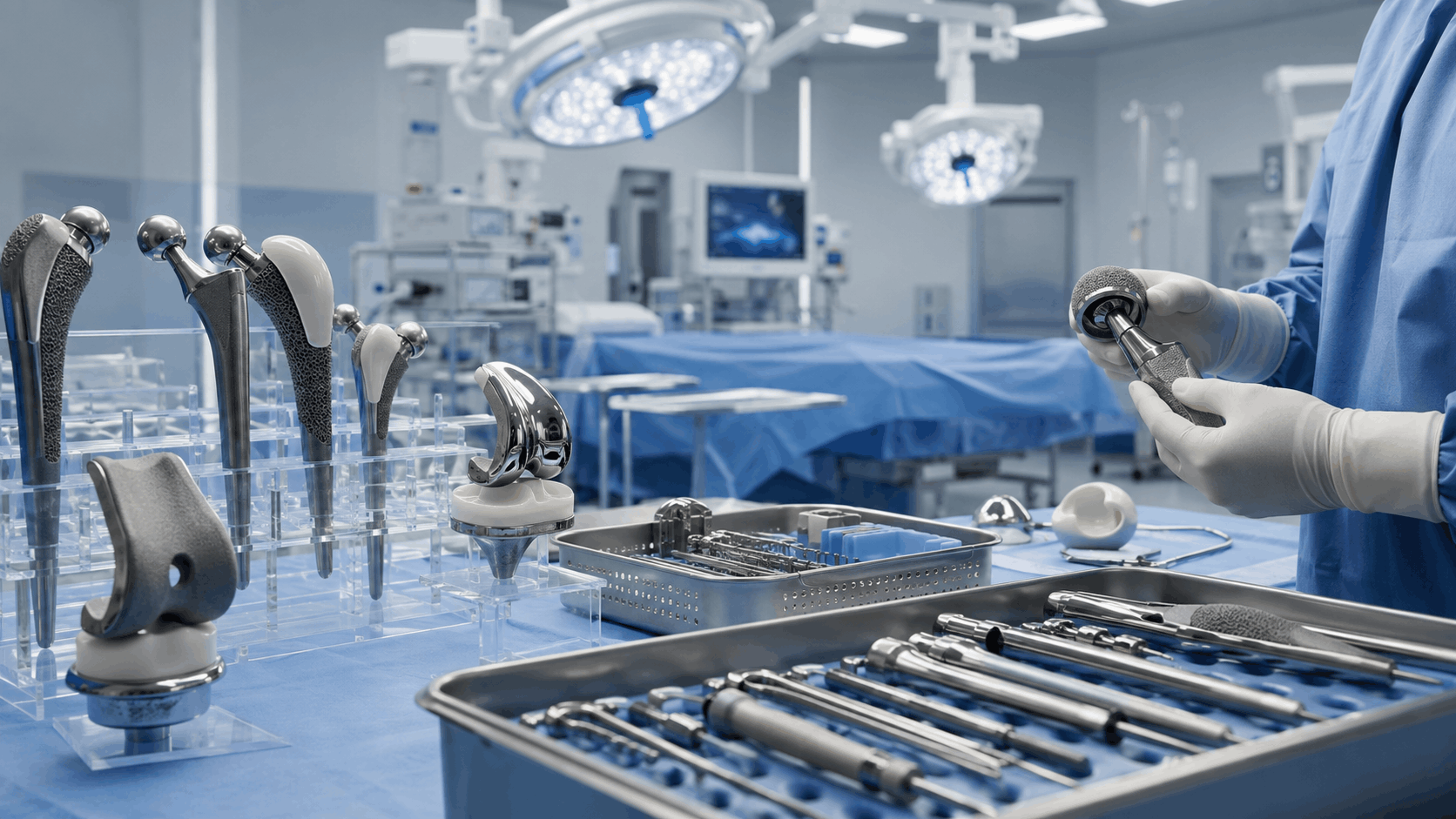
The OrtoHip Bipolar Hip System can support hospitals that require a defined bipolar hip pathway. The OrtoHip Total Hip System is relevant for total hip arthroplasty programs where implant planning, acetabular components, femoral components, and instruments must be coordinated. The OrtoHip K2 Revision Hip System supports hospitals preparing for more complex hip revision pathways.
These systems allow Ortonom Medical to speak to hospitals as an arthroplasty partner rather than a broad medical device vendor. The conversation can focus on case volume, operating room readiness, product availability, and long term cooperation.
Ortonom Medical hip portfolio
- OrtoHip Bipolar Hip System
- OrtoHip K2 Revision Hip System
- OrtoHip Total Hip System
Ortonom Medical knee systems in hospital programs
Knee arthroplasty programs also require structured device planning. Hospitals need implant systems that can support primary and revision pathways while keeping instrument and component management clear for surgical teams.
Ortonom Medical’s knee portfolio includes OrtoKnee Fixed Knee System, OrtoKnee Revision Knee System, and OrtoKnee Mobile Knee System. This range helps hospitals evaluate fixed, mobile, and revision knee pathways within one focused manufacturer relationship.
For hospitals, the benefit is not only product variety. The benefit is program clarity. When knee systems are supported through consistent stock planning, instrument readiness, and documentation, the hospital can reduce operational uncertainty and build stronger confidence among surgeons and procurement teams.
Ortonom Medical knee portfolio
- OrtoKnee Fixed Knee System
- OrtoKnee Revision Knee System
- OrtoKnee Mobile Knee System
What hospitals expect from medical device manufacturers
Hospitals expect medical device manufacturers to understand how decisions are made inside healthcare organizations. Surgeons may evaluate product performance and workflow. Procurement teams examine price, documentation, availability, and traceability. Operating theatre managers focus on schedule stability. Sterile services teams need instrument clarity and repeatable preparation routines.
A strong manufacturer must address all of these expectations together. If only the product is presented, the hospital may still hesitate because the operational model is unclear. If the product and the operating model are presented together, the agreement becomes easier to evaluate.
For Ortonom Medical, this means connecting OrtoHip and OrtoKnee systems to practical hospital requirements. Availability, instrument preparation, product documentation, traceability, training support, and replenishment planning should be part of the same discussion.
| Hospital department | Main concern | What the manufacturer must support |
|---|---|---|
| Orthopedic surgeons | Product workflow and surgical confidence | Clear hip and knee system pathways |
| Procurement | Availability price and documentation | Structured proposal and traceability |
| Operating theatre | Surgical schedule protection | Implant and instrument readiness |
| Sterile services | Tray preparation and inspection | Clear instrument routines |
| Hospital management | Long term program stability | Scalable cooperation model |
African hospital agreements and market specific priorities
Medical devices in hospitals across Africa must be managed with regional realities in mind. A generic approach does not work because logistics, procurement rules, hospital growth, and private healthcare investment vary between markets.
In South Africa Gauteng and Namibia, hospitals may prioritize rapid response and protection of high value operating schedules. In Morocco, Algeria, Egypt, and Libya, documentation, governance, and formal approval processes may strongly influence procurement decisions.
Nigeria, Ghana, Senegal, Côte d’Ivoire, and Guinea represent important West African markets where hospital networks and orthopedic services are growing. Kenya and Tanzania are also important for structured arthroplasty expansion. Cameroon, DRC, and Gabon require dependable communication, realistic logistics planning, and stable support.
| Region | Target markets | Hospital agreement priority |
| Southern Africa | South Africa Gauteng and Namibia | Schedule protection and rapid response |
| North Africa | Morocco Algeria Egypt and Libya | Documentation governance and traceability |
| West Africa | Nigeria Ghana Senegal Côte d’Ivoire and Guinea | Scalable supply and program growth |
| East Africa | Kenya and Tanzania | Implementation readiness and continuity |
| Central Africa | Cameroon DRC and Gabon | Logistics planning and communication |
Supply continuity as a core requirement for hospital devices
Supply continuity is one of the strongest indicators of manufacturer reliability. Hospitals cannot build stable arthroplasty programs when implant availability changes unpredictably. A missing size or delayed component can interrupt a planned surgical list.
For hip and knee implant systems, supply planning should begin with expected procedure volume. The hospital and manufacturer should define core sizes, minimum stock levels, reorder points, replenishment frequency, and urgent request procedures. This creates a practical foundation for program stability.
Ortonom Medical can support hospital discussions by focusing on realistic stock planning rather than generic product promotion. The goal is to make sure hospitals understand how product availability will be protected after an agreement is signed.
Essential supply planning elements include:
- Core implant and component definitions
- Minimum availability levels
- Usage based reorder points
- Scheduled replenishment reviews
- Packaging and expiry control
- Urgent request procedures
- Monthly stock and activity reporting
Documentation and traceability for medical devices in hospitals
Documentation is central to hospital medical device governance. For hip and knee implants, hospitals need accurate product records, lot information, usage documentation, and traceability procedures. These records support patient safety, inventory management, and internal audits.
Traceability should be practical. If the process is too complicated, hospital teams may struggle to maintain consistency. Manufacturers should support routines that are clear enough for daily use while still meeting procurement and management expectations.
For multi site hospital groups, standardized documentation becomes even more important. Consistent records help management compare usage, monitor stock, and maintain the same operating model across multiple facilities.
Instrument readiness and sterile services coordination
Medical devices in hospitals are not limited to the implant itself. In arthroplasty, instruments are part of the complete operating pathway. Even when the correct implant is available, a case may be delayed if instruments are incomplete, damaged, or not prepared correctly.
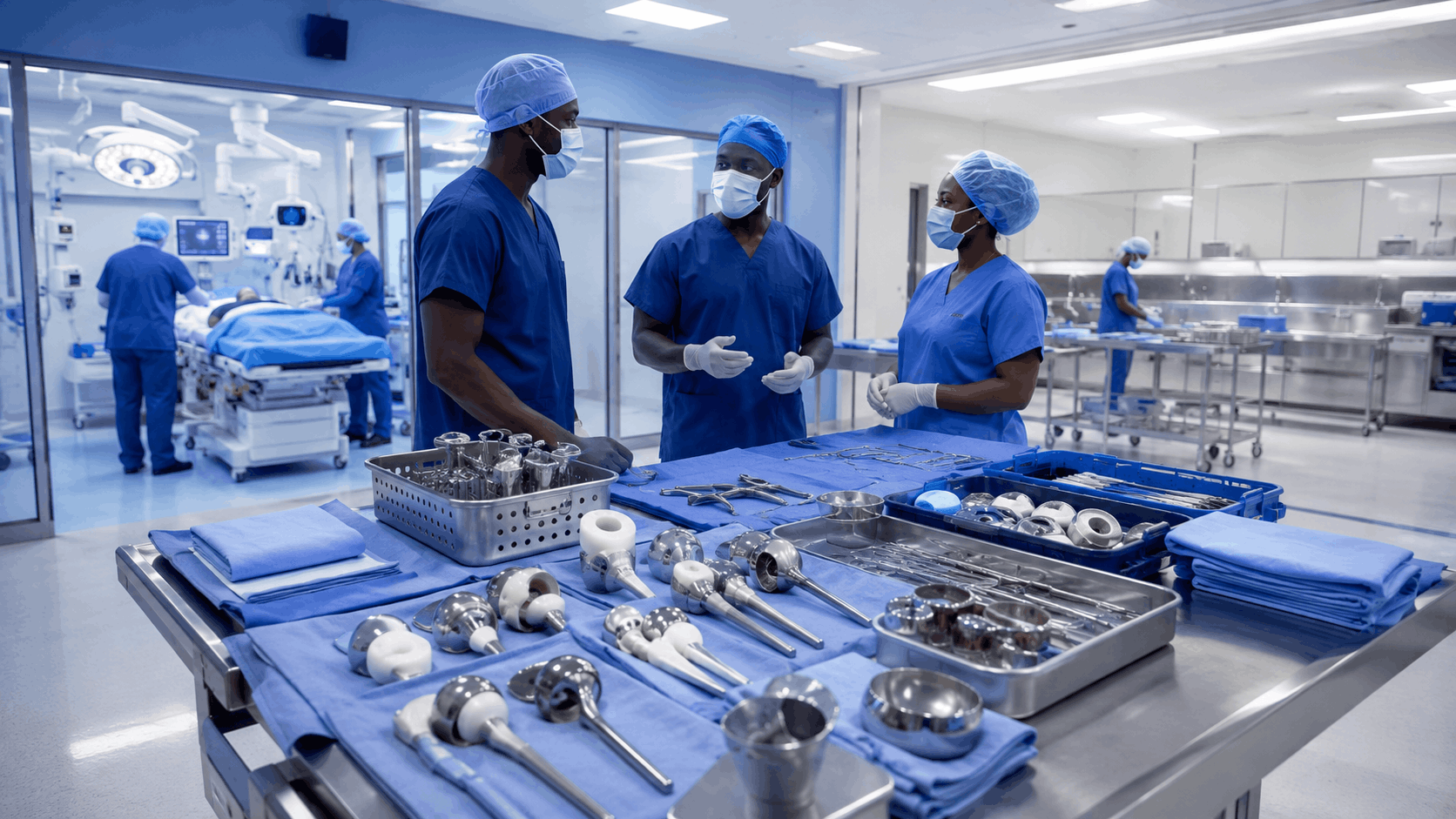
Sterile services teams need tray maps, inspection routines, handling instructions, and escalation pathways. They must know how each instrument set should be prepared and what to do when something is missing or damaged. This reduces uncertainty before surgery.
Instrument readiness also supports surgeon confidence. Orthopedic specialists want consistent preparation because it allows them to focus on the procedure instead of solving avoidable operational problems. A manufacturer that understands this can build stronger hospital trust.
Training support without losing product focus
Training support should remain focused on the selected hip and knee systems. Hospitals do not need broad and unrelated training messages. They need product orientation, workflow explanation, instrument preparation guidance, and refresh routines that help teams maintain consistency.
Initial education can support surgeons, operating theatre teams, sterile services, and procurement departments. Each group needs to understand how the selected system fits into the hospital program. This creates a shared operating language.
Follow up training can help protect standardization as teams change or procedure volume increases. For African hospitals expanding arthroplasty services, this type of focused support is valuable because it helps maintain program stability over time.
| Training stage | Participants | Objective |
| Product orientation | Surgeons and theatre teams | Understand OrtoHip and OrtoKnee pathways |
| Instrument preparation | Sterile services and OR staff | Improve tray readiness and inspection |
| Procurement alignment | Purchasing and management teams | Clarify documentation and stock routines |
| Continuity refresh | Existing and rotating teams | Maintain consistency as volume grows |
Turning hospital device needs into long term cooperation
A hospital may begin by searching for medical devices, but a long term agreement requires more structure. The manufacturer must understand the hospital’s procedure volume, clinical objectives, procurement expectations, stock model, and implementation timeline.
For Ortonom Medical, the opportunity is to convert hip and knee implant interest into stable hospital cooperation. This means presenting the product portfolio together with a clear operational model. Hospitals should see not only what is available, but how the program will be supported.
This approach is especially important in African target markets where hospitals are building or expanding orthopedic capacity. A structured proposal can reduce uncertainty and help decision makers move from product evaluation to formal cooperation.
Medical devices in hospitals must be evaluated through the full clinical and operational pathway. In orthopedic arthroplasty, hip and knee implant systems require product clarity, supply continuity, instrument readiness, documentation, traceability, training support, and structured hospital agreements.
Ortonom Medical supports this focused need through OrtoHip Bipolar Hip System, OrtoHip K2 Revision Hip System, OrtoHip Total Hip System, OrtoKnee Fixed Knee System, OrtoKnee Revision Knee System, and OrtoKnee Mobile Knee System.
For hospitals in South Africa Gauteng, Morocco, Algeria, Egypt, Nigeria, Ghana, Kenya, Tanzania, Libya, Gabon, Senegal, Namibia, Cameroon, Guinea, DRC, and Côte d’Ivoire, Ortonom Medical offers a clear pathway for hip and knee arthroplasty cooperation. The goal is to support reliable hospital programs, protect surgical continuity, and build long term agreements across Africa.